
Battery Care Tips for Getting the Most Out of a 1500mAh Disposable
By Ghost Pro UAE Team· Published 7 Aug 2026· Fact-checked by our order desk
Your disposable's 1500mAh battery and 10ml of e-liquid are engineered to run out together — but UAE heat, cold AC, humidity, and bad puffing habits can throw that balance off early. Here's how to get every one of the full 3500 puffs.
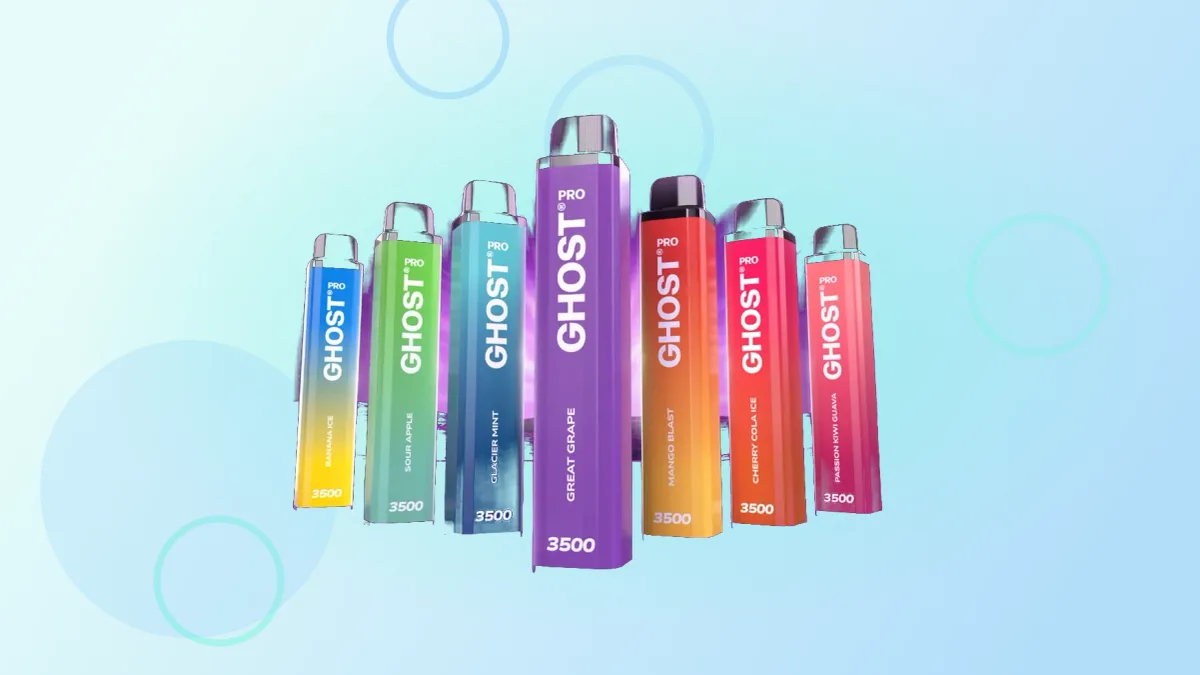
Why Battery Life and E-Liquid Are Designed to Run Out Together
A disposable vape only works as a product if two very different countdowns finish at roughly the same time: the electrical charge in the battery, and the physical volume of e-liquid in the tank. Get that pairing wrong and you end up with one of two annoying outcomes — a device that still has plenty of juice left but a dead battery, or a battery with charge to spare and a bone-dry coil pulling nothing but hot air. Neither is a good experience, and neither is what you're paying for.
The Ghost Pro 3500 Puffs is built around matching those two countdowns deliberately. Each device carries a 1500mAh battery and 10ml of 20mg nicotine e-liquid, sized against a 1.2 ohm mesh coil so that the puff count — rated up to 3500 puffs — reflects both running out at close to the same point. That number isn't a marketing round-up; it's the practical result of how much energy the battery can deliver to the coil before voltage drops too low to vaporise liquid properly, matched against how much liquid the coil can actually atomise before the wick runs dry.
Understanding this pairing matters because it changes how you should think about "battery care" on a disposable. You're not trying to preserve a battery for years like you would a phone — you're trying to get the full, evenly-distributed 3500 puffs the device was built to deliver, without wasting either resource early through bad handling. A battery drained too fast by careless habits leaves liquid behind that never gets used. A coil flooded or run hard by aggressive puffing can burn through liquid before the battery has given up its charge. Either way, you lose value you already paid for.
This guide walks through what's actually happening inside a 1500mAh disposable as it works through its lifespan, what accelerates or damages that process — heat and cold being the two biggest factors in UAE conditions — and the specific habits that keep vapor output, flavor, and battery delivery consistent from the first puff to somewhere near puff 3500. None of this is exotic advice. It's the same practical logic that applies to any small lithium battery paired with a heating element, adjusted for how a draw-activated disposable is actually used day to day.
Inside the Numbers: What 1500mAh and a 1.2Ω Mesh Coil Actually Do
It helps to know what the two headline specs are actually doing, because most of the "why did my vape suddenly feel weaker" questions trace back to a basic misunderstanding of how a battery and a coil interact.
The 1500mAh rating describes the battery's total charge capacity — think of it as the size of the fuel tank, not the rate fuel comes out. The 1.2 ohm mesh coil is the resistance the battery has to push current through every time you draw. Lower resistance coils pull more current per second (and vaporise more liquid per second) but drain a battery faster; higher resistance coils sip more gently. A 1.2 ohm mesh coil sits in a deliberately efficient middle ground — enough resistance to stretch battery capacity across thousands of puffs, low enough to still produce a satisfying, visible vapor cloud and carry flavor properly on each draw.
The "mesh" part matters just as much as the resistance number. A mesh coil is a flat, perforated sheet of heating material rather than a single coiled wire, which means it heats a much larger, more even surface area of the wicking material per puff. That's why mesh-coil disposables tend to produce more consistent flavor and vapor density than older wire-coil designs, especially toward the middle and later stages of the device's life — there's less of a "cold spot" on the coil where liquid sits unheated.
The catch is that a mesh coil's larger surface area needs steady voltage to heat evenly. When a battery is fresh, it delivers close to its rated voltage on every draw, so the mesh heats uniformly and you get a clean hit. As the battery works through its 1500mAh capacity, voltage naturally sags — a normal characteristic of lithium batteries under load, not a defect. Near the end of a charge cycle, that sag means the coil heats slightly less aggressively, which is part of why the last several hundred puffs on any 3500-puff device feel a notch softer than the first several hundred. It's the battery and coil working exactly as designed, just later in the curve.
The Puff Curve: How Vapor Output Changes From Puff One to Puff 3500
If you pay attention across a full device, there's a recognisable arc rather than a flat, identical experience from puff one to puff 3500 — and knowing what that arc should look like helps you tell normal aging apart from an actual fault.
The first 50 to 100 puffs are the "wick saturation" phase. The cotton or wicking material inside needs a short window to fully soak through with e-liquid before the mesh coil is working with an evenly-saturated surface. Vapor in this window can feel very slightly thinner or the throat hit marginally sharper than it settles into later — this is completely normal on a sealed, fresh device and evens out fast.
From there, the device settles into its main stretch — typically the bulk of the 3500-puff rating — where vapor density, flavor intensity, and draw resistance stay close to constant. This is the zone where the 1500mAh battery is delivering close to peak voltage and the 10ml liquid reservoir still has plenty of volume for the wick to draw from. Most of your sessions with a device happen here, and it should feel indistinguishable from puff 300 to puff 2,000.
The final stretch — roughly the last 10 to 15% of the rated puff count — is where both curves bend downward together. Battery voltage has sagged further from repeated discharge cycles, and the remaining liquid volume is thin enough that the wick has to work harder to keep the mesh saturated between draws. Vapor gets visibly lighter, flavor mutes slightly, and the draw can feel a touch warmer. This isn't the device failing; it's both engineered countdowns approaching zero at the same time, which is the entire point of how the 1500mAh battery and 10ml liquid volume were sized against each other in the first place.
Draw-Activated Design: Why There's No Button to Manage
The Ghost Pro 3500 Puffs is draw-activated — there's no button to press, no screen to check, no charge indicator to squint at. An internal airflow sensor detects the moment you inhale and fires the coil for the duration of that draw, then cuts power the instant you stop. That's the entire interface.
This has a real, practical battery benefit that's easy to overlook: a draw-activated device has essentially no standby drain. Button-fired vapes and vape mods can bleed battery charge sitting idle in a pocket — a partially depressed button, a screen left lit, a lock function that didn't engage — none of which applies here, because the coil only ever draws current during an actual inhale. Every milliamp-hour of that 1500mAh capacity is reserved for puffs you actually take, not standby loss between them.
The flip side is that draw-activation rewards a clean, deliberate inhale and punishes sloppy handling. A few habits worth building in:
Don't blow into the mouthpiece to "test" it or clear it — some sensors will register the pressure change and fire the coil dry, burning a puff's worth of battery and heating the coil with nothing to vaporise, which can also scorch the wick prematurely. If you want to check a device is working, take an actual short draw.
Avoid rapid, repeated dry triggers — pulling on an empty or newly-opened device in quick succession before liquid has had a chance to saturate the wick does the same thing: it cycles the coil against dry cotton, wasting both battery charge and the wick's working life before you've had a single real puff.
Store the device so nothing can apply constant pressure or airflow across the mouthpiece — a tight pocket alongside keys, coins, or a phone can occasionally create enough incidental pressure to trigger false activations over hours, quietly chipping away at charge you never actually inhaled.
None of these are exotic risks, but they're the most common ways a draw-activated device loses puffs it should have delivered.
Heat Is the Enemy: Dubai Summers and Battery Chemistry
Of everything that shortens a disposable's usable life in the UAE specifically, heat is the biggest factor by a wide margin — and it's worth being concrete about why, because "don't leave it in the sun" undersells how fast this actually happens here.
A car parked in direct Dubai sun in summer can reach cabin temperatures well above ambient within minutes, and a dashboard, parcel shelf, or glovebox exposed to direct sunlight runs hotter still. Lithium batteries — the kind inside every disposable, including the 1500mAh cell in the Ghost Pro 3500 Puffs — are chemically rated for a specific temperature range, and prolonged exposure above that range does two things at once: it permanently reduces the battery's usable capacity (so you get fewer total puffs than the device was rated for), and it can cause the internal chemistry to degrade unevenly, which shows up as inconsistent draw strength even within a single session.
Heat doesn't stop at the battery. The 20mg nicotine e-liquid inside thins out as temperature rises, which changes how it wicks through the mesh coil. Liquid that's too thin can over-saturate the wick and flood the coil, leading to gurgling, leaking from the mouthpiece, or a harsh, sputtering draw — none of which is a manufacturing fault, but a direct consequence of the liquid being heat-thinned before you ever pressed it to your lips.
The practical rule for anyone driving between, say, Dubai and Sharjah, or out toward Abu Dhabi or Al Ain in peak summer: treat a disposable vape the way you'd treat a phone or a can of soda. Never leave it on the dashboard, in a glovebox, on a parcel shelf, or in a car interior parked without shade for any extended period. If you're commuting with one, keep it in a bag or pocket in the cabin with you, away from direct sun through the windscreen, rather than in a cupholder baking under UV. It's a small habit that directly protects both the battery capacity you paid for and the flavor quality of the liquid still inside.
The Cold Side: AC, Fridges, and the Humidity Nobody Thinks About
Heat gets most of the attention, but the cold end of the spectrum — and the humidity that comes bundled with UAE weather — causes its own, different set of problems, and both are more relevant here than people expect, mostly because of how aggressively indoor air conditioning runs against outdoor heat and coastal moisture.
Lithium batteries rely on a chemical reaction to deliver current, and that reaction slows down measurably in cold conditions. A battery that's been sitting somewhere cold — inside a heavily air-conditioned car, or carried straight from a freezing mall food court back out into 40°C heat — can deliver noticeably weaker, slower power for the first several draws until it warms back toward normal operating temperature. You might mistake this for the device dying early when it's actually just cold-sluggish.
There's also a specific temptation worth calling out directly: putting a disposable in the fridge or freezer to "enhance" a cooling flavor before use, particularly with something from the Ice & Menthol lineup like Glacier Mint or Watermelon Freeze, where people assume extra cold will intensify the menthol hit. It's a bad idea for the hardware. Moving a sealed device from a cold fridge into warm, humid UAE air causes condensation to form on and potentially inside the unit — the same reason a cold drink can sweats the moment you take it outside. That moisture has nowhere good to go near a battery and an electronic sensor, and it risks internal corrosion or a short far more than it improves how cold Glacier Mint tastes on the draw. The mesh coil and mouthpiece design already carry that menthol sensation on their own without help from an actual fridge.
The better habit, especially after the Dubai-to-indoors-to-outdoors temperature swings that define most days here: let a device that's been through a big temperature change sit at room temperature for a few minutes before drawing on it hard. Whether it's coming in from a hot car or out of an over-cooled office, that short acclimation window lets both the battery and the liquid settle back to a temperature where they perform the way they're designed to.
Coastal humidity adds a third dimension to the same problem. Dubai, Sharjah, and Ajman in particular carry high ambient humidity for large stretches of the year, especially through the summer months when heat and moisture combine, and it's a quieter threat to a disposable's battery and coil than either temperature extreme on its own.
The risk isn't the air itself — it's what happens when a device moves between very different humidity environments quickly, the same condensation mechanism covered above with cold devices, just triggered by moisture in the air rather than a fridge. Stepping out of a heavily air-conditioned mall or office (cold, dry air) into thick outdoor humidity, or the reverse, can leave a thin film of moisture on and around the seams of a device carried in a pocket. Most of the time this evaporates harmlessly. Repeated over weeks, especially on a device carried daily rather than kept in stable storage, it's a slow contributor to corrosion around the airflow sensor and battery contacts — the kind of gradual wear that shows up as an occasional missed activation on a draw rather than a dramatic failure.
Humid air also affects the e-liquid itself at the margins: excess ambient moisture interacting with an opened device over a long period can very slightly affect how cleanly the mesh coil vaporises the liquid, contributing to the kind of gurgle or sputter that's more commonly caused by heat-thinning but can be compounded by humidity exposure over time.
None of this calls for anything drastic. Keeping a device in a bag or pocket rather than loose on a damp surface, drying it off with a cloth if it's been somewhere genuinely wet — caught in rain, sitting near a pool, splashed at a beach day in Ajman or Fujairah — and avoiding leaving it in a bathroom during a shower are the practical countermeasures. It's a lower-priority concern than direct heat exposure, but on the humid coastal stretch of the UAE it's worth being aware of rather than dismissing outright.
Everyday Storage: Where to Keep Your Device Between Sessions
Most of a disposable's life is spent not being puffed on — it's sitting in a bag, a pocket, a car console, or a desk drawer between sessions. Where it sits during that downtime has a real, cumulative effect on both battery health and how the liquid behaves.
Room temperature, out of direct sunlight, is the target — roughly the same range you'd want for storing any small electronic device. A desk drawer, a bag pocket away from a laptop's exhaust vent, or a jacket pocket indoors all work fine. What to avoid: glove boxes and parcel shelves (heat, covered above), gym bags and pool bags where humidity and moisture can build up around the device, and the bottom of a bag where it can get crushed under heavier items — a disposable's shell protects the internals well under normal handling, but it isn't built to have books or bottles stacked on it.
Carrying it in the same pocket as a phone is generally fine, but be mindful during a phone's active charging or heavy use — phones can run warm enough during fast charging or gaming that a device pressed directly against the back of one for hours picks up some of that heat. It's a minor effect compared to direct sun exposure, but on a hot day it adds up on top of ambient temperature rather than in isolation.
If you've bought a box of 10 rather than a single device — a common choice given the better per-device price it works out to — the same storage logic applies to the unopened units sitting in reserve. Keep the box somewhere at stable room temperature rather than in a hot car boot "for later," even though each device inside is sealed. A sealed device that's been cooked in a hot boot for a week starts its 3500-puff life already carrying some of the capacity loss described earlier in this guide, before you've even opened it.
How You Puff Affects How Long the Battery Lasts
Puff technique is the one variable almost entirely in your hands, and it has a bigger effect on getting a full, even 3500 puffs than most people assume.
A steady, moderate draw — roughly two to three seconds, similar to a relaxed drag on a cigarette rather than a hard, fast pull — gives the mesh coil enough time to properly saturate and vaporise the liquid sitting on it without overdriving the battery for that draw. Short, sharp, rapid puffs pull current in quick spikes that are less efficient for the battery to deliver and can leave liquid under-vaporised, which you experience as a thinner, less flavorful hit than the device is capable of.
At the other extreme, "chain vaping" — taking puff after puff back to back with no gap — doesn't give the wick time to re-saturate the coil between draws. The coil starts firing against a drier surface than it's designed for, which produces a harsher, sometimes faintly burnt-tasting draw, and does so while pulling sustained current from the battery in a way a single 1500mAh cell isn't optimised for over long stretches. It's genuinely wasteful: you get a worse hit while also accelerating both battery drain and liquid consumption unevenly relative to how many puffs you've actually logged.
The simple fix is pacing — a natural gap of even 10 to 15 seconds between puffs during a session gives the wick time to fully re-wet the coil and lets the battery's voltage recover slightly between draws (a normal characteristic of lithium cells under intermittent load). You'll notice this most clearly on flavors with a strong upfront profile, since anything sweet or bold — a Candy Floss from the Candy & Dessert range is a good example — makes an under-saturated, chain-vaped draw taste noticeably flatter and thinner than the same flavor pulled at a natural pace.
None of this requires overthinking every single puff. It's closer to "drive like you'd want your car driven" — a normal, unhurried rhythm gets meaningfully more consistent performance out of the device than treating it like a race to the bottom.
Signs Your Device Is Naturally Reaching End of Life
Because battery and liquid are engineered to taper off together, there's a predictable, gradual pattern to how a Ghost Pro 3500 Puffs winds down — and it's worth knowing what that pattern looks like so you don't mistake normal aging for a fault, or a genuine fault for normal aging.
Natural end-of-life signs, typically appearing in roughly the final few hundred puffs: vapor density visibly thinner than earlier in the device's life; flavor present but noticeably muted compared to the first day you opened it; draw resistance feeling marginally warmer or "harder-working," a direct result of the battery voltage sag discussed earlier. These should all arrive gradually, over dozens of puffs, not suddenly from one draw to the next — and they typically show up close to when you'd expect the device to be nearing its 3500-puff rating based on how much you've been using it.
A genuine fault looks different and shows up early rather than late: no vapor at all from the very first few draws on a freshly opened device; an immediate burnt or acrid taste rather than the device's actual flavor profile; visible liquid leaking from the mouthpiece or seams before you've used it meaningfully; or an airflow sensor that doesn't respond at all when you draw on it. These are day-one problems, not end-of-3500-puffs problems, and they're a legitimate reason to reach out for a replacement rather than assume you're just experiencing normal wear.
Ghost Pro's aggregate 9.9/10 rating across 383 verified UAE customer reviews reflects that early-fault devices are genuinely rare, but rare isn't the same as impossible with any electronic consumable — mesh coils and small lithium cells are manufactured at scale, and a small percentage of any batch can ship with an issue. If you do get one, the fastest path to a resolution is a message to the order line on WhatsApp at +971 56 165 2004 rather than troubleshooting a device that was faulty from the first puff.
Getting Even, Full Puffs Across All 3500: Daily Habits That Help
Pulling together everything above into a practical daily routine, here's what actually moves the needle on getting the full rated life out of a device rather than an early, uneven tail-off:
Keep devices sealed until you're ready to start one. An unopened device isn't losing capacity sitting on a shelf the way an opened one exposed to air and temperature swings can drift over time — there's no reason to open a second device "just in case" while you're still working through the first.
Match your storage location to the season, not just the day. A spot in your car that's fine in a mild UAE winter afternoon is a liability in July; get in the habit of moving vapes, along with anything else heat-sensitive, out of the car when you park for any length of time in summer.
Give the coil a breather during heavy sessions. A short pause every several draws lets the wick re-saturate and the battery recover slightly, which keeps flavor and vapor consistent rather than tapering off in bursts.
Don't dry-fire or blow into the device to test it. As covered earlier, this burns real battery charge and coil life for zero actual vapor.
Use the device within a reasonable window after purchase rather than stockpiling for months. Buying a box of 10 for the better per-device price is smart economics — see the next section — but "reasonable window" means weeks to a few months of normal use, not letting sealed units sit for a year in variable storage conditions before opening them.
Handle it like you would any small electronic device carrying a battery: avoid drops onto hard surfaces, avoid submersion (pool bags, spilled drinks), and avoid sitting or crushing pressure in a bag.
None of these habits require special equipment or extra cost — they're entirely about handling, and they're the difference between a device that delivers a smooth, consistent 3500 puffs and one that peters out early through avoidable wear.
Flavour Fade vs Battery Fade: Telling Them Apart
When a draw starts tasting different from how it did on day one, it's easy to assume something's broken. Usually it isn't — it's one of two entirely normal processes, and they're worth being able to tell apart because they mean different things about how much device life is left.
Battery fade shows up as reduced vapor volume and a slightly warmer, harder-working draw, with the flavor itself still recognisably correct just less intense — this is the voltage-sag effect described earlier in this guide, and it's a sign you're approaching the later stretch of the puff count regardless of which flavor you're on.
Flavour fade is different: it's the liquid's aromatic profile thinning out specifically, often noticeable before vapor volume changes much at all. This tends to be most obvious on flavors built around a single sharp note rather than a broad blend. Tart, sour profiles are usually the first thing to soften — something like Sour Apple from the Signature Classics lineup, or Blue Sour Razz from the Berry Mix range, both lead with an upfront tartness that's the first characteristic to mute as the liquid volume runs low, even while the underlying sweetness lingers a little longer. Cooling flavors behave similarly for a different reason: the menthol sensation in an Ice & Menthol flavor is often the first element to fade as the coil runs slightly warmer late in a device's life, since that cooling effect depends partly on the physical characteristics of the vapor itself.
By contrast, layered or heavier fruit blends tend to mask both kinds of fade longer, simply because there's more going on in the flavor profile for your palate to still register even as intensity drops. A Peach Mango or a Caribbean Crush from the Tropical & Fruit range, built from multiple fruit notes stacked together, generally reads as "still good" for longer into a device's life than a single-note flavor would at the same puff count.
Neither kind of fade means something's wrong — both are the expected, gradual tail end of a device that's done its job across thousands of puffs. The practical takeaway is just recognising it as normal rather than assuming a fault, and knowing you're likely in the final stretch of that particular device's rated life.
Buying in a Box of 10: Why Batching Helps With Consistency
There's a battery-and-storage argument for buying a box of 10 rather than single devices one at a time, on top of the straightforward pricing logic.
On pricing: a single Ghost Pro 3500 Puffs device costs 40 AED, while a box of 10 runs 350 AED — working out to about 35 AED per device, a meaningful saving if you're a regular user rather than an occasional one. Delivery is 30 AED standard, waived entirely once your order reaches 350 AED, which pushes the box option further ahead on total cost for anyone ordering in any real volume. Everything is settled in cash on delivery in AED — no cards, no online payment — so what you agree on WhatsApp is what you pay at the door.
The consistency angle: buying a box means most of your devices sit sealed and untouched in stable storage until you're actually ready to open one, rather than a single device being carried around, exposed to your car, your bag, and ambient temperature swings for the entire stretch between purchases. If you go through a device every week or two, a box of 10 sitting in one stable spot at home is a more controlled storage environment than nine separate trips carrying single units through Dubai traffic and UAE summer heat. Fewer purchase cycles also means fewer chances for any one device to spend time in a hot car boot or a bag left in the sun before it even gets opened.
Ordering itself runs entirely through WhatsApp at +971 56 165 2004 — message to check current stock across flavors, confirm your quantity, and get delivery timing for your emirate. Dubai orders typically arrive in around 2 hours; Sharjah and Ajman run roughly 4 to 6 hours; Abu Dhabi and Al Ain are generally around 6 hours; and Ras Al Khaimah, Fujairah, and Umm Al Quwain typically fall in a 6 to 12 hour window given the distance. As with everything nicotine-related, this is restricted to buyers aged 21 and over.
Final Checklist: Getting the Full 3500 Puffs From Every Device
Bringing everything in this guide down to a short list you can actually keep in mind day to day:
Keep it out of direct sun and hot cars — the single biggest threat to both battery capacity and liquid quality in UAE conditions, and the one habit worth prioritising above all others here.
Don't chill it in a fridge or freezer to "boost" flavor — condensation risk to the electronics outweighs any perceived improvement, especially on Ice & Menthol flavors that already deliver their cooling effect by design.
Let a device acclimate a few minutes after a big temperature swing — from a hot car, from heavy AC — before drawing on it hard.
Draw at a natural, steady pace rather than chain-vaping — better flavor now, more even performance across the full puff count.
Don't dry-fire or blow into the mouthpiece to test it — it wastes both battery charge and coil life for nothing.
Store between sessions at room temperature, away from moisture, crushing pressure, and direct sunlight.
Recognise gradual fade in the final stretch as normal engineering, not a fault — and treat sudden, day-one problems as the actual sign something needs replacing.
Consider a box of 10 over single devices if you're a regular user — better per-device economics at 35 AED versus 40 AED, free delivery on orders of 350 AED+ or 20+ pieces, and more stable storage for the devices waiting their turn.
Handled this way, a 1500mAh disposable should deliver a smooth, consistent draw from the first puff to somewhere close to its full 3500-puff rating, with battery and liquid tapering off together right at the end exactly as the device was designed to do. For stock checks, flavor availability, or to place an order, WhatsApp +971 56 165 2004 directly — cash on delivery in AED, with delivery windows running from around 2 hours in Dubai out to 6 to 12 hours for the northern emirates.
Quick answers
Why does my Ghost Pro disposable seem to lose vapor and flavor at the same time near the end?+
That's by design, not a fault. The 1500mAh battery and 10ml of e-liquid are sized against the 1.2 ohm mesh coil so both run down together over the rated 3500 puffs. As battery voltage naturally sags late in the discharge cycle, the coil heats slightly less aggressively right as liquid volume is also getting thin, so vapor and flavor taper off in the same final stretch rather than one outlasting the other.
Does leaving my disposable in the car in Dubai heat actually damage it?+
Yes, meaningfully. A car interior in direct Dubai sun can heat up well beyond ambient temperature within minutes, and prolonged heat exposure permanently reduces a lithium battery's usable capacity while also thinning the e-liquid, which can cause flooding, leaking, or a harsh draw. Avoid leaving it on a dashboard, in a glovebox, or on a parcel shelf for any extended period, especially in summer.
Should I put my disposable in the fridge to make an Ice flavor colder?+
No. Moving a device from a cold fridge into warm, humid UAE air causes condensation to form on and inside the unit, which risks corrosion or a short near the battery and airflow sensor. Ice & Menthol flavors like Glacier Mint or Watermelon Freeze already deliver their cooling sensation through the mesh coil and mouthpiece design without needing extra refrigeration.
Does chain vaping actually waste battery and liquid, or is that a myth?+
It's real. Puffing back-to-back without a gap doesn't give the wick time to re-saturate the coil, so it fires against a drier surface, producing a harsher, sometimes burnt-tasting draw while pulling sustained current the 1500mAh cell isn't optimised for over long stretches. A natural 10-15 second gap between puffs gives both the wick and the battery voltage time to recover.
How do I tell if my device has a real defect versus is just nearing the end of its 3500 puffs?+
Natural end-of-life fade is gradual: thinner vapor, muted flavor, and a slightly warmer draw building up over the final few hundred puffs. A genuine fault shows up immediately instead — no vapor from the first few draws, an immediate burnt taste, visible leaking, or a sensor that never responds. Day-one problems are worth reaching out about via WhatsApp at +971 56 165 2004 rather than assuming normal wear.
Does UAE humidity affect the battery even if I'm careful about heat and cold?+
It's a smaller but real factor, especially in coastal cities like Dubai, Sharjah, and Ajman. Moving a device quickly between cold, dry AC air and thick outdoor humidity can leave condensation on the seams, which over weeks of daily carry can contribute to corrosion around the battery contacts and airflow sensor. Drying the device off after genuine wet exposure and avoiding damp storage spots is enough to manage it.
Is it better to buy a single device or a box of 10 for battery consistency?+
For regular users, a box of 10 (350 AED, about 35 AED per device versus 40 AED for a single) tends to perform more consistently because most units stay sealed in stable storage until opened, rather than one device being carried around and exposed to temperature swings for weeks. It also qualifies for free delivery at orders of 350 AED+.
What's the ideal way to draw on the device to get the most even performance across its full life?+
A steady, moderate draw of roughly two to three seconds — similar to a relaxed cigarette drag — gives the mesh coil enough time to vaporise liquid properly without overdriving the battery. Avoid short rapid-fire puffs and avoid chain vaping; pacing draws with brief gaps keeps both flavor and vapor density consistent from puff one through puff 3500.
Related guides
Ghost Pro Banana Ice Review: Taste, Price & Where to Buy in Dubai (2026)
We spent a full device on Ghost Pro Banana Ice to find out if the creamy fruit-and-menthol combo holds up puff after puff, and how it stacks up against the rest of the range.
Gummies vs Candy Floss: Ghost Pro's Candy & Dessert Showdown
Ghost Pro's Candy & Dessert category has just two flavours — Gummies and Candy Floss — and they couldn't be more different. Here's the full head-to-head to help you pick, or decide to order both.
Vape Bar Ghost Pro 3500 vs Vapes Bars Ghost Pro: Is It the Same Device?
Shops write the name three different ways. Here's what's actually the same, what to check on the pack, and how to avoid paying for the wrong model.
Red Angel Vape: Throat Feel, Taste and What the Name Means
What Ghost Pro Red Angel tastes like, why it feels gentle, and what the name refers to.