
Behind the Numbers: What 1500mAh, 10ml and 20mg Really Mean
By Ghost Pro UAE Team· Published 16 Jul 2026· Fact-checked by our order desk
1500mAh, 10ml, 20mg, 3500 puffs — the numbers on the box explained in plain language, and how they actually work together to determine battery life, flavour, and throat hit.
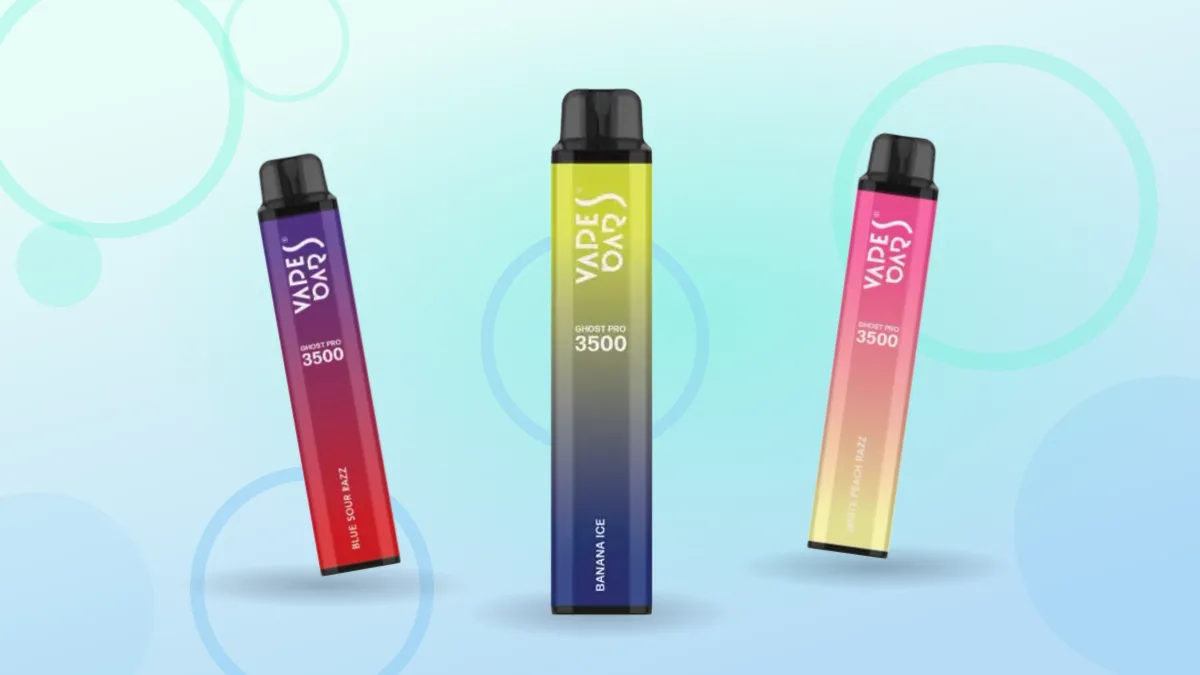
Every disposable vape box is covered in numbers. 1500mAh. 10ml. 20mg. 3500 puffs. Most people glance at them the way they glance at the nutrition label on a cereal box — acknowledged, not understood, immediately forgotten. Then the device dies on day three instead of day five, or the throat hit feels stronger than expected, or it runs dry before the puff counter should say it's empty, and suddenly those numbers matter a lot.
This article exists to translate the spec sheet on the Ghost Pro 3500 Puffs into something you can actually use. Not marketing language, not vague reassurance — the actual mechanics of what a 1500mAh battery does, what 10ml of e-liquid means in practical terms, what 20mg nicotine strength feels like on the throat, and how a 1.2 ohm mesh coil ties all three numbers together into a single 3500-puff experience. If you've ever wondered why one disposable outlasts another, or why the same "20mg" label can feel different from one flavour to the next, this is the explainer.
We'll go spec by spec, then show how they interact, because none of these numbers works in isolation. A bigger battery means nothing without enough e-liquid to justify it. A high nicotine strength means nothing if the coil can't atomize it properly. The Ghost Pro 3500 Puffs is built as a matched system — 1500mAh, 10ml, 20mg, 1.2 ohm, draw-activated, rated for 3500 puffs — and understanding why those five figures were chosen together tells you more about the device than any single number on its own.
What 1500mAh Actually Powers
Milliamp-hours (mAh) measure electrical charge capacity — essentially, how much energy the battery can store and discharge before it's empty. A 1500mAh battery is a genuinely substantial capacity for a disposable vape. Plenty of disposables on the market ship with 400-600mAh cells that are sized to just barely last as long as the e-liquid does, no more. The Ghost Pro 3500 Puffs runs meaningfully higher than that, and the reason comes down to the coil it has to feed.
Here's the mechanic most people never think about: a mesh coil, like the 1.2 ohm one in this device, has a larger surface area than the older single-strand coils used in early disposables. More surface area means more e-liquid contact per second, which means better flavour reproduction and denser vapor — but it also means the coil draws more current per puff to reach vaporizing temperature. A small battery paired with a mesh coil either underpowers the coil (weak, thin vapor, muted flavour) or drains itself long before the e-liquid runs out. The 1500mAh cell in the Ghost Pro 3500 Puffs is sized specifically to keep a 1.2 ohm mesh coil firing at consistent power from the first puff to somewhere near the last, rather than tapering off halfway through the device's life.
In real terms, 1500mAh is enough capacity to support roughly 3500 puffs of draw-activated firing without the battery being the limiting factor — which is the entire design point. On most well-built 1500mAh disposables, the e-liquid and the battery are engineered to run out at approximately the same time. That's not a coincidence; it's the whole reason the puff rating exists as a single number instead of two separate figures for "battery life" and "e-liquid life." When either runs out early, you get complaints about devices dying with liquid still in the tank, or the reverse — a dry hit from a coil that's still technically powered. A properly matched 1500mAh/10ml/1.2 ohm build is meant to avoid both failure modes.
Battery Life in Practical, Daily Terms
Numbers on a spec sheet are one thing; how they play out across your actual day is another. So let's translate 1500mAh into something closer to a personal timeline.
If you're a moderate user — say 150-200 puffs a day, which is a fairly typical pattern for someone using a disposable as their main nicotine source without chain-vaping — a full 1500mAh charge feeding a device rated for 3500 puffs works out to somewhere in the range of two to three weeks per device, assuming the e-liquid and battery are depleting in step with each other. Heavier users pulling 300+ puffs a day will see that window compress to under two weeks. Occasional or social users who might only take a few dozen puffs on a given day can stretch a single device across three to four weeks, though flavour intensity and vapor production on any e-liquid do tend to fade slightly as a device nears the very end of its charge, simply because a battery's discharge curve isn't perfectly flat all the way to zero.
This is one reason people who use Ghost Pro regularly often keep more than one flavour in rotation rather than running a single device down to the wire — switching between something like Watermelon Freeze from the Ice & Menthol range and a fruit-forward option like Peach Mango means neither device is ever pushed to its absolute limit in a single sitting, and battery performance stays closer to peak output throughout.
It's also worth being clear about what 1500mAh does not mean: it doesn't mean the device is rechargeable, and it doesn't mean puff count is infinitely extendable by "resting" the device between sessions the way you might extend a phone battery by closing background apps. A disposable's 1500mAh cell is a fixed, one-time capacity. Once it's spent — or once the 10ml of e-liquid is gone, whichever happens first — the device is finished. The number describes total lifetime capacity, not a renewable resource.
Why Mesh Coils and Bigger Batteries Go Together
The 1.2 ohm mesh coil deserves its own explanation because it's the component that actually determines how the other numbers feel in your hand and throat. Resistance, measured in ohms, describes how much a coil resists the flow of electrical current. Lower resistance coils (sub-ohm, under 1.0) draw more current and produce bigger clouds but burn through battery and e-liquid faster — that's the territory of high-wattage refillable mods, not disposables. Higher resistance coils sip current more conservatively but can undersaturate with e-liquid at high wattages, leading to weaker flavour.
1.2 ohm sits in a deliberately practical middle ground for a mesh-style coil in a disposable format. It's low enough resistance to let the mesh element heat evenly and fast — which matters because mesh coils, unlike the older cotton-wick-and-wire builds, distribute heat across a flat or cylindrical mesh surface rather than a single coiled wire. That even heating is why mesh-coil devices tend to produce more consistent flavour puff after puff, without the "burnt" hit you sometimes get from an overheated single point on an old-style coil. At the same time, 1.2 ohm doesn't demand so much current that a 1500mAh battery would be drained in a few hundred puffs.
The practical upshot: the mesh coil is why flavours in the Ghost Pro range — whether it's something crisp like Glacier Mint or something tart like Sour Apple — come through clearly and don't degrade in intensity as fast as they would on a cheaper coil design. And the 1.2 ohm rating specifically is why that flavour clarity doesn't come at the cost of battery longevity. Change either number in isolation — drop to a lower-resistance coil without upsizing the battery, or keep the coil but shrink the battery — and the 3500-puff rating stops being achievable.
What 10ml of E-Liquid Looks Like in Real Terms
10 millilitres doesn't mean much as an abstract unit, so here's a way to picture it: it's roughly two standard teaspoons of liquid, or about a third of a standard shot glass. That's the entire fuel supply for the device's rated lifespan — no cartridges to swap, no pods to refill, just one sealed 10ml reservoir that has to last from the first puff to the 3500th.
Compare that to older-generation disposables, many of which shipped with 2ml tanks rated for 300-600 puffs. 10ml is a substantial jump — more than triple what a lot of early disposable pods carried — and it's the main reason a single Ghost Pro device can plausibly reach a rating in the thousands of puffs rather than the hundreds. E-liquid volume and puff rating scale together in a fairly direct way: more liquid means more vaporization cycles before the tank runs dry, provided the coil and battery can keep pace, which is exactly the coordination discussed above.
10ml also affects something people don't think about until it happens: consistency near the end of the device's life. A smaller tank means the last dozen or so puffs are drawing from liquid sitting right at the coil, with very little reserve — which is part of why cheap, small-tank disposables often taste "off" or noticeably weaker in their final stretch. A 10ml reservoir has enough volume that the wicking material feeding the coil stays adequately saturated for longer, so flavour and vapor density hold up more evenly across the device's life rather than sharply dropping off in the last day of use.
The Puff Count Math: How 3500 Comes From 10ml and 1.2 Ohms
The 3500-puff rating isn't an arbitrary marketing number — it's a calculated output of the other specs, based on an average puff duration (industry testing typically uses draws in the 1-1.5 second range) and how much e-liquid a 1.2 ohm mesh coil vaporizes per draw at that duration. Divide 10ml by a typical microliter-per-puff consumption rate for a coil in this resistance range, and you land in the 3000-4000 puff territory — which is exactly where Ghost Pro's 3500-puff rating sits.
This is useful to know because it explains why puff ratings are always an average, not a guarantee, and why your personal count will drift from the number on the box in one direction or the other. Longer, deeper draws consume more e-liquid per puff than short, quick ones — so someone who takes long, cloud-chasing pulls might get closer to 2800-3000 puffs from the same device, while someone who takes short, frequent draws might stretch past 3500 toward 3800-4000. Neither person is doing it "wrong"; they're just interacting with a fixed 10ml supply at a different rate per draw, and the 3500 figure represents a realistic midpoint rather than a hard ceiling or floor.
It's also why the battery and e-liquid are engineered to deplete on a similar timeline. If the math didn't line up — if, say, the battery could theoretically support 5000 puffs' worth of coil-firing but the e-liquid ran out at 3500 — you'd be carrying dead weight in the form of unused battery capacity. Conversely, if the e-liquid could last 5000 puffs but the battery gave out at 3500, you'd be left with a device that still tastes fine but simply won't fire anymore. The 1500mAh/10ml/1.2 ohm combination is calibrated so that neither resource is the obvious bottleneck — both run out in the same general window, which is what allows a single number like "3500 puffs" to describe the device honestly.
What 20mg Nicotine Strength Actually Means
Nicotine strength is measured in milligrams per millilitre (mg/mL) of e-liquid. 20mg means every millilitre of the e-liquid inside the device contains 20 milligrams of nicotine — across the full 10ml reservoir, that's 200mg of total nicotine content sealed into the device at manufacture. That figure doesn't change based on flavour; every flavour across the Ghost Pro range, from the Ice & Menthol lineup to the Candy & Dessert options, is filled to the same 20mg strength, so switching flavours never means switching strength.
20mg sits at the higher end of the nicotine-strength spectrum commonly used in disposable vapes, and it's the strength most disposable brands in this category standardize on, precisely because it's calibrated for how disposables are actually used — draw-activated, no adjustable wattage, no way to compensate for a "weak" nicotine delivery by cranking up power the way you could on a refillable mod. Because the device's power output is fixed by the 1500mAh/1.2 ohm pairing rather than user-adjustable, the nicotine strength has to be dialed in at the liquid level to produce a satisfying, consistent hit puff after puff.
It's worth being precise about what 20mg is not. It's not a measurement of vapor volume, and it's not a measurement of flavour intensity — those are functions of the coil and the e-liquid's flavouring concentration, not the nicotine content. Two puffs of equal size and equal nicotine strength can still feel very different depending on the flavour profile, which is the subject of the next section. And because this is a nicotine product, it's restricted to buyers aged 21 and over, and general regulatory guidance around nicotine products in the UAE should always be checked against current official sources rather than assumed.
Throat Hit, Explained Properly
"Throat hit" is the sensation — a slight scratch, warmth, or peppery catch at the back of the throat — that nicotine and certain flavour compounds produce when inhaled. It's the vaping equivalent of the sensation you get from a strong spirit versus a mild one, and it's one of the most misunderstood specs on any vape's label because people conflate three separate things: nicotine strength, vapor temperature, and flavour chemistry.
Nicotine strength is the primary driver of throat hit at a chemical level — nicotine itself has a mildly irritating effect on the throat's mucous membranes, and at 20mg that effect is present but calibrated to be satisfying rather than harsh, assuming normal draw technique. But two other factors modulate how that 20mg actually feels in the moment. First, coil temperature: the 1.2 ohm mesh coil produces a moderate, even vapor temperature rather than the harsher, hotter draw you'd get from an underpowered coil straining to vaporize liquid it can't quite keep up with — an underpowered or failing coil often produces a harsher, hotter hit that gets misattributed to nicotine strength when it's really a hardware issue. Second, flavour chemistry: menthol and cooling agents (found across the Ice & Menthol range) create a sensory cooling effect that can either mask or exaggerate perceived throat hit depending on the person, while sour or tart flavour compounds — like those in a Blue Sour Razz or Sour Apple — can add their own sharp, tangy sensation that some users describe as "hitting harder" even though the nicotine content is identical to a smoother, creamier profile like Buba Blue or a dessert option like Gummies.
This is why the same 20mg strength can feel noticeably different across the Ghost Pro range depending on which flavour you're on. It's not inconsistency in manufacturing — every flavour is filled to the same 20mg/10ml specification — it's the interplay between a fixed nicotine level and thirty-two different flavour chemistries sitting on top of it. If you find a particular flavour feels unexpectedly strong or mild on the throat, that's very likely the flavour profile talking, not a different nicotine strength hiding under the same label.
Draw-Activation: The Fourth Variable Nobody Talks About
Every spec discussed so far assumes a consistent trigger mechanism, and that's where draw-activation comes in. The Ghost Pro 3500 Puffs has no button — it fires automatically when you draw on the mouthpiece, using an airflow sensor rather than a manual switch. This sounds like a minor convenience feature, but it actually interacts directly with battery life, puff count, and throat hit in ways worth understanding.
With a button-activated device, it's possible to hold the fire button without drawing air, or to draw air without holding the button in sync — both of which waste battery charge or e-liquid without producing a usable puff. Draw-activation removes that inefficiency entirely: the coil only fires when air is actually moving through the device, which means every milliamp-hour of that 1500mAh battery and every microlitre of that 10ml tank is being spent on an actual, inhaled puff rather than a misfire or an accidental hold. This is part of why the 1500mAh/10ml combination can reliably reach a 3500-puff rating — there's very little energy or liquid lost to activation error, because there's no manual activation step to get wrong.
Draw-activation also affects perceived throat hit through draw resistance — the physical effort of pulling air through the device. A tighter draw slows airflow across the coil, giving the e-liquid slightly more dwell time at the heating surface, which can make a hit feel warmer and slightly more pronounced. A looser, airier draw does the opposite. The Ghost Pro's draw-activated, button-free design is tuned toward a moderate, cigarette-like draw resistance — snug enough to trigger the sensor reliably and produce good vapor density, not so tight that you're fighting the device for airflow. If you're used to a looser sub-ohm mod draw, this will feel a bit more restricted at first; if you're coming from smoking or from other MTL (mouth-to-lung) style disposables, it should feel familiar within a puff or two.
Cost Per Puff: Turning the Price Tag Into a Number You Can Compare
Once you understand that 3500 puffs is the realistic output of the 1500mAh/10ml/1.2 ohm system, the pricing becomes a lot easier to evaluate on its own terms rather than just comparing sticker prices across brands.
A single Ghost Pro 3500 Puffs device costs 40 AED. Divide that by the 3500-puff rating and you get roughly 1.14 fils per puff — a fraction of a fil, in practice close to noise, but useful as a baseline. Buy by the box — 350 AED for 10 devices, working out to 35 AED per device — and the per-puff cost drops to roughly 1 fil per puff. That's a meaningful discount when you're buying in any real volume, which is exactly why the box pricing exists: for someone getting through even two or three devices a month, the box format pays for itself in convenience alone, on top of the per-unit saving.
It's also a useful way to think about "value" flavours versus flavours you might reach for less often. Since every flavour is priced identically — 40 AED single, 350 AED per box regardless of which of the 32 flavours you choose — there's no cost penalty for building a mixed box across categories. A box could reasonably include something crisp from Ice & Menthol like Red Apple Ice, a couple of options from the Berry Mix range like Blueberry Pomegranate, something tropical like Strawberry Kiwi, and a Signature Classic like Pink Lady, all at the same 35 AED-per-device rate. The spec sheet — 1500mAh, 10ml, 20mg, 3500 puffs — is identical across every flavour and every category, so the only variable in a mixed box is taste preference, not performance or price.
Where the Numbers Go Wrong: Real Failure Modes
Understanding the specs also means understanding what it looks like when something deviates from them — because disposables, like any manufactured product, occasionally do fall short of a spec sheet, and knowing the difference between normal variation and an actual fault is genuinely useful.
A device that dies well before anything close to 3500 puffs, with e-liquid clearly still visible in the tank, points to a battery-side issue rather than a liquid-side one — either a defective cell or a connection fault, not a nicotine or flavour problem. A device that produces dry, burnt-tasting hits despite having charge left is the opposite signature: e-liquid has run out, or the wicking material feeding the coil can't keep up, while battery capacity remains. Both are hardware or manufacturing outliers rather than the expected behaviour of a 1500mAh/10ml/1.2 ohm system, and neither is something you should just accept as "how disposables are." A well-matched spec sheet like this one is designed specifically so both failure modes are rare when a unit is functioning as intended.
Flavour fade — a gradual dulling of taste over the last few hundred puffs — is different from an outright fault. As discussed earlier, this is a normal characteristic of any disposable as the e-liquid reservoir gets low and the wicking material has less to draw from, and it tends to show up earlier on devices with smaller tanks than the 10ml capacity here. A slight softening in the final stretch of a device's life is expected; a device that tastes burnt or produces no vapor at all from puff one is not, and is worth flagging rather than working around.
Matching the Spec Sheet to Your Actual Habits
All of this technical detail is only useful if it helps you make a better decision, so here's how the numbers translate into who this device suits.
If you're a former or current smoker using a disposable as a consistent daily nicotine source, 20mg strength paired with a 3500-puff, 1500mAh device is built for exactly that use case — it's meant to deliver a satisfying, consistent hit across weeks of regular use without needing to think about charging, refilling, or swapping components. The draw-activated, no-button design mirrors the simplicity of a cigarette in terms of how little there is to operate, which is part of why this format has become the default entry point for people moving away from combustible tobacco.
If you're a social or occasional user, the same spec sheet works differently in your favour: a 3500-puff device used sparingly can last considerably longer in calendar time than the "few weeks" estimate given earlier, and the 10ml/1500mAh pairing means the device won't degrade in flavour or vapor quality just from sitting between uses — unlike, say, a refillable pod system where e-liquid can go stale over long idle periods. There's no meaningful "shelf clock" running against you between puffs.
If you're choosing based on flavour variety rather than nicotine habit, the good news is the spec sheet is a non-issue — 1500mAh, 10ml, 20mg, 1.2 ohm, and 3500 puffs are constant across all 32 flavours and all 6 categories, from Grape Collection to Tropical & Fruit, so you can pick based purely on taste (a Caribbean Crush one week, a Cherry Cola Ice the next) without worrying that you're trading away battery life or puff count for flavour.
Getting the Right Numbers Delivered
Understanding the spec sheet matters most at the point of actually getting product in hand, and Ghost Pro's ordering process is built to be as low-friction as the device itself. Orders and stock checks run entirely through WhatsApp at +971 56 165 2004 — message with the flavour (or flavours) and quantity you want, confirm availability, and the order is placed. There's no account to create and no online payment step; payment is cash on delivery, in AED only, when the order arrives.
Delivery timing varies by emirate, and it's worth knowing before you order if timing matters to you. Dubai orders typically arrive in around 2 hours. Sharjah and Ajman run about 4-6 hours. Abu Dhabi and Al Ain are around 6 hours. Ras Al Khaimah, Fujairah, and Umm Al Quwain run longer, in the 6-12 hour range, reflecting the greater distance from the fulfillment point. Standard delivery is 30 AED, and that fee is waived entirely on orders of 350 AED or more — which, tied back to the cost-per-puff math above, makes box-level ordering the more economical choice on two fronts at once: cheaper per device and free delivery.
Ghost Pro's broader track record backs up the idea that this spec sheet performs as described in practice, not just on paper: the brand holds a 9.9 out of 10 rating across 383 verified UAE customer reviews. That's a large enough sample, drawn from actual buyers across the emirates the brand serves, to be a meaningful signal that the 1500mAh/10ml/20mg/3500-puff combination holds up under real, repeated use rather than just sounding good on a spec sheet.
Putting It All Together
Step back and the five numbers form a single coherent system rather than five unrelated facts. The 1.2 ohm mesh coil sets a power demand that a 400mAh battery couldn't sustain evenly, so the battery is sized to 1500mAh. That battery capacity, combined with the coil's per-puff vaporization rate, is engineered to track the depletion of a 10ml e-liquid reservoir so neither runs out drastically ahead of the other. That 10ml reservoir, vaporized at a realistic average draw length, produces a puff count landing around 3500 — which is the number printed on the box not as a promise but as an honest average across normal use. Layered on top of the mechanical system, 20mg of nicotine per millilitre gives every one of those 3500 puffs a consistent strength, while draw-activation ensures that none of the battery or liquid is wasted on false triggers, and that the whole system responds to something as simple and familiar as inhaling.
None of these specs is impressive in isolation — plenty of devices on the market can point to a big battery number or a high puff count on its own. What actually determines whether a disposable performs well is whether the numbers were chosen to work together, and that's the real answer to what 1500mAh, 10ml, and 20mg mean: not three separate marketing points, but three interlocking parts of one system, whether you're reaching for a menthol-forward Blackcurrant Ice or something sweeter from the Candy & Dessert range. Read that way, the spec sheet stops being decoration and starts being useful — a way to predict, before you ever place an order, roughly how long a device will last, how it will feel, and whether it matches how you actually intend to use it.
Quick answers
Does a bigger battery like 1500mAh mean the device is rechargeable?+
No. The 1500mAh figure describes the total one-time energy capacity built into the Ghost Pro 3500 Puffs, not a rechargeable cell. It's sized to power the 1.2 ohm mesh coil consistently across the device's full rated life, but once that charge (or the 10ml of e-liquid, whichever runs out first) is spent, the device is finished and isn't designed to be topped up.
Why does 20mg nicotine strength feel stronger in some flavours than others?+
The nicotine strength is identical across all 32 flavours at 20mg per millilitre, so the difference you're noticing is flavour chemistry, not nicotine. Menthol and cooling notes (common in the Ice & Menthol range) can mute or alter perceived throat hit, while sour or tart profiles like Blue Sour Razz or Sour Apple can read as sharper, even though the underlying nicotine content is the same as a smoother flavour like Buba Blue.
Will I actually get 3500 puffs out of one device?+
3500 is a realistic average based on typical draw length interacting with the 10ml e-liquid reservoir and the 1.2 ohm coil, not a hard guarantee. Shorter, quicker draws tend to land above 3500; longer, deeper draws that pull more e-liquid per puff tend to land a bit below it. Either pattern is normal — it reflects how you draw, not a fault in the device.
Why does flavour or vapor seem to fade near the end of a device's life?+
As the 10ml reservoir gets low, there's less liquid available to saturate the wicking material feeding the coil, and battery output can taper slightly as the 1500mAh cell nears depletion. A modest softening of flavour and vapor density in the last stretch of a device's life is expected behaviour, not a defect — a device that tastes burnt or produces no vapor from the very first puff is a different, hardware-level issue.
What does draw-activated, no-button actually change about performance?+
Because the coil only fires when air is moving through the mouthpiece, there's no battery charge or e-liquid wasted on accidental button holds or mistimed firing, which is part of why the 1500mAh/10ml combination reliably reaches its 3500-puff rating. It also gives the device a moderate, cigarette-like draw resistance rather than the looser pull of a button-fired mod.
Is buying by the box actually a better deal given the puff-count math?+
Yes. A single device at 40 AED works out to roughly 1.14 fils per puff across its 3500-puff rating, while a box of 10 at 350 AED (35 AED per device) brings that down to roughly 1 fil per puff, plus delivery is free on an order of 350 AED or more — so the box format saves on both the per-unit price and the delivery fee.
Does the 1500mAh/10ml/20mg spec sheet differ between flavours or categories?+
No. Every flavour across all six categories — Ice & Menthol, Berry Mix, Tropical & Fruit, Grape Collection, Candy & Dessert, and Signature Classics — is built on the identical 1500mAh battery, 10ml e-liquid, 20mg nicotine strength, 1.2 ohm mesh coil, and 3500-puff rating. The only thing that changes between flavours is taste, not performance.
How do I check stock or place an order once I know which flavour I want?+
Message the WhatsApp order line at +971 56 165 2004 with the flavour and quantity you want to confirm stock and place the order. Payment is cash on delivery in AED only, with no account or online payment required, and delivery timing depends on your emirate — roughly 2 hours in Dubai, 4-6 hours in Sharjah and Ajman, around 6 hours in Abu Dhabi and Al Ain, and 6-12 hours in Ras Al Khaimah, Fujairah, and Umm Al Quwain.
Related guides
Customer Favourites: The Most Reordered Ghost Pro Flavours
Some Ghost Pro flavours get tried once and forgotten. Others quietly become the box people reorder every single time. Here's the pattern behind which ones earn that spot — and why.
Pink and Orange Vape: The Fizzy Citrus-Berry Flavour Explained
What a pink and orange vape tastes like, how Ghost Pro Pink Orange Fizz layers its flavours, and who it suits.
Single Device vs Box of 10: Working Out the Better Value
40 AED for a single Ghost Pro device or 35 AED per device in a box of 10 — the sticker prices are simple, but delivery fees and flavour confidence change which one actually saves you money. Here's the real math.
Nicotine Salts Explained: What 20mg Nicotine Strength Feels Like
Ever wondered what "20mg nicotine salt" actually means beyond the number on the box? Here's the real chemistry behind nic salts versus freebase, why 20mg became the UAE's default disposable strength, and an honest, sensory account of what the throat hit feels like.