
Disposable Vapes and Responsible Disposal: What UAE Buyers Should Know
By Ghost Pro UAE Team· Published 13 Aug 2026· Fact-checked by our order desk
A used disposable vape isn't just plastic — it's a lithium battery, a mesh coil, and residual nicotine e-liquid sealed into one unit. Here's a practical, no-nonsense look at handling spent Ghost Pro devices responsibly, from spotting when a device is truly finished to finding e-waste options across the UAE.
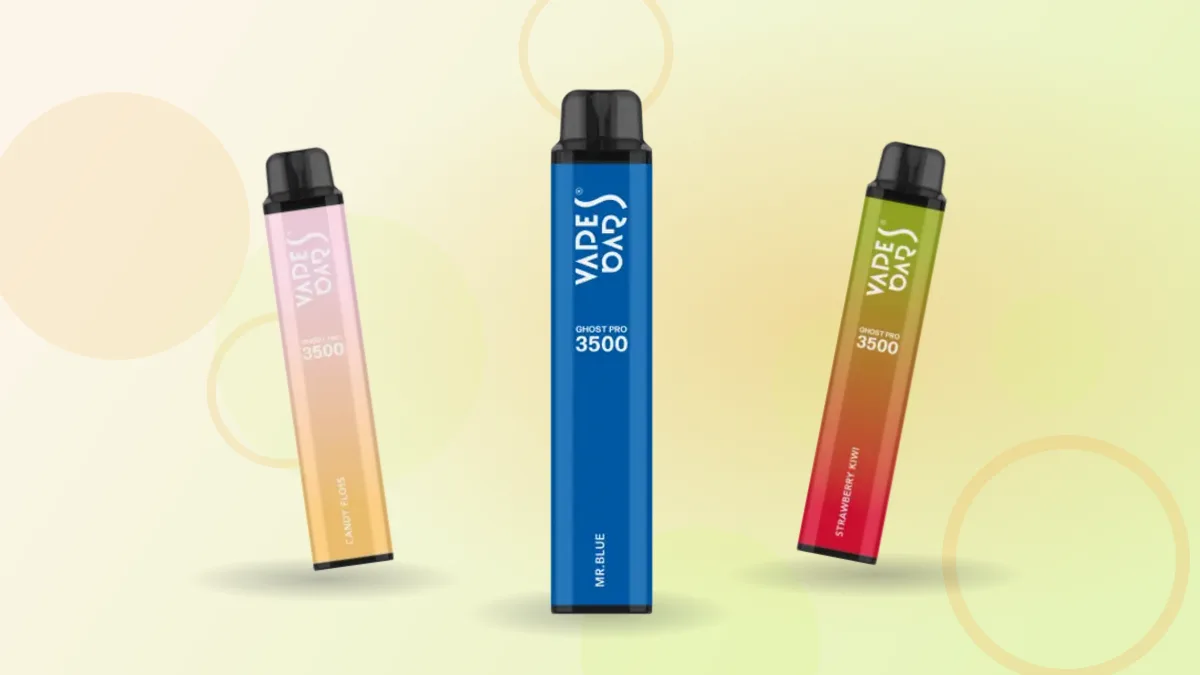
Every disposable vape has a lifecycle, and most buyers only ever think about the first half of it — the unboxing, the first pull, the flavour. The second half, the part where the device stops firing and ends up somewhere, gets almost no attention. That's understandable. A Ghost Pro 3500 Puffs device is built to be simple: draw-activated, no buttons, no refilling, no charging cable to lose. Simplicity is the whole appeal. But "simple to use" and "simple to throw away" aren't the same thing, and treating a dead disposable like an empty water bottle is where most of the avoidable waste problems start.
This article isn't about scaring anyone off disposables or pretending every UAE household is one dead vape away from an environmental incident. It's a practical look at what's actually inside these devices, why the regular household bin isn't the ideal endpoint for them, and what a sensible disposal routine looks like for someone who vapes regularly and wants to do it without being careless about the empty devices piling up in a kitchen drawer. We'll keep the specifics grounded — no invented regulations, no exaggerated hazard claims — and focus on what you can control as a buyer.
Why "Just Throw It Away" Doesn't Work for Disposable Vapes
A disposable vape isn't a single-material object. It's a small assembly of a lithium-ion battery, a metal heating coil, plastic and metal housing, a wicking element, and whatever e-liquid hasn't been vaporised yet. That combination is exactly why it doesn't belong in the same category as, say, a used tissue or a food wrapper. Regular household waste streams are designed around organic and inert materials — they're not built to safely handle small embedded batteries mixed in with everything else.
The issue isn't unique to any one brand or country. It's a structural feature of every disposable vape on the market, because every disposable vape needs a power source to heat the coil that turns e-liquid into vapour. A Ghost Pro device runs on a 1500mAh battery paired with a 1.2 ohm mesh coil, which is what gives it enough consistent power to reach its rated 3500 puffs per device. That battery doesn't disappear or become inert once the device stops producing vapour — it's still a small lithium cell sitting inside a plastic shell, and it stays that way until someone processes it properly.
This is worth stating plainly because it's easy to assume that because a product is inexpensive and disposable by design — 40 AED for one device, 350 AED for a box of ten — it must also be disposable in the "no second thought required" sense. Price point and disposal responsibility are unrelated. A 40 AED device and a far more expensive piece of electronics can contain the same basic battery chemistry, and both deserve the same baseline handling once they're done.
What's Actually Inside a Ghost Pro 3500 Puffs Device
It helps to actually picture the internals rather than treat the device as a sealed mystery. Understanding the concept (not literally opening one — more on why you shouldn't physically pry one apart later) helps explain every recommendation in this guide.
Each Ghost Pro device starts life pre-filled with 10ml of 20mg nicotine strength e-liquid, sealed into an internal tank or pod structure that feeds a wicking material sitting against the coil. The coil itself is a 1.2 ohm mesh design, chosen because mesh coils heat more evenly across a larger surface area than older single-wire coils, which is part of why the flavour stays consistent from the first draw to somewhere near the last. Powering all of this is the 1500mAh battery, a lithium-ion cell roughly comparable in chemistry to what's inside a set of wireless earbuds or a small power bank, just scaled to fit a device you can hold between two fingers.
Wrapping the whole thing together is the outer shell — usually a combination of plastic and a thin metal or plastic-coated body — plus the draw-activation sensor that fires the coil the moment you inhale, with no button required. There's no removable battery, no refill port, no charging port. It's built as one sealed unit from first use to last, which is exactly what makes it convenient in the hand and slightly more involved to dispose of correctly, because you can't simply pop the battery out the way you might with a remote control or a toy.
Knowing this internal layout matters for one specific reason: almost every disposal mistake people make with these devices comes from treating them like they're mostly plastic with a little bit of "electronics" tucked inside, when the reality is closer to the reverse. The battery and coil are small, but they're not incidental — they're the majority of what makes the device something other than ordinary trash.
The Lithium Battery Problem: Small Cell, Real Risk
Lithium-ion batteries have become the default power source for almost everything rechargeable, from phones to power tools to disposable vapes, because they pack a lot of energy into a small, light cell. That same energy density is the reason they need to be handled with some care once a device reaches end of life. A charged or partially charged lithium cell that gets crushed, punctured, or exposed to high heat can react — sometimes with sparking, sometimes with heat buildup — because the internal separator between the battery's positive and negative components is thin and mechanically simple.
This isn't a reason for alarm every time you finish a device. A Ghost Pro battery sitting quietly, drained after its 3500 puffs, in a drawer or a bag, isn't doing anything dangerous on its own. The risk profile changes specifically when a battery is compressed, torn open, or subjected to significant heat — which is exactly what happens inside a garbage truck's compactor, inside an incinerator, or inside a bin that gets compacted mechanically. This is the actual, specific reason lithium cells and household waste compaction don't mix well: it's not that a battery sitting in a bag is hazardous by itself, it's that the compaction and heat processes downstream of the bin are where a damaged cell becomes a genuine ignition source, and that risk multiplies when hundreds of batteries are compacted together in one truck or one facility.
For a single household vaping a device or two a week, this might sound like a remote concern. But disposable vapes are, by definition, consumed in volume — a device lasts through roughly 3500 puffs and then it's replaced, which for a daily user can mean multiple devices a month, every month. Multiply that across a market the size of the UAE's vaping population and you get a genuinely large number of small lithium cells entering the waste stream every single day. The individual risk from one device is low. The aggregate picture, at scale, is exactly why battery-specific handling exists as a category separate from general refuse in most well-run waste systems.
Residual Nicotine E-Liquid: What's Left Behind
The e-liquid question gets less attention than the battery question, but it's worth addressing directly. A fresh Ghost Pro device holds 10ml of 20mg nicotine e-liquid. By the time a device reaches its rated 3500 puffs, the overwhelming majority of that liquid has been vaporised and inhaled — that's the entire mechanism of how the product works. But "overwhelming majority" isn't "all of it." Wicking systems are engineered to be efficient, not perfectly exhaustive, and there's almost always a small residual amount of e-liquid left in the wick, the pod cavity, or coating the internal components when a device finally stops firing or gets set aside.
This residual liquid still contains nicotine, and nicotine-containing liquid is not something you want a child or a pet getting direct access to, even in small amounts. This isn't a scare tactic — it's the same basic logic that applies to leftover medication, cleaning concentrate, or any other household substance that's fine in its intended use case and not meant for incidental contact. Treating a "dead" device as fully inert liquid-wise is the wrong assumption. Treating it as still containing a small amount of active nicotine solution, sealed inside its housing, is the accurate one.
Practically, this doesn't require anything dramatic. It mostly means: don't deliberately break open a used device to see what's left inside, don't leave a pile of finished devices within easy reach of small children or pets, and understand that "empty" in marketing terms (3500 puffs delivered) doesn't mean "zero liquid content" in a literal sense. The device's sealed design already does most of the protective work here — the residual liquid isn't sloshing around loose, it's contained within the internal structure — but that containment is exactly why you shouldn't be the one to compromise it by prying the unit apart.
How to Know When Your Device Is Genuinely Finished
Part of disposing of devices sensibly is not disposing of them prematurely, which sounds like an odd thing to flag but comes up constantly. Because Ghost Pro devices are draw-activated with no display, no puff counter, and no button, there's no digital readout telling you exactly where you are in the 3500-puff lifecycle. That's a deliberate simplicity trade-off, not an oversight, but it means the signal that a device is finished is sensory rather than numerical.
The most reliable indicators are a fading or diminishing vapour production on each draw, a flavour that starts tasting thinner or slightly burnt compared to the rich, consistent notes you got early on, and a battery that no longer seems to fire as readily on the first draw of the day. Any one of these on its own might just be a slightly cold device or a very deep inhale; two or three together, consistently, usually means you're near the natural end of that device's 3500-puff rating. A faint burnt or "dry hit" taste specifically is usually the clearest signal — it typically means the wick has finally run short of liquid to vaporise, which lines up with the device approaching the end of its rated life rather than a fault.
Why does this matter for disposal? Because a device that still has meaningful life left in it is a device you're disposing of unnecessarily — more battery capacity thrown away, more e-liquid than expected still inside, and more devices cycling through your household than you actually need. Getting a genuine feel for when a device is truly finished, rather than tossing it the moment the flavour softens slightly, is itself a small but real waste-reduction habit, independent of anything downstream at the bin.
Never Puncture, Crush, or Burn a Used Disposable
This is worth its own section because it's the single most common mistake people make with any small lithium-battery device, not just vapes: assuming that because a device is "just plastic and a bit of metal," it's fine to squash it flat to save space, pry it open out of curiosity, or toss it into an outdoor fire pit or incinerator setup.
Don't do any of these things with a used Ghost Pro device, or any disposable vape. As covered above, the specific failure mode of a lithium-ion cell is triggered by exactly this kind of mechanical stress or heat exposure — puncturing the housing, crushing it underfoot or in a compactor, or applying direct flame. None of these are things you'd do deliberately in normal use, but they're exactly the kind of thing that happens by accident when a device is tossed loose into a bin bag that then gets compressed, or when someone decides to "make it smaller" before throwing it out, thinking that's the tidy thing to do.
The safest posture is the opposite of intervention: leave the device housing intact, don't attempt to disassemble it, don't try to drain remaining liquid yourself, and don't apply any force to the shell beyond normal handling. A sealed, undisturbed device — even a fully spent one — is low-risk sitting in a drawer or a collection bag. The risk profile only changes once someone (or some piece of waste-processing machinery) starts applying force or heat to it. Your job as the person disposing of it is simply to not be the source of that force, and to route it to an end point where it's handled by people and processes designed for it rather than a standard compactor truck.
A Practical Checklist for Preparing a Device for Disposal
Once you've confirmed a device is genuinely finished — fading vapour, flattening flavour, sluggish first draws — here's a straightforward routine that covers the bases without requiring anything technical:
First, don't disassemble it. Leave the outer housing sealed exactly as it left the box, just empty of most of its charge and liquid now. Second, keep it separate from general household rubbish rather than dropping it straight into the kitchen bin — a dedicated small container, jar, or bag specifically for spent devices works well and takes seconds to set up. Third, if you're storing several devices before taking them somewhere for proper handling, keep that collection point away from direct heat sources (don't leave the jar on a sunny windowsill or near a stove) and out of reach of small children, given the residual nicotine liquid discussed earlier. Fourth, when you have a reasonable batch collected, look into e-waste or battery-specific collection options in your area rather than defaulting to the regular bin — more on where to look for these in the next section. Fifth, transport them in a way that keeps the housings from being crushed together — a rigid container beats a soft bag if you're moving a larger batch, simply to avoid accidental compression in transit.
None of this is complicated or time-consuming once it's a habit. The friction is almost entirely in the first few times — after that, it's no different from having a designated spot for dead batteries from a TV remote, which most households already do without thinking about it.
Household Bin vs E-Waste Collection: Understanding the Difference
It's worth being clear-eyed about why "just use the regular bin" and "use an e-waste collection point" are genuinely different pathways, not just a stricter version of the same thing. Regular household waste collection is optimised for volume and speed — bins get compacted mechanically, trucks consolidate loads, and the entire system assumes the contents are inert or at least non-reactive under pressure and heat. That assumption holds for food waste, packaging, paper, and most plastics. It doesn't hold for lithium batteries, which is precisely the category a spent disposable vape falls into.
E-waste and battery collection streams, by contrast, are built around the opposite assumption: that everything arriving needs to be handled without compaction, sorted by material type, and processed by people or machinery equipped for batteries and electronics specifically. This is the same reason your household doesn't throw a dead laptop or a broken cordless drill straight into the weekly bin — the instinct to route electronics differently already exists for larger items, it just hasn't fully extended in most people's minds to small items like a disposable vape, largely because vapes are new enough as a product category that habits haven't fully caught up yet.
We're deliberately not going to cite specific UAE municipal rules, fines, or exact program names here, because regulations and programs vary by emirate and change over time, and asserting specifics we can't verify would do more harm than good. What's safe to say in general terms: nicotine products and their packaging are age-restricted and regulated in the UAE, and e-waste handling infrastructure — battery drop points, recycling initiatives, municipal collection programs — exists in various forms across the country and continues to expand. If you want the current, authoritative picture for your specific emirate, your municipality's official channels or waste management provider are the right place to check, not a vape brand's blog post.
Even without citing specific programs, there are practical, low-effort ways to find a legitimate e-waste or battery drop-off point wherever you are in the UAE. Many electronics retailers — the kind that sell phones, laptops, and small appliances — run in-store battery or e-waste collection bins as a standard part of doing business, precisely because they sell the devices these batteries come from. It costs a quick question at the counter to find out if a nearby electronics store has one.
Shopping malls and larger residential communities across Dubai, Abu Dhabi, Sharjah, and the other emirates increasingly host e-waste collection points or periodic collection drives, often positioned near entrances or customer service desks. If you live in a managed community or building with a facilities or community management team, asking them directly whether there's a battery or e-waste collection arrangement on-site is usually the fastest way to get a concrete, local answer rather than searching generically.
Your municipality's own website or customer service line is the most reliable source for anything close to official guidance, since waste management structures differ across Dubai, Abu Dhabi, Sharjah, Ajman, Ras Al Khaimah, Fujairah, and Umm Al Quwain, and change often enough that anything more specific written here could be outdated by the time you read it. The honest, useful takeaway is this: the infrastructure to dispose of small batteries and e-waste responsibly generally exists somewhere within reach in most UAE cities — it just usually takes one phone call, one search, or one question to a building manager to locate it, rather than being something that arrives at your doorstep unprompted.
Buying Smarter: How Box Purchases Reduce Waste Per Puff
Disposal habits matter, but so does the volume of devices you're generating in the first place, and this is one area where a small purchasing decision compounds into a real difference over months of regular use. Buying a box of 10 Ghost Pro devices for 350 AED works out to roughly 35 AED per device — noticeably less than the 40 AED single-device price — but the waste angle is just as relevant as the cost angle.
A single-device purchase typically means its own packaging, its own delivery trip, and its own handling footprint every time you need a refill. A box of 10 consolidates all of that into one packaging unit and one delivery, which directly reduces the per-device overhead in terms of both packaging material and delivery-related resources. If you're someone who goes through a device every few days, the difference between ten separate single-unit orders over a couple of months versus one box order is a meaningful reduction in cumulative packaging waste and transport trips, on top of the cost savings.
There's also a delivery-efficiency angle baked directly into how Ghost Pro's shipping works: standard delivery is 30 AED, but it's free once your order reaches 350 AED. That threshold isn't arbitrary from a logistics standpoint — consolidating orders into fewer, larger deliveries is more efficient per unit delivered, whether you're thinking about it in terms of cost, driver time, or fuel per device delivered. If you already know you'll get through a box within a reasonable window, ordering ahead in bulk rather than restocking one device at a time is a simple way to reduce your overall footprint without changing anything about how you actually use the product. It also means fewer separate disposal cycles to think about — one box lasting several weeks generates its outer packaging once, rather than ten separate unboxing moments spread across ten deliveries.
Storage and Handling Between Use and Disposal
The stretch of time between "device is finished" and "device gets properly disposed of" is where most bad habits quietly form, mostly because it's the least glamorous part of the whole process and nobody thinks about it until there's a small pile of spent devices sitting on a countertop. A few practical habits make this stretch painless rather than something to put off.
Keep a dedicated, closed container for spent devices rather than letting them accumulate loose in a drawer with other odds and ends. A simple lidded tin, an old jar, or even a resealable pouch does the job — the goal is just containment, so nothing gets crushed against something else and nothing is loosely accessible to a curious child or pet. Keep that container somewhere ordinary and out of direct heat — not on a sunny dashboard, not next to a stovetop, not in direct sun on a balcony ledge. Ordinary room-temperature storage, out of the way, is all that's needed; there's no special climate control required for a device sitting inert.
If you're someone who orders a box of 10 and works through it steadily, it's worth setting a rough rhythm: when you finish one device, it goes straight into the collection container rather than sitting loose "for later." That single small habit — treat the end of a device's life as a two-second task rather than something to defer — is the difference between an occasional straightforward drop-off of a small batch and a chaotic pile-up that eventually gets dumped into the regular bin out of sheer inconvenience. The goal is to make responsible handling the path of least resistance, not an extra chore you have to remember to do separately.
Common Disposal Mistakes UAE Vapers Make
A few mistakes come up repeatedly enough that they're worth naming directly, because avoiding them is mostly just a matter of awareness rather than effort.
The first is treating a "dead" device as fully safe to squeeze into an already-full bin bag, pressing down to make room. This is exactly the compaction scenario that raises battery risk, and it's an easy habit to fall into without thinking about it as anything other than tidying up. The second is opening or attempting to take apart a device out of curiosity about how it works — genuinely interesting from an engineering standpoint (a mesh coil and a wicking system packed into something the size of a large marker is a neat piece of design), but not something to satisfy by prying into a used unit, given the residual liquid and battery inside. The third is stockpiling dozens of spent devices indefinitely with no plan, which usually ends with someone eventually dumping the whole backlog into general waste in one go simply because it's the path of least resistance after ignoring the issue for months — better to build the small, regular habit described above than let it become a large, awkward problem later.
The fourth mistake is assuming that because a device is small, it's not worth the effort of separate handling compared to, say, a laptop battery or a power tool battery — but small-format lithium cells in aggregate are exactly the category that gets under-handled precisely because each individual item seems too minor to bother with. The fifth, more subtle mistake is not distinguishing between a device that still has meaningful puffs left and one that's genuinely spent, which as covered earlier leads to premature disposal and more devices cycling through a household than necessary. None of these require dramatic behaviour change to fix — they're mostly about building the pause-and-contain habit rather than defaulting to the nearest bin.
Building a Simple End-to-End Habit
Pulling all of this together, responsible disposal for a disposable vape user really comes down to a short, repeatable loop rather than a long list of rules to memorise. Use the device until it's genuinely finished — fading vapour, flattening flavour, sluggish draws — rather than swapping it out early. Don't take it apart, crush it, or expose it to heat once it's done. Drop it into a dedicated collection container rather than the regular kitchen bin, and keep that container somewhere ordinary, cool, and out of reach of children. Periodically route that collected batch to a proper e-waste or battery drop-off point — an electronics retailer, a community collection bin, or whatever option your building or municipality has in place — rather than letting it default into general waste.
On the purchasing side, buying in boxes of 10 rather than one-off singles reduces the packaging and delivery footprint per device, and it happens to be more cost-effective too, at roughly 35 AED per device in a 350 AED box versus 40 AED for a single unit. Ordering enough to clear the free-delivery threshold — an order of 350 AED or more — consolidates your deliveries further, which lines up neatly with the general principle that fewer, larger shipments beat many small ones from a resource-efficiency standpoint.
None of this requires becoming an expert in battery chemistry or waste policy. It requires treating a spent vape device the same basic way most people already treat a dead phone battery or a burnt-out power bank: not as ordinary trash, but as something small and electronic that deserves a slightly different path to its final destination. Whether the device that got you there was a cooling Glacier Mint from the Ice & Menthol lineup, a tart Sour Apple from the Signature Classics range, or a tropical Passion Kiwi Guava that disappeared faster than expected, the end-of-life routine is identical — and building it into a two-second habit is genuinely the whole solution.
Ordering Details, Age Restrictions, and Keeping Perspective
None of the disposal guidance above changes based on where or how you bought the device, but it's worth being clear about what you're actually working with when a Ghost Pro device reaches the end of its life, since that shapes expectations around residual content and battery condition. Every device — whether it's a fruity Strawberry Kiwi from the Tropical & Fruit range, a tart Blue Razz Lemon from the Berry Mix lineup, or a classic Mr. Blue from the Signature Classics collection — ships as an identical build: 10ml of 20mg nicotine e-liquid, a 1500mAh battery, a 1.2 ohm mesh coil, and a rated maximum of 3500 puffs. There's no variation in the internal hardware across the 32-flavour range, which means the disposal considerations in this guide apply uniformly regardless of which flavour you're finishing.
Ghost Pro devices are ordered through WhatsApp at +971 56 165 2004, with stock checks handled the same way, and payment is cash on delivery in AED only. Delivery timing varies by emirate — roughly 2 hours within Dubai, 4 to 6 hours for Sharjah and Ajman, around 6 hours for Abu Dhabi and Al Ain, and 6 to 12 hours for Ras Al Khaimah, Fujairah, and Umm Al Quwain. None of that logistics detail changes the disposal picture, but it's useful context for anyone deciding whether to place a smaller, more frequent order or consolidate into a single larger one for the packaging and delivery-efficiency reasons covered earlier. As with any nicotine product, purchase and use is restricted to buyers aged 21 and over, and the responsibility for correct disposal sits with the buyer, not the delivery process.
It's worth ending on a grounded note rather than an alarmist one. A single spent disposable vape, handled reasonably — not crushed, not burned, not pried open, kept away from small children given the residual nicotine liquid, and eventually routed to a proper collection point rather than the regular bin — is a low-effort, low-risk item to deal with responsibly. The issues described throughout this guide are about aggregate handling at scale, and about the specific failure modes that show up when good habits aren't in place, not about any single device being a ticking hazard sitting on your countertop.
Ghost Pro's own customer base reflects a large, active group of regular UAE users — the brand holds a 9.9/10 rating across 383 verified customer reviews, which points to a sizeable, repeat-purchasing community across Dubai, Abu Dhabi, Sharjah, Ajman, Ras Al Khaimah, Fujairah, Umm Al Quwain, and Al Ain. A community that size generates a genuinely large cumulative number of spent devices over time, which is exactly why individual habits — a dedicated collection container, a "don't crush it" rule, an occasional trip to an e-waste point — add up to something meaningful in aggregate, even though any single instance of the habit takes seconds. Treat the end of a device's life with the same small amount of care you'd give a dead phone battery, keep the volume-driven purchasing benefits of ordering by the box in mind, and the entire disposal question stops being something to worry about and becomes just another small, automatic part of using the product.
Quick answers
Can I just throw a used Ghost Pro disposable in my regular household bin?+
It's not the ideal option. A spent device still contains a lithium-ion battery and typically a small amount of residual nicotine e-liquid, neither of which regular household waste compaction is designed to handle safely. Where possible, keep spent devices separate and route them to an e-waste or battery collection point instead of the general bin.
Is there still e-liquid or nicotine left in a device after it hits 3500 puffs?+
Usually a small amount, yes. Each device starts with 10ml of 20mg nicotine e-liquid, and while the wicking system is efficient, it isn't perfectly exhaustive, so a residual trace typically remains in the wick or pod cavity even once the device stops producing satisfying vapour. Treat a finished device as still containing some active liquid, not as fully empty.
Why shouldn't I puncture, crush, or take apart a used vape battery?+
Lithium-ion cells like the 1500mAh battery inside a Ghost Pro device can react to mechanical stress or high heat, sometimes producing sparking or heat buildup. Puncturing, crushing, or burning a spent device is exactly the kind of stress that can trigger this, so the safest approach is to leave the housing intact and let it be processed through a proper e-waste channel.
Does buying a box of 10 instead of single devices actually reduce waste?+
It helps on two fronts. A box of 10 at 350 AED (about 35 AED per device, versus 40 AED for a single) consolidates packaging and delivery into one trip instead of ten, cutting cumulative packaging waste and transport trips for the same amount of vaping. Ordering 2+ boxes also qualifies for free delivery, reinforcing the same fewer-larger-shipments logic.
How do I know if my device is actually finished or still has puffs left?+
Since Ghost Pro devices are draw-activated with no puff counter, look for sensory cues: fading vapour production, a flavour that turns thinner or slightly burnt compared to earlier draws, and a battery that fires less readily on the first pull of the day. A few of these together usually mean you're near the end of the 3500-puff rating.
Are disposable vape batteries recyclable like other small electronics?+
The battery chemistry is broadly similar to other small lithium-ion electronics like earbuds or power banks, which is why the same general handling logic applies: route it to an e-waste or battery drop-off point rather than general waste. Electronics retailers, community collection bins, and municipal e-waste programs are the usual places to check, and availability varies by emirate and location.
What should I do if I've accumulated a large pile of used devices at once?+
Keep them in a rigid, closed container rather than a soft bag to avoid the housings being crushed together in transit, and take the whole batch to an e-waste or battery collection point in one trip. Building a habit of dropping each spent device into a dedicated container as you finish it, rather than letting a backlog build up, prevents this from becoming an occasional overwhelming task.
Does responsible disposal change anything about how the device performs while I'm still using it?+
No. Everything about flavour, vapour production, and the 1.2 ohm mesh coil's performance is unaffected by disposal habits — this guidance only applies once a device is genuinely spent. Whether you're finishing a Glacier Mint or a Passion Kiwi Guava, the device performs identically up to that point regardless of how you plan to dispose of it afterward.
Related guides
Ghost Pro Apple Pear Strawberry Review: Taste, Price & Where to Buy in Dubai (2026)
We put Ghost Pro Apple Pear Strawberry through a full review — taste, comparisons, and whether its balanced, low-sugar profile is worth ordering in the UAE.
Best Ghost Pro Tropical Flavours for Summer
A hot-weather buyer's guide to Ghost Pro's Tropical & Fruit lineup plus the honorary Watermelon Freeze — which flavours actually beat UAE summer heat, and how to match them to your day.
What Does Caribbean Crush Vape Taste Like? A Puff-by-Puff Walkthrough
A plain description of how Ghost Pro Caribbean Crush tastes from the first draw to the last, and which other flavours are similar.
Best Nostalgic Candy-Style Ghost Pro Flavours
Five Ghost Pro 3500 Puffs flavours built to taste like a childhood candy shop — from spun-sugar Candy Floss to sour-hit Blue Sour Razz — reviewed and compared for UAE vapers chasing nostalgia.