
Does Temperature Affect Vape Flavour? Hot vs Cold Weather Vaping
By Ghost Pro UAE Team· Published 11 Aug 2026· Fact-checked by our order desk
The same Ghost Pro 3500 Puffs device can taste completely different on a 46°C Dubai pavement versus in a chilled mall — here's the actual science of viscosity, vapour density, and cooling receptors behind it, and what UAE vapers can do about it.
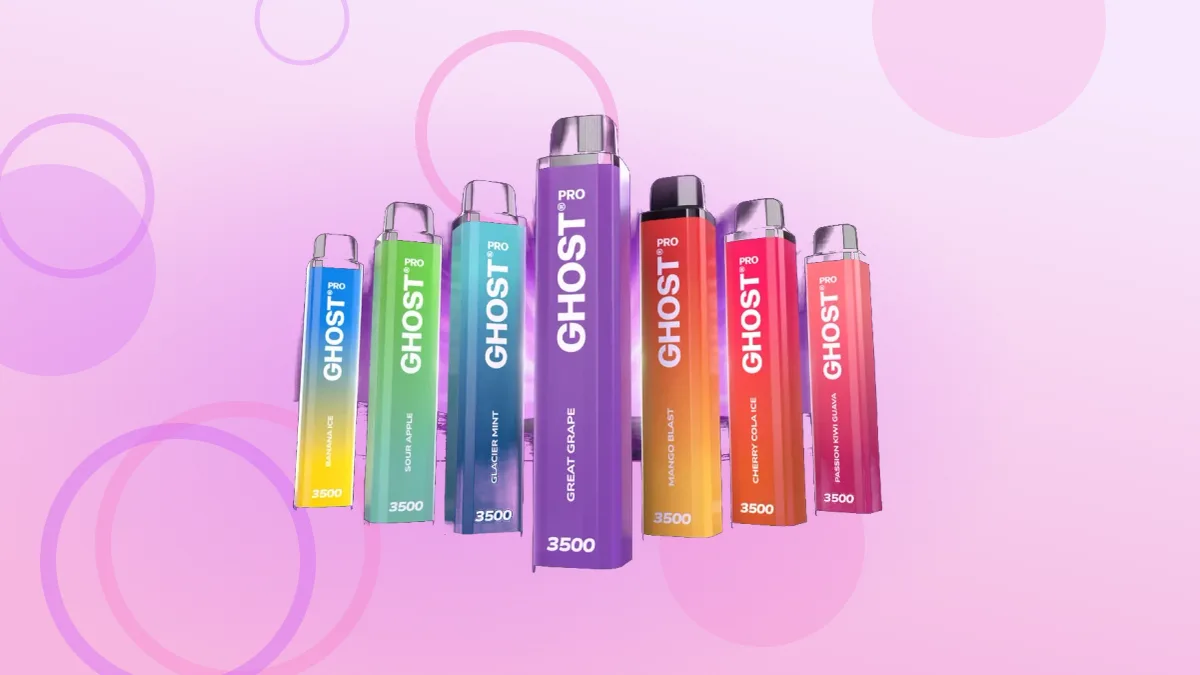
Why Your Vape Tastes Different at 46°C Than It Does at 21°C
Take the same Ghost Pro 3500 Puffs device, the same flavour, the same fresh coil — and vape it standing outside on a Dubai pavement in August, then again twenty minutes later in the air-conditioned chill of a Deira mall. Most regular vapers will tell you those two draws don't taste the same. The sweetness lands differently. The menthol either disappears or hits like a slap. The vapour itself looks and feels thicker in one place than the other.
This isn't in your head, and it isn't a faulty batch. Temperature genuinely changes three separate things that stack together to alter what you taste: the physical viscosity of the e-liquid sitting in the coil, the density and behaviour of the vapour once it leaves the device, and — most interestingly — how your own mouth and nose interpret flavour compounds and cooling sensations relative to the ambient temperature around you. In a country like the UAE, where outdoor temperatures regularly exceed 45°C in summer and nearly every indoor space is air-conditioned down to 20-22°C, this isn't a minor curiosity — it's a daily, lived experience for anyone who moves between a hot car, a cooled mall, a beach afternoon, and a chilled office in the space of a single day.
Think about the actual sequence a typical device goes through on an ordinary UAE Tuesday: a bag at home overnight, a hot car for the commute, a petrol station forecourt under direct sun, a 22°C office all afternoon, then a balcony still holding onto the day's heat come evening. Four or five distinct thermal environments, all on the same 10ml of e-liquid, all producing a subtly different draw. Understanding why these swings happen means you stop mistaking environmental drift for a bad batch or a faulty device.
This article breaks down the actual mechanics behind it — the chemistry of e-liquid under heat, why draw-activated mesh coil devices like the ones we sell behave the way they do in extreme conditions, why an Ice & Menthol flavour can feel completely different walking out of a mall versus standing at a petrol station at 2pm, and what you can actually do about it. Every Ghost Pro 3500 Puffs device runs the same hardware regardless of flavour — a 1500mAh battery driving a 1.2 ohm mesh coil, pre-filled with 10ml of 20mg nicotine e-liquid, draw-activated with no button, rated for up to 3500 puffs. That consistency in hardware is what makes it possible to isolate temperature as the variable changing your experience, rather than the device itself — no wattage dial, no preheat button, no firmware setting to blame.
The Chemistry Behind Flavour: What Heat Actually Does to E-Liquid
E-liquid is fundamentally a mixture of propylene glycol (PG) and vegetable glycerin (VG), carrying nicotine and flavouring compounds in suspension. Both PG and VG are viscosity-sensitive to temperature in a very predictable way: heat thins them, cold thickens them. This is basic fluid physics, the same reason honey pours faster out of a jar left in the sun than one left in a fridge. VG in particular is notably more viscous than PG at any given temperature, which is part of why VG-heavy liquids in general are more sensitive to thermal swings — a warm VG-leaning liquid loosens up dramatically compared to how sluggish it becomes once it cools.
That viscosity shift matters enormously inside a disposable vape because the entire mechanism depends on the coil's wicking material pulling liquid in at a specific rate to saturate the coil between draws. This is a capillary action process — the same principle that lets a paper towel pull water upward against gravity — and capillary flow rate is directly tied to fluid viscosity. A 1.2 ohm mesh coil is engineered to wick a particular viscosity range efficiently. When ambient heat — a device sitting in a hot bag or being drawn on repeatedly outdoors — thins the liquid, it wicks faster and more generously; draws can feel wetter, more saturated, sometimes slightly more intense on the front end because more liquid is being vaporised per puff. Conversely, when a device gets cold — left in an over-cooled car overnight, or carried through a freezing mall for hours — the liquid thickens and wicks more slowly, occasionally producing a drier, less flavour-forward draw right at the start until the coil catches up.
Draw-activated devices like these also have no preheat cycle the way some button-fired mods do. On a button device, a short preheat pulse can warm the coil before the main power kicks in, partially masking a cold-liquid start. A draw-activated mesh coil has no such buffer — the very first millisecond of airflow triggers power delivery, so whatever viscosity state the liquid is in at that instant is exactly what gets vaporised. That's why the very first draw after pulling a device out of a cold bag can feel noticeably different from the third or fourth, once the coil has worked through the initial thicker liquid at the wick surface.
On top of viscosity, individual flavour compounds have their own volatility profiles, meaning they turn into vapour at different rates for a given amount of heat. Some aromatic esters and aldehydes — the molecules responsible for fruity, candy, and dessert notes — need a certain amount of heat energy to vaporise off the coil efficiently; in fragrance terminology these behave like "base notes," slower to release and longer to persist. Others are highly volatile "top notes" that flash off almost instantly regardless of temperature, which is why a sharp citrus or mint accent can still cut through even on a cool draw while a rounder, creamier note lags behind. This is part of why a Candy Floss or Gummies vape (from our Candy & Dessert range) tastes noticeably richer when the ambient air is warm, while a crisper flavour barely changes with temperature at all. It's also why blended flavours can shift in balance rather than simply getting "stronger" or "weaker" — top notes stay roughly constant while base notes swell or fade, changing the character of the profile rather than just its intensity.
Vapour Density: Why a Puff Feels "Thicker" or "Thinner" Depending on Where You Are
Separate from what's happening chemically inside the device, there's a second layer: what happens to the vapour cloud the second it leaves the mouthpiece. Vapour density and visible cloud size are governed heavily by ambient humidity and temperature, not just by the device's output. When hot PG/VG vapour meets cooler surrounding air, it condenses into the visible aerosol droplets you actually see and taste — this is nucleation, the same basic process that makes your breath visible on a cold morning. The bigger the temperature gap between the vapour and the surrounding air, the faster and more completely that condensation happens, which is a large part of why cloud size and density shift so much between environments even when the device output hasn't changed at all.
In Dubai's superheated outdoor air, that temperature gap is small — the ambient air is already close to body temperature or hotter, so the vapour has little incentive to condense and disperses almost immediately. The visible cloud dissipates fast and can feel "thinner" even though the coil is producing the same aerosol volume. Walk into a cooled, more humid indoor environment — a mall, a shisha lounge, an air-conditioned car — and that same puff hangs in the air longer, looks denser, and gives your nose more time to pick up retronasal flavour before it disperses. Retronasal olfaction is the pathway through the back of your throat and nasal cavity that picks up aroma from something already in your mouth, as opposed to orthonasal smell, which is what happens when you sniff something directly. Most of what we call "flavour" is actually retronasal aroma rather than taste-bud taste, which is why extending the time vapour lingers near your palate has such an outsized effect on how rich a flavour seems, independent of anything chemical changing in the liquid itself.
This is a major, underrated reason indoor vaping often "tastes better": you're not getting more flavour compound, you're getting more time to perceive it. Many commercial air-conditioning systems in UAE malls and offices are also tuned to hold relative humidity in a comfortable mid-range, adding a layer of consistency indoors that outdoor air during peak summer can't match — you'll sometimes even notice a faint mist near mall entrance doors on the hottest days, condensation forming as the AC-cooled indoor air meets the wall of heat outside, the same nucleation principle at work on a larger scale.
This also explains a common complaint from UAE vapers that flavours taste "weaker" in peak summer despite nothing changing about the device or the juice. It's rarely the liquid — it's the environment eating the vapour before your palate has time to process it fully. It's also part of why vaping next to an open window or a strong breeze tends to mute flavour regardless of season: moving air disperses the aerosol even faster than still hot air does on its own.
The TRPM8 Effect: How Cooling Agents Trick Your Brain (and Why Heat Fights Back)
Here's where it gets genuinely interesting, and it's the core of why Ice & Menthol flavours behave so differently across environments. Menthol and modern synthetic cooling agents (the compounds responsible for that "icy" sensation in flavours like Glacier Mint, Banana Ice, Blackcurrant Ice, Cherry Cola Ice, Red Apple Ice, and Watermelon Freeze) don't actually lower the temperature of anything. They work by binding to a receptor called TRPM8 on your tongue and in your nasal passages — the same receptor that detects genuine cold, typically activating somewhere in the mildly cool range well below body temperature. Your brain interprets that signal as "cold" regardless of the actual temperature involved, which is exactly the same trick a peppermint sweet or a menthol chest rub relies on.
Because TRPM8 is a contrast-based receptor, its signal strength depends heavily on the baseline temperature of your mouth and the surrounding air. Standing outside in Dubai heat with an overheated, dehydrated palate, the receptor is already working from a very high baseline — the cooling agent still fires, but the perceptual "gap" it needs to create feels smaller relative to how hot everything else feels, so the ice sensation reads as duller or more fleeting. Step into a properly air-conditioned space at 21-22°C, where your mouth has already cooled somewhat, and that same cooling agent creates a much sharper contrast — the "icy hit" people associate with a good menthol vape.
There's a secondary twist: if the temperature drop is too extreme — going from 46°C pavement into an aggressively over-cooled mall entrance — some vapers report the ice hit feels almost harsh for the first few draws before it settles, because the contrast briefly overshoots what feels pleasant. The sweet spot for the cleanest, most balanced ice sensation tends to be a moderate transition rather than the most extreme swings UAE weather can produce.
Some synthetic cooling agents used across the vaping industry are chemically distinct from natural menthol and activate TRPM8 with a longer-lasting, less "sharp" sensation, or engage a related receptor, TRPA1, adding a slightly different tingling quality alongside the cold. Blends combining actual menthol with synthetic coolants tend to feel more resilient across temperature swings than a menthol-only formulation, since the two compounds don't fade at exactly the same rate as your palate's baseline shifts.
There's also a fatigue dimension separate from temperature entirely: TRPM8 can experience temporary desensitisation with repeated, rapid stimulation. Chain-vaping the same ice flavour for several minutes straight can make the cooling feel like it's fading purely from repetition — your receptors are momentarily "worn down," not the liquid running weaker. A minute or two of normal breathing and the sensation typically returns close to full strength.
Individual Palate Differences: Why the Person Next to You Might Not Notice Any of This
Everything above describes population-level tendencies, but temperature sensitivity in taste and smell varies meaningfully from person to person, which is why two people vaping the exact same device side by side can report genuinely different experiences. Genetic variation in TRPM8 and related receptors means some people are simply wired to register cooling sensations more intensely than others — the same broad phenomenon behind differences in how strongly people react to spicy food via the related TRPV1 pathway. Someone with a naturally sensitive cooling response might find an Ice & Menthol flavour plenty vivid even in outdoor heat, while someone less sensitive might need the full indoor contrast before noticing much cooling at all.
Nasal congestion is another variable that has nothing to do with ambient temperature but interacts with it heavily. Because most flavour perception runs through retronasal smell rather than the tongue, anything that reduces nasal airflow — a mild cold, seasonal congestion, or dry, dusty air — blunts flavour independently of the weather, and it's easy to misattribute a stuffy-nose day to "the heat killing the flavour." Age and long-term vaping history can similarly reduce olfactory receptor density over time, meaning a flavour profile may read as more subtle to a longtime user than a newcomer, regardless of the thermal environment either is standing in — worth remembering before judging a flavour on a single draw.
Dubai Outdoors in August: What 45°C+ Does to Your Device and Your Palate
Peak UAE summer is a genuine stress test for both the hardware and your own senses, with several things happening simultaneously when you're vaping outdoors in extreme heat.
First, the e-liquid inside the device thins as discussed, so the coil saturates faster and can occasionally deliver a slightly wetter, heavier draw than the same device would in cooler conditions. Second, your own hydration status matters more than people realise — taste perception is genuinely affected by a dry mouth, and outdoor UAE heat is dehydrating quickly even over short exposure. A dehydrated palate has less saliva to dissolve and carry flavour compounds to your taste receptors, which is a big part of why food and drinks (and vapes) can taste "flatter" on a scorching afternoon. Third, the ambient heat itself raises the baseline temperature of the vapour and your mouth together, which blunts the contrast that makes cooling agents and even some bright, tart notes (like the Berry Mix range's Blue Sour Razz or Blackcurrant Berry Squash) feel as vivid as they do in cooler settings.
Surface heat versus air temperature. Asphalt, paved courtyards, and parked-car exteriors in direct sun can run dramatically hotter than the air temperature reported anywhere — radiant heat bouncing off pale concrete or a dark car bonnet adds thermal load well beyond the ambient reading. A device carried in a trouser pocket on that kind of surface absorbs heat from below as well as the air around it and your own body heat besides, part of why a device can feel warm to the touch outdoors before you've even taken a single puff.
The net effect: don't assume something's wrong with a device or flavour just because it tastes muted on a brutal summer afternoon outdoors, whether that's waiting for a taxi outside a mall valet stand or standing at a petrol station forecourt at 2pm. It's very likely the environment, not the e-liquid, doing the work. Sipping water and giving your palate a minute to recover before judging a flavour is a genuinely useful habit in UAE summer conditions — and moving into even partial shade measurably lowers the radiant heat load on both you and the device, even when the air temperature reading stays exactly the same.
Walking Into an Air-Conditioned Mall: The Flavour "Reset" Effect
The flip side of the above is one of the most universally recognised experiences among UAE vapers: walking from blistering outdoor heat into an aggressively cooled mall, and having a flavour suddenly taste "switched on" again. This is the combination of several effects converging at once — your mouth cools and rehydrates slightly as you stop sweating, the ambient air is denser and more humid than outside, vapour hangs around longer giving your nose more contact time, and any cooling agents in the liquid suddenly have a proper contrast to work against.
The effect tends to be more pronounced the longer you were outside beforehand. A quick dash from an air-conditioned car straight into an air-conditioned mall barely registers a change, because your palate never had time to adjust to outdoor heat in the first place. But after ten or fifteen minutes outdoors — waiting for a ride, walking from a distant parking area — the contrast on stepping into a cooled interior is dramatically more noticeable, and some vapers describe the second or third indoor draw as tasting distinctly better than the first, since mouth-surface temperature doesn't drop instantly.
This is why Ice & Menthol flavours are often described as "mall flavours" by frequent UAE vapers — Glacier Mint or Watermelon Freeze genuinely come alive indoors in a way they may not on a sweltering street corner. But it's not just the ice range that benefits: sweeter, more delicate profiles in the Tropical & Fruit category — Peach Mango, Strawberry Kiwi, White Peach Razz — also read cleaner and more layered indoors, because the volatile top notes that give tropical fruit its brightness aren't being burned off by ambient heat before they reach your nose.
If you've ever bought a device, vaped it once outside, shrugged, then tried it again later in an office or car with the AC running and thought "wait, this is actually really good" — this is exactly why. Same 10ml of 20mg e-liquid, same 1.2 ohm mesh coil, completely different tasting conditions.
Why Some Flavours Perform Better Outdoors and Others Indoors
Once you understand the mechanics above, you can actually predict which flavour categories hold up better in which UAE conditions, rather than guessing.
Ice & Menthol (Banana Ice, Blackcurrant Ice, Cherry Cola Ice, Glacier Mint, Red Apple Ice, Watermelon Freeze) — these rely entirely on the TRPM8 contrast effect, so they perform best in genuinely cooled indoor environments and feel comparatively muted in extreme outdoor heat. Save these for the mall, the office, or the car once the AC has kicked in. Glacier Mint, being a more single-minded cooling profile without much fruit sweetness underneath, tends to show the widest swing of anything in the range.
Berry Mix (Berry Burst, Blackcurrant Berry Squash, Blueberry Pomegranate, Blue Razz Lemon, Blue Sour Razz, Buba Blue, Strawberry Grape) — tart, high-volatility notes that can read as sharp in extreme dry heat when your palate is dehydrated, but taste clean and vivid indoors where saliva and ambient moisture are more normal. The sourer entries, like Blue Sour Razz, are especially sensitive to palate hydration, since sour perception relies on saliva-mediated acid contact with your taste receptors.
Tropical & Fruit (Apple Pear Strawberry, Caribbean Crush, Passion Kiwi Guava, Peach Mango, Strawberry Kiwi, Strawberry Melon Chew, Strawberry Peach Citrus, Watermelon Bull, White Peach Razz) — the most weather-flexible category. Their sweetness and juiciness genuinely suit hot outdoor UAE conditions contextually (poolside, beach), and they still perform well indoors, just with slightly more nuance visible in cooler air.
Grape Collection (Grape Bull, Great Grape) — deep, rich profiles with lower-volatility top notes hold up consistently across temperature swings better than lighter fruit or ice flavours, making them a safer "any weather" choice.
Candy & Dessert (Candy Floss, Gummies) — sweet, rounder profiles that benefit from warmth to fully volatilise their flavour compounds, but can taste cloying when your palate is already heat-fatigued outdoors. Best enjoyed indoors or once temperatures have dropped in the evening.
Signature Classics (Mr. Blue, Mr. Red, Red Angel, Pink Lady, Pink Orange Fizz, Sour Apple) — a genuinely mixed bag spanning tart, sweet, and candy-adjacent notes, part of why this range tends to have at least one option that performs well no matter the setting.
Battery and Coil Behaviour in UAE Heat: What 1500mAh and 1.2Ω Mesh Actually Do When It's Hot
The 1500mAh battery and 1.2 ohm mesh coil in every Ghost Pro 3500 Puffs device are built to a consistent spec regardless of flavour, but like any lithium-ion and metal-alloy system, both respond to ambient temperature. Mesh coils have a resistance that shifts slightly with temperature — most alloys used in vape coils exhibit a positive temperature coefficient, meaning resistance climbs a little as the coil heats up. On a fixed-voltage device like these, this is a small, self-limiting effect you won't consciously notice puff to puff, but it's part of why chain-vaping heavily in already-hot conditions can occasionally produce a slightly harsher draw toward the end of a long session — the coil is running hotter than it would in cooler conditions before it even gets there.
There's a related quirk worth knowing about: moving a device quickly between cold and hot, humid air can occasionally cause brief internal condensation, the same phenomenon that fogs up glasses walking out of an air-conditioned building. A sudden thermal shock can leave a faint film of moisture inside the airpath, occasionally producing a slightly gurgly first pull that clears up almost immediately — a normal response to rapid temperature change, more noticeable the more extreme the transition.
Lithium-ion batteries, as a general rule across all consumer electronics, perform and age best within a moderate temperature range and are known to degrade faster with prolonged exposure to extreme heat. This is standard battery chemistry, not specific to any one product: extreme, sustained heat exposure isn't good for any lithium-ion battery's long-term performance, whether it's in a phone, a power bank, or a disposable vape.
Don't Leave It in the Car: Heat Damage That Changes Flavour Before You Even Notice
This deserves its own section because it's such a common UAE-specific habit. A car interior parked in direct summer sun can climb well past 70°C within an hour, even with a light-coloured exterior — sustained heat that does real, cumulative things to a sealed e-liquid device long before you ever pick it up again.
The mechanism is essentially a greenhouse effect: sunlight passes through the windscreen and heats the interior surfaces, and that heat can't escape as easily as the light that came in, so it builds up steadily. Cracking a window barely dents this in practice, since most of the heat gain comes from direct solar radiation hitting the dashboard and seats rather than simple air exchange — and a glovebox or centre console, shielded from direct sun but sealed inside the same superheated cabin, can hold heat just as long as an exposed dashboard.
Extended heat exposure can accelerate oxidation and slight degradation of flavour compounds in the e-liquid over time, meaning a device that's spent days baking on a dashboard or in a glovebox may taste noticeably flatter or "off" compared to one stored at room temperature, even if it was never dropped or damaged. Repeated heat-cool cycling — hot car by day, air-conditioned home by night, over and over — also isn't ideal for the internal wicking material or the battery's long-term health.
The simple practical rule: treat a disposable vape the way you'd treat a phone or a tube of sunscreen. Keep it out of direct sun and out of a hot glovebox. If you're buying in bulk — the 350 AED box of 10 works out to roughly 35 AED per device versus 40 AED buying single units — store the spares somewhere climate-stable at home rather than leaving a box in the car "for convenience." A box left in a hot boot for a week isn't a dramatic, instant failure, but it is a slow, compounding one, easy to avoid with a bit of planning around where you keep your spares.
Cool Season UAE: November to March Vaping and AC Overcorrection
It's easy to frame this whole topic as "hot outside versus cold AC inside," but the UAE's cooler season (roughly November through March, with pleasant evenings often sitting in the high teens to low twenties Celsius) adds a third condition worth understanding. Outdoor and indoor temperatures are often much closer together during these months, which narrows the contrast effects described earlier — ice flavours don't get the dramatic "reset" hit they do against 45°C summer heat, because the outdoor baseline is already fairly mild.
Interestingly, this is also when UAE indoor spaces sometimes overcorrect: malls, offices, and cars often keep the same aggressive AC settings year-round, meaning on a mild 24°C winter evening you can still walk into an interior cooled to 20°C, creating a milder but still noticeable version of the same contrast effect. Winter also brings a wider day-to-night swing than summer does — a warm midday and a genuinely cool evening can sit ten degrees or more apart, so the environment a device experiences over one winter day can actually vary more than during a summer day, when outdoor heat and indoor cooling are both fairly constant.
Cooler months also change where and how people vape socially — outdoor cafés, desert camps, and beach evenings all see far more use once the worst of the summer heat has passed, and these settings tend to sit in that moderate, TRPM8-friendly zone rather than either extreme. For most UAE-based vapers, winter is genuinely the season where flavour behaviour is most stable and predictable — a useful stretch to explore the Tropical & Fruit or Signature Classics ranges, since you'll get a more consistent read on the actual flavour without extreme weather muddying the comparison.
A Simple Way to Test This Yourself
If any of this sounds abstract, it's easy to verify with your own senses in under half an hour. Pick one device from the Ice & Menthol range, since that category shows the widest swing, and take a single unhurried draw in three settings on the same day: outdoors in direct heat, in a normally air-conditioned space, and somewhere unusually cold like right in front of an AC vent. Leave ten to fifteen minutes between draws so your palate genuinely adjusts each time, then compare how quickly the vapour disappears and how sharp the cooling feels against the sweetness underneath. Most people are surprised by just how large the gap is, given that nothing about the device or liquid actually changed.
Practical Tips to Keep Every Puff Consistent Regardless of the Thermometer
A few habits make a genuine difference if you want the most consistent flavour experience across the UAE's temperature extremes:
- Store devices at stable room temperature. Avoid direct sun, car dashboards, and anywhere near a stove or heater — a sunny windowsill can quietly bake a device for hours without it ever feeling obviously hot when you first pick it up.
- Give a device a few seconds' rest between draws in extreme heat. Chain-vaping when the ambient temperature is already high pushes coil temperature higher than it needs to be, producing a harsher, slightly burnt-edge taste.
- Rehydrate before judging a flavour outdoors. If a flavour tastes muted on a scorching afternoon, that's often your dehydrated palate talking rather than the e-liquid.
- Let a device settle for a minute after a sudden temperature change. This avoids mistaking a brief condensation-related hiccup for anything wrong with the device.
- Match flavour to environment when you can. Keep an Ice & Menthol option for AC-heavy stretches and something from Tropical & Fruit or Grape Collection for outdoor moments.
- Avoid carrying a device against your body in extreme heat. A trouser pocket against your leg adds body heat on top of ambient heat; a bag keeps it slightly cooler by comparison.
- Buy in a box rather than single units if you vape regularly. The 350 AED box of 10 works out cheaper per device than the 40 AED single price, and means you're not repeatedly heat-cycling one carried device.
- Don't judge a new flavour on a single extreme-weather draw. Try it first in a moderate, climate-controlled setting.
How All This Interacts With Puff Count and Device Lifespan
A question we get asked often: does heat change how many puffs you actually get out of a device rated for 3500 puffs? The honest answer is that the puff rating is a function of e-liquid volume (10ml) and coil efficiency, and that doesn't change because of ambient temperature. What can change is how a user responds to a temperature-muted flavour — taking longer, harder draws to compensate for a flavour that seems weaker in extreme heat burns through the coil and liquid faster than normal, gentler puffing would. Heat doesn't reduce the rated puff count on paper, but heat-driven overcompensation can mean you reach the end of a device's usable life sooner than expected if you're unconsciously pulling harder to chase flavour the environment is dulling.
There's also a flooding risk specifically in heat: because thinned, warm liquid wicks faster and more generously, an unusually long, hard draw can occasionally over-saturate the mesh faster than it can vaporise, producing a brief gurgle or a wetter mouthful of vapour than usual. This isn't a sign of a faulty device — it clears within a draw or two — but shorter, more measured draws serve you better in extreme heat.
The inverse holds in cold conditions: a device that's been sitting somewhere cool, with thicker, slower-wicking liquid, might give one or two slightly weaker opening draws before settling into its normal rhythm — not a fault, just the coil catching up. A gentler first draw after a cold environment is generally enough to avoid this entirely.
Ordering Smart for the Season: Delivery, Payment and Stock in UAE Heat
None of this changes how straightforward it is to actually get a device in your hands. Every order goes through WhatsApp at +971 56 165 2004 — message to check current flavour stock or place an order directly. Payment is cash on delivery in AED only; there's no card or online payment option, which keeps the process simple and avoids any need to enter payment details online.
Delivery is 30 AED standard, and free once your order reaches 350 AED — a good incentive to stock up on a mix of categories in one order rather than reordering repeatedly. Delivery speed varies by emirate: Dubai typically sees devices arrive in around 2 hours, Sharjah and Ajman in roughly 4-6 hours, Abu Dhabi and Al Ain around 6 hours, and Ras Al Khaimah, Fujairah, and Umm Al Quwain in the 6-12 hour range.
Given everything covered above about heat degrading flavour and battery condition over time, it's worth being mindful of how a fresh delivery is stored the moment it arrives — don't let a summer delivery sit in a hot car boot for the rest of the day. Ghost Pro currently holds a 9.9/10 rating across 383 verified UAE customer reviews, and a consistent flavour experience — helped along by sensible storage and an understanding of how your environment shapes what you taste — is a real part of that. As with any nicotine product, Ghost Pro 3500 Puffs is intended strictly for buyers aged 21 and over, and nicotine products remain age-restricted and regulated in the UAE — always check current official guidance if you have questions about local rules.
Quick answers
Does hot weather actually change the flavour of a disposable vape, or does it just feel that way?+
It's real, not imagined. Heat thins the PG/VG e-liquid so it wicks faster onto the coil, changes how densely vapour forms and lingers in the air, and raises your mouth's baseline temperature, which blunts the contrast that cooling agents like menthol rely on. None of that requires anything to be wrong with the device or the liquid itself.
Why does an Ice & Menthol flavour taste stronger in a mall than outside in Dubai summer?+
Cooling agents work by triggering the TRPM8 receptor, which detects cold by contrast against your current mouth and air temperature. In 45°C+ heat that contrast is small, so the ice sensation reads as duller. Step into a 21-22°C air-conditioned space and the same cooling compound creates a much sharper, more noticeable contrast, which is why Ice & Menthol flavours are often called 'mall flavours' by regular UAE vapers.
Is it bad to leave a Ghost Pro 3500 Puffs device in a hot car?+
Yes, it's worth avoiding. A car interior in direct UAE summer sun can climb well past 70°C within an hour. Sustained heat like that can accelerate oxidation of flavour compounds in the e-liquid, leaving a device tasting flatter or 'off,' and repeated heat-cool cycling isn't good for the wicking material or battery long-term. Treat it like a phone or sunscreen: keep it out of direct sun and hot gloveboxes.
Which Ghost Pro flavours hold up best in extreme outdoor heat?+
Tropical & Fruit flavours (like Peach Mango, Strawberry Kiwi, and Watermelon Bull) and the Grape Collection (Grape Bull, Great Grape) tend to be the most weather-flexible, since their aroma compounds are less dependent on a cooling contrast effect. Ice & Menthol and Candy & Dessert flavours generally perform best once you're indoors in air conditioning.
Does temperature affect how many puffs I get out of a 3500-puff device?+
The rated puff count is based on e-liquid volume (10ml) and coil efficiency, so ambient temperature doesn't change the number on paper. However, if extreme heat is muting a flavour and you compensate with longer or harder draws, you'll burn through the coil and liquid faster, effectively shortening the device's usable life in practice.
Why does my vape taste different first thing after taking it out of a cold car versus a hot one?+
Liquid viscosity is temperature-dependent. Cold liquid is thicker and wicks more slowly, sometimes giving one or two weaker opening draws until the coil catches up. Warm liquid is thinner and wicks faster, sometimes producing a wetter, more intense first draw. Since these are draw-activated devices with no preheat cycle, whatever state the liquid is in the instant you draw is exactly what gets vaporised.
How do I order Ghost Pro 3500 Puffs in the UAE and what does delivery look like?+
Orders go through WhatsApp at +971 56 165 2004 to check flavour stock or place an order. Payment is cash on delivery in AED only. Standard delivery is 30 AED, free on orders of 350 AED or more, with typical arrival around 2 hours in Dubai, 4-6 hours in Sharjah and Ajman, around 6 hours in Abu Dhabi and Al Ain, and 6-12 hours in Ras Al Khaimah, Fujairah, and Umm Al Quwain.
Related guides
Ghost Pro Blueberry Pomegranate Review: Taste, Price & Where to Buy in Dubai (2026)
We tried Ghost Pro Blueberry Pomegranate properly — the tangy, tart-forward taste, who it's built for, and how it holds up against the rest of the range.
Al Ain Vape Delivery Guide: Ordering Near the Oman Border
Al Ain sits apart from the UAE's coastal delivery corridor — here's exactly how Ghost Pro 3500 Puffs delivery works for the oasis city, from realistic timing to which flavours suit the desert heat.
Sour Apple Vape: How Sour Is Ghost Pro Sour Apple?
A practical sourness guide to Ghost Pro Sour Apple, with a ladder against the gentler apple flavours in the range.
What Is Ghost Pro? A Plain-English Explainer
Ghost Pro in plain English: what the product is, what it isn't, who makes it and how it differs from other things called Ghost.