
How to Choose the Right Nicotine Strength for You
By Ghost Pro UAE Team· Published 10 Aug 2026· Fact-checked by our order desk
Nicotine strength decides whether a disposable vape actually works for you, not flavour. Here's how to read the mg numbers, translate them from cigarettes or your last device, and understand why Ghost Pro fixes every flavour at 20mg.
Why Nicotine Strength Is the First Decision, Not an Afterthought
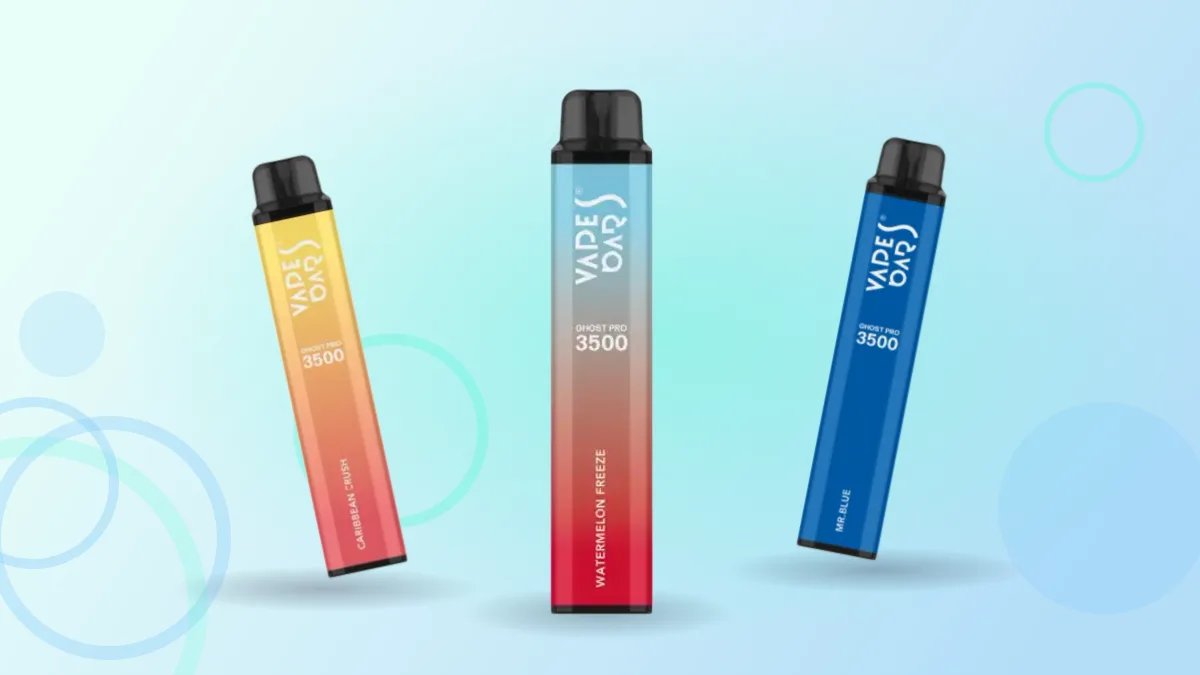
Most people shopping for a disposable vape start with flavour. They scroll a menu of names like Watermelon Freeze or Caribbean Crush, pick whatever sounds good that day, and only notice the nicotine strength printed in small type on the side of the box once the device is already in their hand. That's backwards, and it's the single most common reason people end up disappointed with a vape that, on paper, should have suited them fine.
Nicotine strength determines how a device actually feels to use — whether it satisfies a craving in two draws or twenty, whether the back of your throat registers a hit or nothing at all, and whether you find yourself chain-puffing out of frustration or setting the thing down after a few pulls because it did its job. Flavour affects whether you enjoy the experience. Strength affects whether the device works for you at all. Get the flavour wrong and you switch to a different one next box. Get the strength badly wrong and you either burn through a device in a day because it's under-delivering, or you feel overwhelmed and give up on vaping as an option entirely.
This matters more in the UAE disposable market than people expect, because most first-time buyers here are arriving from one of two very different starting points: traditional cigarettes, or a previous vape or disposable with a strength label that used a completely different scale. Someone coming from a pack of Marlboro Reds a day has different needs than someone stepping down from an old 50mg salt-nic pod system, and both of them are different again from someone who has never used a nicotine product before and is starting fresh. A single flavour range that ignored this would be guessing at what half its customers actually need.
Ghost Pro 3500 Puffs sidesteps a lot of this guesswork by fixing every one of its 32 flavours — across Ice & Menthol, Berry Mix, Tropical & Fruit, Grape Collection, Candy & Dessert, and Signature Classics — at a single nicotine strength: 20mg, in a 10ml pre-filled tank, powered by a 1500mAh battery through a 1.2 ohm mesh coil, rated for up to 3500 puffs per device. There's no 3mg version and no 50mg version to accidentally grab instead. That simplifies the shopping decision, but it also means the useful question isn't "which strength should I buy from this brand" — it's "does 20mg actually match what I need, and if I'm coming from somewhere else, what should I expect when I switch." That's what this guide is for.
How Nicotine Strength Actually Works in a Disposable Vape
Nicotine strength on a vape is expressed in milligrams per millilitre (mg/mL, often just written as "mg") of the e-liquid inside the device. It tells you the concentration of nicotine in the liquid, not the total amount you'll get from the whole device — that second number depends on tank size too, which is why a 10ml tank and a 2ml tank at the same mg strength contain very different total quantities of nicotine.
Two liquid formulations dominate the disposable and pod market: freebase nicotine and nicotine salts. Freebase is the older style, generally used at lower concentrations (think 3mg, 6mg, 12mg) because at higher strengths it produces a harsh, peppery throat hit that most users find unpleasant. Nicotine salts are chemically modified to feel smoother at the back of the throat even at much higher concentrations, which is precisely why the modern disposable category — including 20mg, 35mg, and 50mg devices — became viable in the first place. Without salt nicotine, a 20mg draw-activated disposable would be a rough, coughing experience for most adult users; with it, 20mg reads as a firm but manageable throat hit that a lot of switchers describe as landing close to a cigarette.
The other variable that shapes how strength feels in practice is the coil and battery behind it. A 1.2 ohm mesh coil, like the one in every Ghost Pro device, produces a warmer, denser vapour per draw than the higher-resistance coils used in some older pod systems. Mesh coils heat e-liquid more evenly across a larger surface area than the single-wire coils they replaced, which means more of the nicotine and flavour compound in each draw actually vaporises rather than sitting unheated in the wick. Combined with 1500mAh of battery capacity keeping voltage stable across the device's life, that means the nicotine delivery per puff stays reasonably consistent from the first draw to somewhere near the 3500th — not something you can say about cheaper, underpowered coils that taper off in output as the battery drains.
Draw activation itself plays a smaller but real role too. Because there's no button to press, the vapour only comes when you actually pull air through the mouthpiece, and the intensity of your draw — a slow, gentle pull versus a hard, fast one — changes how much vapour, and therefore how much nicotine, reaches you per puff. Two people using the identical 20mg device can have noticeably different experiences of "how strong it feels" purely based on draw technique, which is worth knowing before you conclude a strength is wrong for you when the issue might just be how you're pulling on it.
What 20mg Actually Means Inside a 10ml Tank
Numbers on their own don't mean much without context, so here's how 20mg sits relative to the wider strength range you'll see across the vape market in the UAE and beyond.
Nicotine strengths in disposables and pod systems commonly run from 0mg (no nicotine at all, for flavour-only use) up to around 50mg, with common stops at 3mg, 6mg, 12mg, 20mg, 35mg, and 50mg depending on the brand and device format. Anything below about 12mg tends to be aimed at very light or occasional users, or people deliberately stepping down toward quitting nicotine altogether. The 20mg to 35mg band is where the bulk of the adult switcher market sits — strong enough to satisfy someone used to a daily cigarette habit, without tipping into the harshness or head-rush territory that very high concentrations can produce for anyone without an established tolerance. Above 35mg, and especially at 50mg, devices are generally aimed at heavy, established nicotine users who need a lot of nicotine delivered fast and are less sensitive to throat hit.
At 20mg concentration in a 10ml tank, a Ghost Pro device holds 200mg of total nicotine across its full life — roughly the nicotine content equivalent of one to two packs of cigarettes, spread across up to 3500 puffs rather than delivered in the concentrated bursts of a smoked cigarette. That "spread out" delivery is one of the biggest adjustments for anyone switching from smoking: the nicotine arrives more gradually across a much longer session, so it doesn't produce the same sharp, immediate effect that a cigarette does, even though the total amount available over the device's life is comparable to what a moderate smoker would get through in a similar stretch of time.
It's worth being precise about what 20mg doesn't tell you: it's a concentration, not a guarantee of experience. A slow, light user pulling short, gentle draws on a 20mg device across a full day will have a very different overall nicotine intake than someone chain-vaping hard, fast pulls in the same period. The 3500-puff rating assumes an average one-to-two-second draw; puff style is the biggest single variable in how far any given strength actually goes for you.
Coming From Cigarettes: Matching Your Habit to a Strength
If cigarettes are your reference point, the most useful proxy is how many you smoke in a typical day, because that roughly maps to how much nicotine your body is used to receiving and how strong a vape needs to be to feel like an adequate substitute.
Light or occasional smokers — a handful of cigarettes a day, or purely social smoking — often find that 20mg feels comparable to, or even slightly stronger than, what they're used to, particularly in the first few days of switching before their draw technique adjusts. This group is well served by a 20mg device precisely because it isn't the maximum strength on the market; it satisfies without requiring the intensity a heavier smoker would need.
Pack-a-day smokers, the largest single group of people switching to disposables, generally land closest to the sweet spot 20mg is designed for. It's strong enough to register a real hit, deliver a noticeable throat sensation on the draw, and satisfy the kind of craving a full cigarette used to handle — while remaining smooth enough, thanks to salt nicotine formulation and the mesh coil's efficient vapour production, to draw on repeatedly through a day without becoming harsh or overwhelming.
Heavier smokers — a pack and a half to two packs a day, or anyone who has smoked for decades with a well-established tolerance — may find that a single 20mg device doesn't fully replicate the nicotine load they're used to, especially early on. For this group, the honest answer isn't a different Ghost Pro strength (since the range doesn't offer one), it's usage pattern: drawing more frequently, taking slightly longer pulls, and giving the switch a full week or two before judging whether 20mg is enough, since perceived "enoughness" tends to shift as your body recalibrates away from combustion nicotine delivery. Many heavy smokers report that a strength which initially feels slightly under-powered becomes perfectly adequate once they're a week or two removed from cigarettes and no longer comparing every draw directly to a fresh one.
There's no universal formula here, and anyone with specific health considerations around nicotine intake should rely on guidance from a healthcare professional rather than a shopping guide. But as a general rule of thumb for adult smokers deciding whether a 20mg disposable is a reasonable starting point: if you're smoking somewhere in the range of half a pack to a pack and a half a day, 20mg is very likely to land in the right neighbourhood, with the first three to five days being the real test period rather than the first hour.
Coming From a Different Vape or Disposable: Translating the Old Numbers
If your reference point is a previous vape rather than cigarettes, the comparison gets a little more literal — but only if you know which scale your old device used, because the market isn't consistent about it.
Older refillable vape kits and early e-liquid bottles almost always used freebase nicotine measured in the low single digits: 0mg, 3mg, 6mg, sometimes up to 12mg or 18mg for the strongest freebase mixes. If that's what you're used to, jumping straight to a 20mg salt-nic disposable is a bigger leap than the numbers alone suggest, because you're changing two things at once — a higher concentration, and a nicotine formulation that hits the throat very differently. Someone used to 6mg freebase who tries 20mg salt nic for the first time is likely to notice a much stronger throat sensation on the first few draws than the number "20" might suggest if they're mentally comparing it to "6." That's not a fault in the device; it's the salt formulation doing exactly what it's designed to do — deliver more nicotine more smoothly than freebase ever could at that concentration.
Some older disposable brands, particularly ones popular a few years ago, labelled strength as a percentage instead of mg — 2%, 3%, or 5% nicotine by volume being common. As a rough conversion, 2% is approximately 20mg/mL and 5% is approximately 50mg/mL, since percentage-by-volume and mg/mL are just two different ways of expressing the same concentration (multiply the percentage by 10 to get an approximate mg/mL figure). So someone coming from a "2%" disposable is, in practical terms, already used to something very close to Ghost Pro's 20mg — the switch should feel familiar almost immediately. Someone coming from a "5%" or 50mg device, on the other hand, is stepping down meaningfully, and should expect to need more frequent draws to get the same total nicotine across a day, at least until their body adjusts to the lower baseline.
If your last device didn't list a strength at all, or you genuinely don't remember, the safest approach is to treat 20mg as a moderate, middle-of-the-road strength and judge by feel over your first two or three devices rather than trying to reverse-engineer an exact match. It sits comfortably below the highest-strength disposables on the market and comfortably above entry-level freebase liquids, which is exactly why it's the strength most switcher-focused disposable brands, including Ghost Pro, have converged on as their default.
Why Ghost Pro Standardises the Entire Range at 20mg
It would be easy to assume a single fixed strength across 32 flavours is just a manufacturing simplification, but there's a genuine product logic to it, and it's worth understanding if you're deciding whether that fixed strength works for you.
First, 20mg represents the point on the strength curve where the widest range of switchers — light smokers, pack-a-day smokers, and people coming from mid-strength previous vapes — can all reasonably expect a satisfying result without the device being either too weak to bother with or so strong it becomes unpleasant. Brands that sell every strength from 0mg to 50mg across every flavour are optimising for maximum shelf coverage, but they're also asking every customer to make a guess, and a wrong guess means an unsatisfying device that either gets abandoned half-used or chain-vaped to compensate — neither outcome good for the customer or the brand's reputation for that flavour. Fixing at one well-chosen strength removes that guesswork from the flavour decision entirely, so choosing between Blue Sour Razz and Peach Mango is a question about taste, not a strength gamble.
Second, consistency across the range means the nicotine experience doesn't compete with the flavour experience for your attention. If Glacier Mint were sold at 12mg and Red Angel at 35mg, comparing the two flavours would always be confounded by comparing two different nicotine intensities at the same time — you'd never really know if you preferred one flavour over the other, or just preferred its strength. With every flavour from Ice & Menthol through Signature Classics locked at the same 20mg, switching flavours is a clean taste comparison, and switching for variety doesn't come with a hidden strength surprise.
Third, from a practical inventory and ordering standpoint — especially relevant when ordering via WhatsApp rather than browsing a filterable online store — a single strength across the board means there's one less variable to specify when placing an order. You tell the team which flavours and how many, not which flavour-strength combination, which matters when orders are being confirmed quickly over chat and dispatched same-day across Dubai, Sharjah, Ajman, Abu Dhabi, Al Ain, Ras Al Khaimah, Fujairah, and Umm Al Quwain.
None of that means 20mg is objectively "correct" for every single person — the earlier sections exist precisely because it isn't automatically right for someone coming from a 50mg device or someone who has never used nicotine before. But it does mean the choice was made deliberately, aimed at the centre of the switcher market rather than picked arbitrarily, and it's why the practical question for most buyers isn't "which strength" but "how do I adjust my usage if 20mg runs slightly hot or slightly cool for my particular starting point."
Signs Your Strength Is Too High for You
Even at a moderate 20mg, a strength can feel like too much for a specific individual, particularly someone with a lighter smoking history, no prior nicotine use, or unusually sensitive throat response. The signs are fairly consistent and worth knowing so you can adjust technique rather than assuming the device is faulty.
A harsh, scratchy, or coughing-inducing sensation on the throat with every draw — not just the first one or two while your palate adjusts, but persisting after several draws — is the clearest sign the strength is landing harder than is comfortable for you. A mild throat catch on the first draw of a new device is normal even at moderate strengths; a cough on draw ten is not.
Feeling light-headed, slightly dizzy, or unusually jittery shortly after a session, especially if you're new to nicotine products altogether or have taken a long break from them, is a sign your intake is outpacing what your body is currently calibrated for. This is more likely to show up in the first device or two after starting, or after a gap of days or weeks without any nicotine, than it is after weeks of regular, moderate use — because tolerance shifts fairly quickly with regular exposure.
A short, sharp headache after a session, or a lingering unpleasant aftertaste that feels more chemical than flavour-driven, can also point to a strength that's simply more than your current tolerance calls for, particularly if it happens consistently rather than as a one-off.
If any of this sounds familiar, the fix isn't necessarily a different device — it's usage pattern. Slower, gentler draws pull less vapour per puff than hard, fast ones, which directly reduces nicotine intake per draw. Spacing draws further apart, taking two or three puffs instead of five or six in a sitting, and giving yourself longer gaps between sessions all reduce total intake without needing to change strength at all. For most people who find 20mg initially strong, easing into it over the first device rather than drawing on it exactly like a cigarette resolves the issue within a day or two.
Signs Your Strength Might Be Too Low for You
The opposite problem shows up just as often, particularly among heavier or longer-term smokers switching over, and it tends to manifest as a pattern of behaviour rather than a single physical sensation.
The clearest sign is chain-puffing — reaching for the device again and again in quick succession, far more often than you'd have reached for a cigarette, because each individual draw isn't quite landing the way you expect it to. If you notice you're pulling on the device nearly continuously rather than in the more spaced-out pattern typical of cigarette breaks, that's usually a sign the per-draw nicotine delivery feels lighter than what your habit calls for, and you're compensating with volume.
A persistent, nagging sense that "something's missing" even shortly after a session — not a craving exactly, but a feeling that the session didn't fully register — is another common report from heavier smokers in their first few days on a new strength.
Burning through a device unusually fast relative to the 3500-puff rating is a related but distinct signal. If you're finishing what should be several days' worth of puffs in a single day or two, it's worth asking whether you're drawing more heavily and more often than the device's rated puff count assumes, which is often a strength-seeking behaviour rather than genuinely needing that much vapour volume.
Here again, the honest answer for Ghost Pro customers isn't a different strength option, since the range doesn't include one — it's recognising that the adjustment period for heavier smokers switching to any vaping strength typically runs several days to two weeks, and that judging a strength on day one, when your body and habits are still calibrated to cigarette-level nicotine delivery, tends to undersell what a moderate, steady strength like 20mg actually provides once the adjustment settles.
How Puff Count, Battery, and Coil Interact With Strength
It's easy to think about nicotine strength as an isolated number, but in a disposable device it interacts directly with the hardware specs, and understanding that interaction helps explain why the same 20mg strength can feel different across the life of a single device.
The 1500mAh battery is sized specifically to sustain the 1.2 ohm mesh coil at consistent output across the device's full rated 3500 puffs. Early in a device's life, with the battery at full charge, draws tend to feel slightly warmer and more vapour-dense; as the battery approaches the end of its charge, output can taper slightly, which some users perceive as the "strength" fading even though the underlying 20mg e-liquid concentration hasn't changed at all — what's changed is how much of it is being vaporised per draw. This is a normal characteristic of battery-powered mesh coil devices generally, not a fault, and it's one reason a device's last hundred or so puffs can feel a little softer than its first hundred.
The mesh coil itself matters more than people expect. Mesh coils distribute heat across a wider, flatter surface than older single-coil designs, which means more consistent vaporisation of the e-liquid sitting against it — including the nicotine salts suspended in it. A poorly designed coil can leave nicotine-rich liquid unheated in the wick, effectively wasting strength that never reaches you; a well-designed 1.2 ohm mesh coil converts more of what's in the tank into inhalable vapour, which is part of why 20mg in this format can feel like a fuller, more complete hit than the same 20mg number might deliver through cheaper hardware.
Draw-activation ties back into this directly. Because there's no button and no fixed vapour output setting, every draw's intensity is entirely up to you, which means the coil and battery are responding to your specific pull rather than delivering a fixed dose regardless of technique. A firm, sustained draw pulls more air across the coil, vaporises more liquid, and delivers more nicotine in that single puff than a light, quick sip does. This is genuinely useful information if you're trying to fine-tune how a 20mg device feels: rather than assuming the strength itself needs to change, changing your draw — longer and firmer if you want more per puff, shorter and gentler if you want less — is the most direct lever available on a fixed-strength device.
How Flavour Category Changes the Way Strength Feels
Nicotine strength is a fixed chemical fact, but how strong a puff feels is genuinely shaped by what else is happening on your palate at the same time — and across Ghost Pro's six flavour categories, that perceived intensity varies more than you'd expect for a range that's identical at 20mg throughout.
The Ice & Menthol category — Banana Ice, Blackcurrant Ice, Cherry Cola Ice, Glacier Mint, Red Apple Ice, and Watermelon Freeze — layers a cooling sensation over the throat hit that many users find amplifies the sense of a strong draw, since the cooling and the nicotine throat hit register in a similar physical space. Glacier Mint, the most menthol-forward of the six, tends to feel like the most intense pull in the entire range even though its nicotine content is identical to every other flavour in the lineup; the coolness reads as strength even when the chemistry underneath is the same 20mg as a fruit flavour three names over.
The Berry Mix line — Berry Burst, Blackcurrant Berry Squash, Blueberry Pomegranate, Blue Razz Lemon, Blue Sour Razz, Buba Blue, and Strawberry Grape — sits at the opposite end of that perception spectrum. The sweetness and tartness in flavours like Blue Sour Razz or Blackcurrant Berry Squash tend to soften the sensation of throat hit, making the same 20mg feel rounder and less sharp, which is part of why this category is a common landing spot for people who found their first Ice & Menthol pick a bit more intense than expected.
Tropical & Fruit, the largest category at nine flavours — Apple Pear Strawberry, Caribbean Crush, Passion Kiwi Guava, Peach Mango, Strawberry Kiwi, Strawberry Melon Chew, Strawberry Peach Citrus, Watermelon Bull, and White Peach Razz — generally delivers the most "neutral" read on strength: no cooling to amplify it, no sharp tartness to mask it, just a clean fruit flavour riding over the throat hit as-is. If you're trying to judge, as objectively as possible, whether 20mg genuinely suits you as a baseline, a Tropical & Fruit pick like Peach Mango or Strawberry Kiwi is a fairer test than starting with Glacier Mint at one extreme or a very sweet Candy & Dessert pick at the other.
The two-flavour Grape Collection, Grape Bull and Great Grape, and the two-flavour Candy & Dessert line, Candy Floss and Gummies, both lean into rich, sweet profiles that — much like Berry Mix — tend to round off the edges of the throat hit, making them popular choices for anyone who wants the full 20mg nicotine content without much sharpness at all.
Signature Classics — Mr. Blue, Mr. Red, Red Angel, Pink Lady, Pink Orange Fizz, and Sour Apple — is the most varied category in how it reads against strength, since it spans everything from the tartness of Sour Apple to the softer, rounder profiles of Pink Lady, and it's worth trying more than one from this group before drawing conclusions about how the category as a whole compares to the rest of the range.
None of this changes the actual nicotine delivery — every device across all 32 flavours is the same 10ml tank at 20mg — but knowing that flavour genuinely shapes perceived strength can save you from wrongly concluding a strength is inconsistent across a brand's range when what's actually varying is the sensory context around an identical dose.
Buying Smart in the UAE: Pricing, Delivery, and How Ordering Works
Once you've settled on 20mg as your working strength — whether by choice or because the switcher-friendly logic in the sections above matches your situation — the practical side of buying in the UAE is straightforward, and worth understanding upfront so there are no surprises at the door.
Every flavour across the full 32-flavour range is priced identically: 40 AED for a single device, or 350 AED for a box of ten, which works out to roughly 35 AED per device when bought by the box — a meaningful saving if you already know which flavours, or mix of flavours, you go through regularly. Because pricing doesn't vary by flavour, deciding between something like Watermelon Bull and Strawberry Peach Citrus is a pure taste decision with no cost trade-off either way, and mixing flavours within a box costs nothing extra.
Delivery is priced at 30 AED standard, and becomes free automatically once an order reaches 350 AED — a threshold worth keeping in mind if you're ordering for yourself and a friend or two, since combining orders to hit that threshold is an easy way to avoid the delivery charge entirely. Delivery speed varies by emirate: Dubai typically sees delivery in around 2 hours, Sharjah and Ajman in roughly 4 to 6 hours, Abu Dhabi and Al Ain in around 6 hours, and Ras Al Khaimah, Fujairah, and Umm Al Quwain in roughly 6 to 12 hours. Payment is cash on delivery in AED only — there's no card payment or online payment option, so having the correct cash amount ready when the delivery arrives keeps the handover quick.
Ordering itself runs entirely through WhatsApp at +971 56 165 2004, rather than a conventional online checkout — you message the number directly to check current flavour stock and place an order, which also makes it easy to ask specific questions (including about nicotine strength, delivery timing to your specific area, or which flavours are in stock that day) before committing to an order. This WhatsApp-first model is also why the earlier point about a single fixed 20mg strength matters practically: there's no strength dropdown to select or get wrong mid-chat, so an order is simply a flavour list and a quantity.
Ghost Pro's aggregate standing across the UAE market — a 9.9 out of 10 rating drawn from 383 verified customer reviews — reflects the broader combination of product consistency (the same 1500mAh battery, 1.2 ohm mesh coil, and 3500-puff rating in every device, at the same 20mg across all 32 flavours) and delivery reliability across the emirates listed above, rather than any single flavour or one-off promotion. For a first-time buyer specifically trying to judge whether 20mg will work before committing to a full box, buying a single 40 AED device in a flavour from the more "neutral" Tropical & Fruit category first, then moving to a box of ten once you've confirmed the strength and found a couple of favourite flavours, is a sensible low-risk way to test the water.
A Practical First-Week Plan for Switching to 20mg
Reading about strength in the abstract only goes so far; here's a concrete way to approach your first week with a 20mg disposable if you're coming from either cigarettes or a different vape strength, designed to give you an honest read on whether 20mg suits you rather than a snap judgment from the first hour.
On day one, resist the urge to draw on the device exactly the way you'd smoke a cigarette — hard, fast, frequent pulls. Start with slower, gentler draws spaced further apart than habit might suggest, and pay attention to throat sensation rather than trying to chase a specific "hit" you remember from a different product. If you're testing a Tropical & Fruit flavour like Peach Mango or Strawberry Melon Chew first, as suggested above, you'll get the clearest read on the strength itself without menthol or heavy sweetness distorting the picture.
Across days two and three, start adjusting draw length and frequency based on what day one told you. If throat sensation felt sharp or you noticed light-headedness, deliberately shorten and space out your draws further. If you found yourself reaching for the device constantly and never quite feeling satisfied, lengthen your draws slightly and don't worry about a higher puff count than day one — the 3500-puff rating is generous enough to absorb a few days of finding your rhythm.
By days four through seven, most switchers — smokers and prior vapers alike — report that their sense of the strength has stabilised into something that either clearly works or clearly doesn't, because the body's calibration to a new nicotine delivery pattern typically settles within this window. This is the point at which it's fair to judge 20mg on its merits rather than against first-day expectations shaped by whatever you used before.
If by the end of a full device — ideally paired with trying a second flavour from a different category, since as covered above flavour genuinely changes perceived intensity — 20mg still feels clearly wrong in either direction, that's useful information about your personal nicotine needs generally, worth factoring into any future nicotine product decision, vape or otherwise, rather than something specific to this brand or range.
Age Restrictions and Responsible Use
Everything in this guide assumes an adult buyer who is legally permitted to purchase and use nicotine products. Ghost Pro 3500 Puffs, like all nicotine vape products, is restricted to buyers aged 21 and over, and that restriction applies regardless of nicotine strength — there's no lower-strength exception for younger buyers, because the product category as a whole is age-gated rather than any individual concentration within it.
Nicotine products are age-restricted and regulated in the UAE, as they are in most markets globally, and specific rules can and do evolve. Rather than citing exact statutes or import regulations here, which risks going stale or being imprecise, the sensible approach for any buyer is to check current official guidance if you have questions about the regulatory status of a specific product, and to treat age verification requirements as non-negotiable regardless of what a particular delivery or order process does or doesn't explicitly ask for.
Responsible use also means being honest with yourself about the signs covered earlier in this guide — genuine light-headedness, persistent headaches, or a strength that consistently feels wrong for your body isn't something to push through by habit. Nicotine products, including disposable vapes at any strength, are intended for existing adult nicotine users, and if you're new to nicotine altogether, starting cautiously and paying close attention to how your body responds matters more than optimising for a specific mg number from the outset.
Bringing It All Together
Twenty milligrams isn't a marketing number — it's a specific, deliberate point on a strength spectrum that runs from 0mg flavour-only liquids up toward 50mg heavy-duty concentrations, chosen because it's where the largest share of people switching from cigarettes, or stepping across from a mid-strength previous vape, land comfortably without the device being either underwhelming or overwhelming.
If you're coming from roughly half a pack to a pack and a half of cigarettes a day, or from an older device in the 2% / 20mg neighbourhood, 20mg across Ghost Pro's full range — from Ice & Menthol through Signature Classics — should feel like a reasonably direct match once you've given it a few days to settle in. If you're coming from a much lighter freebase liquid or have never used nicotine before, expect the first device or two to feel stronger than the number suggests, and adjust with slower, more spaced-out draws rather than assuming something's wrong. If you're stepping down from a 50mg device, expect to need more frequent draws initially, and trust that the adjustment period is normal rather than a sign 20mg won't work for you long-term.
Whichever category you fall into, the 1500mAh battery, 1.2 ohm mesh coil, and 3500-puff rating stay constant across every one of the 32 flavours, at the same 40 AED single-device or 350 AED box-of-ten pricing, with the same delivery windows across Dubai, Sharjah, Ajman, Abu Dhabi, Al Ain, Ras Al Khaimah, Fujairah, and Umm Al Quwain, and the same cash-on-delivery terms. The only real variable left once you understand where 20mg sits for you is which flavour to start with — and with six distinct categories to choose from, that's the more enjoyable decision to be making. When you're ready, WhatsApp +971 56 165 2004 to check current stock and place an order.
Quick answers
Why does Ghost Pro only offer 20mg instead of multiple nicotine strengths?+
20mg sits in the middle of the common disposable vape strength range (roughly 0mg to 50mg) and matches what the largest group of switchers — people going from a pack-a-day cigarette habit or a mid-strength previous vape — typically need. Fixing one strength across all 32 flavours also means choosing a flavour is a pure taste decision, with no risk of accidentally grabbing the wrong strength.
I'm a light or occasional smoker — will 20mg feel too strong?+
It can feel a bit firmer than you're used to for the first device or two, especially on the first few draws. Slower, gentler, more spaced-out draws reduce how much nicotine you get per puff without changing the device itself, and most light smokers find 20mg settles into a comfortable range within a few days.
My old vape was labelled 5% or 50mg — is 20mg going to feel weak?+
Likely somewhat lighter than what you're used to, since 5% is roughly 50mg/mL. Expect to draw a little more often in your first few days, take slightly longer pulls, and give it a week before judging — most people adjust their baseline expectation faster than they expect.
How does nicotine strength relate to the 3500-puff rating?+
The 3500-puff rating assumes an average draw length. Longer, harder draws vaporise more e-liquid per puff and will use up the device faster than that average; shorter, gentler draws stretch it further. Strength (20mg) is the concentration in the liquid — how many puffs you actually get depends on your draw style, not the mg number.
Does flavour choice affect how strong the nicotine hit feels?+
Yes, noticeably, even though every flavour is chemically identical at 20mg. Ice & Menthol flavours like Glacier Mint or Watermelon Freeze tend to feel more intense because the cooling sensation layers over the throat hit. Berry Mix, Grape Collection, and Candy & Dessert flavours tend to feel rounder and softer. Tropical & Fruit flavours give the most neutral read if you're trying to judge the strength itself.
How do I know if 20mg is too high or too low for me?+
Too high often shows up as a harsh or coughing throat sensation past the first draw, light-headedness, or a short headache after a session. Too low tends to show up as chain-puffing, a lingering sense that a session didn't quite land, or burning through a device much faster than its puff rating suggests. Both usually resolve with adjusted draw length and pacing rather than needing a different product.
Can I mix flavours within a box of 10 if I'm still figuring out my preferred strength perception?+
Yes — pricing is identical across all 32 flavours at 40 AED per device or 350 AED per box of ten, so mixing flavours across categories like Tropical & Fruit and Ice & Menthol within one order costs nothing extra and is a good way to compare how strength feels across different taste profiles.
Is 20mg nicotine safe, or is it better to start lower?+
This guide can't give medical advice, and nicotine strength suitability varies by individual. Nicotine products are age-restricted and regulated in the UAE, and are intended for existing adult nicotine users aged 21 and over. If you have health questions about nicotine use, speak with a healthcare professional rather than relying on general guidance.
Related guides
Ghost Pro Berry Burst Review: Taste, Price & Where to Buy in Dubai (2026)
We reviewed Ghost Pro Berry Burst properly — taste, comparisons to the rest of the berry lineup, and whether it earns a spot in your next order.
Ras Al Khaimah Vape Ordering Guide: Delivery Times & Flavour Availability
Ordering Ghost Pro 3500 Puffs from Ras Al Khaimah means a longer wait than Dubai, but not a smaller flavour menu. Here's exactly what to expect by area, how to time your order, and why the full 32-flavour range still reaches you.
Glacier Mint Vape: Pure Peppermint in a Disposable
What a glacier mint vape tastes like, how it differs from fruit-ice flavours, and who should pick pure peppermint.
Best Vape Flavours: How to Find the Best One for You
There's no single best vape flavour. Here's a framework for finding the best one for you, with examples from the Ghost Pro range.