
Understanding Puff Count: What 3500 Puffs Actually Means
By Ghost Pro UAE Team· Published 4 Aug 2026· Fact-checked by our order desk
The "3500 puffs" on the box isn't a countdown timer — it's a lab estimate. Here's how puff counts are actually measured, why your draw habits change the real number, and roughly how many days a device should last depending on how you vape.
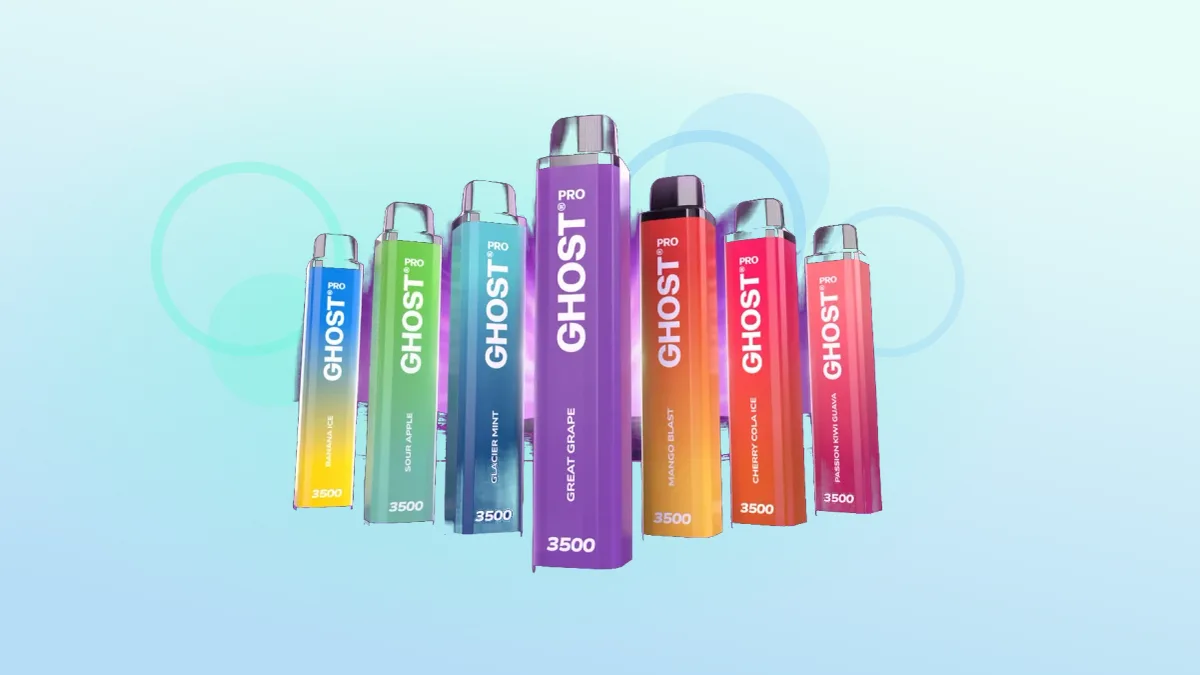
Every disposable vape box has a number printed on it somewhere, and for Ghost Pro 3500 Puffs, that number is right there in the name. But ask ten people what "3500 puffs" actually means and you'll get ten different answers — some think it's a guarantee, some think it's marketing fluff, and most have never stopped to work out what it means for their own habits. This guide breaks the number down properly: how puff counts are measured, why your real-world total will almost never match the number on the box exactly, and roughly how many days 3500 puffs is likely to last depending on how you actually vape.
None of this is about hitting an exact figure. Puff counting is inherently an estimate — a standardized lab measurement translated into a real-world habit that varies from person to person, sometimes from hour to hour. Understanding the mechanics behind the number makes it far more useful than just glancing at the packaging and hoping for the best.
What a Puff Count Rating Actually Represents
A "3500 puff" rating is not a promise that your specific device will fire exactly 3,500 times before dying, not one puff more or less. It's a manufacturer's estimate of how many standardized inhalations a device can deliver under controlled testing conditions, based on the combination of three things: the volume of e-liquid inside, the capacity of the battery, and the resistance of the coil.
For Ghost Pro 3500 Puffs, that estimate is built around a device pre-filled with 10ml of 20mg nicotine e-liquid, powered by a 1500mAh battery running a 1.2 ohm mesh coil. Puff count ratings exist because disposables don't have a liquid gauge or a battery percentage readout — there's no screen, no button, nothing to check except how it tastes and how much vapor it's producing. The rating gives you a reference point. It answers the practical question "roughly how much vape am I holding in my hand" before you've taken a single draw.
It's worth being upfront about something the industry doesn't always spell out clearly: puff counts are derived under lab conditions using a fixed draw length and duration, then repeated until the device runs out of liquid or the battery can no longer vaporize it efficiently. Real usage is nothing like that. Nobody takes 3,500 identical, evenly spaced puffs a day. People take short sharp pulls while driving, long lazy draws while relaxing, quick ones between conversations, and sometimes forget the device in a bag for two days straight. All of that variability is exactly why this article exists — to translate a lab number into something you can actually plan around.
How Puff Counts Are Measured in the First Place
Manufacturers and testing labs establish puff-count ratings using a standardized draw protocol — a fixed puff duration (commonly in the range of one to a few seconds), a consistent pause between puffs, and a fixed airflow rate, repeated mechanically until the device stops producing usable vapor. This isn't a human sitting there vaping for days; it's typically done with a puffing machine that draws air through the device at a controlled rate, simulating inhalation without any of the variation a real person introduces.
The test ends when one of two things happens: the e-liquid reservoir runs dry, or the battery can no longer deliver enough power to the coil to vaporize what's left. In a well-balanced device — and this is a genuine design consideration, not just a spec-sheet talking point — the battery capacity and the liquid volume are matched so that neither one runs out drastically ahead of the other. A 1500mAh battery paired with a 1.2 ohm mesh coil and 10ml of liquid is a combination engineered so the power supply and the fuel supply are roughly in sync across the device's rated lifespan, rather than one becoming dead weight while the other still has plenty left.
This is also why puff counts are sometimes described as "up to" a number rather than a flat guarantee — the rating reflects the upper end of what the hardware and liquid volume can sustain under standardized conditions, not a floor that every unit and every user will hit precisely. Manufacturing tolerances, coil break-in behavior in the first few puffs, and small variances in how much liquid actually gets vaporized versus condensed all nudge the real figure slightly in either direction. None of that makes the rating meaningless — it makes it exactly what it's supposed to be: a solid planning estimate, not a odometer reading.
Why Your Real-World Puff Count Will Never Match the Lab Number
Here's the gap nobody puts on the box: a lab puff and your puff are not the same thing. The standardized test draw is short, consistent, and mechanically identical every single time. Your actual draws vary constantly based on mood, situation, and habit — and that variance is the single biggest reason two people can buy the same Ghost Pro 3500 Puffs device and get noticeably different numbers of days out of it.
Consider the difference between a quick, sharp inhale that lasts under a second and a long, slow pull held for three or four seconds. Both count as "one puff" in casual conversation, but they pull vastly different amounts of air across the coil and vaporize very different quantities of e-liquid. A draw-activated device like this one — no button, just inhale and it fires — makes it especially easy to take long, comfortable pulls without thinking about it, because there's no manual trigger reminding you to keep it short. That convenience is part of what makes draw-activation popular, but it also means puff length is almost entirely down to personal habit rather than any mechanical limit.
Environmental factors play a role too. Cold weather can make batteries perform slightly less efficiently, which can subtly change vapor production per puff. How full your lungs are, how deep you inhale, whether you're taking a mouth-to-lung draw or pulling it straight into your lungs — all of it changes how much liquid gets consumed per puff. None of this means the 3500 puff rating is inaccurate. It means the rating is a standardized reference point, and your personal number will drift from it in whichever direction your habits push it.
Anatomy of a Single Puff: Draw Length, Duration, and Airflow
To understand why puffs-per-day estimates vary so widely, it helps to break down what actually happens during one draw. Three variables determine how much of the device's total capacity a single puff consumes: draw length (how long you inhale), draw intensity (how hard or fast you pull), and frequency (how much time passes between draws).
A short, one-to-two-second draw activates the mesh coil just long enough to vaporize a small amount of liquid — this is closer to what a lab testing protocol simulates, and it's the type of puff that gets you closest to the rated 3500 figure. A longer draw, in the three-to-five-second range, keeps the coil heating and vaporizing for two or three times as long, which means it consumes proportionally more liquid and draws more current from the battery per puff. Take enough of those longer draws and you're functionally taking the equivalent of two lab-standard puffs every time you inhale once, which is exactly why some users report their device feeling "used up" well before they've mentally counted anything close to 3,500 draws.
Draw intensity matters too. A gentle, relaxed pull draws air across the coil at a moderate rate. A hard, fast pull — the kind some users default to out of habit — increases airflow and can pull more vapor per second, again consuming liquid faster per puff. Frequency, meanwhile, mostly affects your calendar math rather than the total puff count itself: taking puffs back-to-back versus spacing them out across the day doesn't change how many total puffs the device can deliver, but it dramatically changes how many days that total gets stretched across, which is really the number most people actually care about.
Light, Moderate, and Heavy Use: What 3500 Puffs Looks Like Day to Day
This is the section most people are actually here for: how many days should a Ghost Pro 3500 Puffs device realistically last? The honest answer is that it depends entirely on your draw habits, but it's possible to sketch out rough, sensible bands based on typical usage patterns — treated here as estimates for planning purposes, not guarantees.
A light user — someone who vapes occasionally through the day, takes shorter draws, and isn't chain-puffing — might land somewhere around 100 to 150 puffs per day. At that rate, 3500 puffs could realistically stretch across roughly three weeks, sometimes longer if draws are consistently on the shorter side.
A moderate user — someone using the device fairly regularly throughout waking hours, with a mix of short and medium draws — might sit closer to 250 to 350 puffs per day. That pace would put a single device in the range of roughly ten days to two weeks.
A heavy user — frequent draws, longer pulls, using it as a near-constant habit throughout the day — could easily be in the 500-plus puffs per day range. At that intensity, a single device might realistically last closer to five to seven days.
These bands are intentionally wide, and that's the point — puff counting isn't precise enough to promise an exact day count, and anyone claiming otherwise is oversimplifying. What's useful about thinking in bands is that it lets you plan purchases sensibly. If you know you're a moderate user going through a device roughly every ten to twelve days, ordering a box of 10 gives you a solid ten-to-sixteen-week supply depending on exactly where in that range you land, which is a far more practical way to think about restocking than waiting until you're down to your last device before placing an order.
Reading the Signs: How to Tell When a Device Is Running Low
Since Ghost Pro 3500 Puffs has no screen, no battery percentage, and no puff counter, the only real feedback you get is sensory. Learning to read those signals is more useful day-to-day than trying to mentally tally every draw.
The clearest early sign is a drop in vapor density. As the e-liquid runs low, there's simply less liquid reaching the coil per draw, and the vapor cloud thins out noticeably compared to how it performed on day one. Flavor intensity typically fades in parallel — a Watermelon Freeze or Berry Burst that tasted vivid and sharp early on will start to taste muted and washed out as the liquid depletes, even though the coil itself hasn't changed.
A burnt or "dry hit" taste is the more definitive signal. This happens when the coil is heating but there isn't enough liquid left to properly saturate the wicking material, so the coil starts scorching the wick itself rather than vaporizing e-liquid. It's an unmistakable acrid taste, completely different from the flavor you started with, and it's the clearest sign the device is at or very near the end of its usable life regardless of what the theoretical puff count suggests.
Slower vapor production on each draw — a noticeable lag between inhaling and vapor appearing — usually points to the battery side of the equation rather than the liquid side. As a 1500mAh battery approaches depletion, it can't deliver power to the 1.2 ohm mesh coil as quickly, so there's a beat of delay before the coil heats enough to vaporize anything. If you notice this happening well before you'd expect based on your own usage pace, it's simply a sign that battery and liquid don't deplete in perfect lockstep for every unit — a normal, expected outcome given the tolerances involved in mass-produced hardware, not a defect.
Battery, Coil, and E-Liquid: The Three Numbers Behind One Rating
The 3500 puff figure isn't arbitrary — it's the output of three specific hardware and liquid specs working together, and understanding each one clarifies why the rating sits where it does.
Start with the e-liquid: 10ml per device. Do the math against the rated puff count and you get an average of roughly 2.85 microliters of e-liquid vaporized per puff (10,000 microliters divided by 3,500 puffs). That's a genuinely tiny amount per draw, which is exactly why draw length matters so much — a puff that's twice as long doesn't just feel longer, it can pull meaningfully more than that average per-puff share of the liquid reservoir, accelerating depletion in a way that compounds over a day of use.
The 1.2 ohm mesh coil is the other half of the liquid equation. Coil resistance determines how much power is needed to heat it to vaporizing temperature, and mesh coils in particular are designed to heat a larger surface area evenly, which is part of why flavor tends to stay consistent across most of a disposable's life rather than degrading in a straight line from the first puff. A 1.2 ohm coil sits in a middle ground — not so low-resistance that it demands huge current draw per puff, not so high-resistance that vapor production feels weak, which is a big part of why the puff count and the battery capacity can be matched as closely as they are.
Then there's the 1500mAh battery, which has to supply enough total energy across the device's life to fire that coil roughly 3,500 times. Battery capacity is really the ceiling on total puffs — even if there were more liquid available, a battery that ran flat first would end the device's usable life regardless. The fact that Ghost Pro 3500 Puffs pairs a 1500mAh cell with a 1.2 ohm coil and 10ml of liquid reflects a deliberate attempt to make sure neither the power source nor the fuel source is the bottleneck well ahead of the other — both are engineered to run out in roughly the same window.
Does Flavour Affect How Many Puffs You Actually Take?
This isn't something most puff-count discussions touch on, but flavor intensity has a real, practical effect on usage pace. Bolder, more intensely flavored options tend to naturally moderate how much someone vapes, simply because a strong flavor delivers satisfaction faster — you don't feel the pull to keep drawing on it. Milder or more delicate profiles can sometimes lead to slightly longer or more frequent puffing, because there's a subconscious tendency to chase a bit more flavor.
Within the Ice & Menthol lineup, something like Glacier Mint delivers a sharp, immediate cooling sensation from the very first draw — that kind of intensity tends to register quickly and doesn't invite unusually long pulls. Compare that to a fruit-forward profile in the Tropical & Fruit range, like Peach Mango or Strawberry Melon Chew, where the flavor is rounder and sweeter rather than sharp, and some users find themselves drawing a touch longer simply to fully register the taste on each inhale.
The Signature Classics line is worth a mention here too, since it includes some of the more distinctive standalone profiles in the range — Sour Apple's tartness, for instance, hits fast and cleanly, similar in effect to the menthol category in that it doesn't require a long draw to register. Meanwhile something from the Berry Mix category, like Blue Sour Razz, layers a sweet-tart complexity that some users linger on a bit longer to catch every note.
None of this is about one flavor being "better" for extending puff count — it's a genuinely minor factor compared to draw length and frequency habits. But if you've noticed that certain flavors seem to disappear faster than others even with similar usage patterns, flavor intensity and how it shapes your natural draw length is very likely part of the explanation, alongside plain day-to-day variation in how much you're using the device generally.
Cost Per Puff: Turning the Number Into a Value Calculation
Once you understand roughly how many puffs you're taking per day, the puff-count rating becomes genuinely useful for budgeting. A single Ghost Pro 3500 Puffs device costs 40 AED, while a box of 10 costs 350 AED — working out to about 35 AED per device when bought by the box, a meaningful discount over buying singles one at a time.
Break that down to cost per puff and the numbers become concrete. At 40 AED for up to 3,500 puffs, you're looking at roughly 1.14 fils per puff on a single device (40 AED divided by 3,500, converted to fils). Buy by the box at 35 AED per device and that drops to roughly 1 fil per puff. It's a small-sounding difference per puff, but across a box of ten devices it adds up to the 50 AED you save by not buying singles.
This is where the light/moderate/heavy framing from earlier becomes practically useful rather than just informative. A moderate user going through a device every ten to twelve days is looking at roughly two to three devices a month — comfortably within box territory, and worth ordering as a box of 10 both for the per-device saving and for the practical benefit of not running out mid-week. A lighter user going through a device every three weeks might reasonably stick to ordering in smaller batches, though the per-device saving on a box still holds regardless of how slowly it gets used, since e-liquid in an unopened, sealed device isn't going anywhere in a hurry.
It's also worth factoring delivery into the real cost picture. Standard delivery is 30 AED, but that's waived entirely on orders of 350 AED or more — another reason box-sized ordering tends to work out meaningfully cheaper once you add everything up, rather than paying delivery repeatedly on smaller single-device top-ups.
Habits That Stretch — or Shrink — Your Puff Count
Since draw length and frequency are the two biggest levers affecting how far 3,500 puffs actually goes, a few practical habits make a real difference without requiring any real sacrifice in enjoyment.
Shorter, more deliberate draws are the single biggest lever. This doesn't mean rushing or under-enjoying a puff — it means being aware that a slow, three-second pull consumes meaningfully more liquid and battery than a crisp one-to-two-second draw, and that the difference compounds heavily across hundreds of puffs a day. Simply noticing your own draw length is often enough to naturally shorten it without any real change in satisfaction.
Storage matters more than people expect. Extreme heat — leaving a device in direct sun on a car dashboard during a Dubai afternoon, for instance — can affect both battery performance and e-liquid consistency over time, and cold storage can temporarily slow vapor production until the device warms back toward room temperature. Keeping devices somewhere shaded and at a stable temperature between uses helps the coil and battery perform consistently across the device's full lifespan rather than degrading unevenly.
Spacing draws apart rather than chain-puffing back-to-back also helps the coil perform consistently. Mesh coils need a brief moment to reheat and properly re-saturate with liquid between draws; puffing in rapid, immediate succession doesn't increase total puff count, but it can occasionally lead to a slightly weaker or less flavorful draw if the coil hasn't fully recovered, which sometimes prompts an extra "make-up" puff that wouldn't otherwise have happened.
Finally, simply being conscious of the estimate itself changes behavior. Once you know a device is realistically good for somewhere in the range of one to three weeks depending on your pace, you stop treating early puffs as "free" and start pacing more evenly across the device's life — which, anecdotally, is exactly the kind of small mindset shift that tends to align real-world puff totals more closely with the rated number.
Common Puff Count Myths, Cleared Up
A few misconceptions come up often enough to address directly. First: a puff count rating is not a countdown timer with a fixed end date. It has no relationship to calendar time at all — a device sitting unused in a drawer doesn't "use up" puffs, and there's no clock ticking against the 3500 figure independent of actual usage. It's purely tied to draws taken, not days passed.
Second: running out of vapor doesn't always mean you've hit exactly 3,500 puffs, and getting fewer or more than that isn't a sign anything went wrong. As covered earlier, the rating is a standardized lab estimate; real puffs vary in length and intensity, so your personal total landing somewhat above or below 3,500 is the expected outcome, not the exception.
Third: a device tasting weaker doesn't necessarily mean the battery is dead — it's just as likely, arguably more likely, to mean the e-liquid is running low while the battery still has charge left. Since Ghost Pro 3500 Puffs doesn't include a battery indicator, taste and vapor density are genuinely the most reliable signals available, more reliable than trying to guess battery state from feel or weight.
Fourth: buying a box of 10 does not mean the devices inside will each hit a different puff count depending on when they were made or how long they sat on a shelf before reaching you. Sealed disposables are designed to hold their charge and liquid integrity well ahead of typical usage windows, so a device from a box bought today performs the same as it would fresh off the production line for all practical purposes.
Ordering, Delivery, and Getting Your Next Box in the UAE
Understanding puff count is most useful when it feeds directly into a restocking rhythm, and ordering Ghost Pro 3500 Puffs across the UAE is built to be simple. All orders and stock checks go through WhatsApp at +971 56 165 2004 — message the number, confirm your flavors and quantities, and the order is placed directly with no account creation or online checkout involved.
Payment is cash on delivery in AED only, with no card or online payment options — you pay the rider in cash when the order arrives at your door. Standard delivery runs 30 AED, and that fee is waived entirely on orders of 350 AED or more, which — tying back to the value math earlier — makes larger, less frequent orders the more cost-effective way to keep a moderate or heavy usage pace stocked.
Delivery windows vary by emirate. Dubai typically sees delivery in around 2 hours. Sharjah and Ajman generally run 4 to 6 hours. Abu Dhabi and Al Ain are usually around 6 hours. Ras Al Khaimah, Fujairah, and Umm Al Quwain tend to fall in the 6 to 12 hour range. If you've worked out that you're a moderate user heading toward the end of a device's life within a day or two, Dubai's fast turnaround in particular means there's rarely a need to stock up excessively far in advance — though anyone in the further emirates will want to message a day or so ahead of actually running out, given the longer window.
It's worth noting Ghost Pro's broader track record here too: the brand holds a 9.9 out of 10 rating across 383 verified UAE customer reviews, which reflects consistency not just in flavor and hardware but in the delivery experience itself — something worth factoring in if you're deciding whether to trust a same-day WhatsApp order over a slower, more traditional retail purchase.
This is also the moment to flag the obvious but essential point: this is a nicotine product, restricted to buyers aged 21 and over, and nicotine products more broadly are age-restricted and regulated in the UAE — anyone ordering should be checking current official guidance rather than relying solely on brand messaging for anything regulatory.
Putting It All Together: A Practical Way to Think About 3500 Puffs
Strip away the technical detail and the practical takeaway is simple: 3,500 puffs is a well-engineered estimate based on 10ml of e-liquid, a 1500mAh battery, and a 1.2 ohm mesh coil working in balance — but your actual number depends entirely on how long and how often you draw. Light users pacing shorter puffs across the day might stretch a device toward three weeks; heavy users taking longer, more frequent draws might see five to seven days; most people land somewhere in the ten-to-fourteen-day middle ground.
The most useful habit isn't trying to count every single puff — nobody does that consistently — it's learning to read the signals your device gives you: thinning vapor, fading flavor, that unmistakable burnt taste when liquid runs critically low. Combine that awareness with a rough sense of your own pace, whether that's closer to the light, moderate, or heavy bands outlined above, and restocking becomes a simple, low-friction routine rather than a guessing game — particularly with a box of 10 bringing the per-device cost down to around 35 AED and, in most cases, qualifying for free delivery on top.
Whether your rotation leans toward the icy hit of something in the Ice & Menthol range, the tart complexity of the Berry Mix lineup, the sweetness across the Tropical & Fruit category, or a Signature Classics staple, the puff count math underneath stays exactly the same — it's the hardware and liquid volume doing the work, and your habits deciding how many days that work gets spread across.
Frequently Asked Questions
Quick answers
Does 3500 puffs mean I'll get exactly 3,500 draws from one device?+
No. The 3500 figure is a standardized lab estimate based on a fixed draw length and duration, repeated until the 10ml of e-liquid or the 1500mAh battery is depleted. Real-world draws vary in length and intensity, so your actual total will land somewhat above or below 3,500 depending on your habits — that's expected, not a fault with the device.
How many days should a Ghost Pro 3500 Puffs device last me?+
It depends heavily on usage pace. As rough estimates: light users taking shorter, less frequent draws might stretch a device toward three weeks; moderate users are typically looking at roughly ten days to two weeks; heavy users taking longer, more frequent draws might see closer to five to seven days. These are planning estimates, not guarantees.
Why does my device seem to run out faster than my friend's, even though we both use Ghost Pro 3500 Puffs?+
Puff length and frequency vary a lot between people. A longer, slower draw pulls more e-liquid and battery power than a short, sharp one, even though both count as 'one puff.' Draw habits, not the device itself, are usually the biggest reason two people get different results from the same puff-count rating.
How can I tell my device is running low without a battery indicator?+
Since it's draw-activated with no screen or button, the most reliable signals are sensory: thinning vapor density, fading flavor intensity, and a slower delay before vapor appears after you inhale. A sharp, acrid burnt taste is the clearest sign the device is at or near the end of its usable life.
Does the flavor I choose affect how many puffs I actually take?+
It can have a minor effect. More intense profiles, like the cooling hit in Glacier Mint from the Ice & Menthol range or the sharp tartness of Sour Apple, tend to register quickly and don't invite unusually long draws. Milder or sweeter profiles, such as Peach Mango, can sometimes lead to slightly longer draws as people chase a bit more flavor.
Is it cheaper per puff to buy a single device or a box of 10?+
A box of 10 works out to about 35 AED per device versus 40 AED for a single, which lowers the cost per puff from roughly 1.14 fils to roughly 1 fil. Boxes of 2 or more also qualify for free delivery, adding further savings on top of the per-device discount.
Does leaving a device unused for a while use up any of its puff count?+
No. Puff count is tied strictly to draws actually taken, not to time passed. A sealed, unused device sitting in a drawer isn't losing puffs on a clock — it holds its charge and liquid integrity well ahead of typical usage windows.
Can I speed up or slow down how fast I use my puffs?+
Yes, largely through draw length and pacing. Shorter, more deliberate draws consume less e-liquid and battery per puff than long, slow pulls, and spacing draws apart rather than chain-puffing helps the mesh coil perform consistently. Storing devices away from extreme heat also helps battery and coil performance stay even across the device's life.
Related guides
How Mesh Coils Work and Why They Make Disposables Taste Better
Why does a disposable taste great on puff one and scorched by puff two thousand? The answer is coil geometry. Here's how mesh coils fix the flavour problems of old round-wire designs, and how Ghost Pro's 1.2 ohm mesh coil puts the theory into practice.
Mr. Blue vs Mr. Red: Which Ghost Pro Signature Flavour Wins
Two Signature Classics, one 3500-puff device, and a genuinely close contest. We break down taste, throat hit and real-world use to help you pick between Mr. Blue and Mr. Red.
The Complete Guide to Ghost Pro's Signature Classics Collection
Mr. Blue, Mr. Red, Red Angel, Pink Lady, Pink Orange Fizz, and Sour Apple aren't just six flavours - they're the six that built the Ghost Pro name. Here's a full breakdown of each one, how they compare, and which one to order first.
Menthol Disposable Vape: How to Choose Your Level of Cold
Not every menthol disposable vape feels the same. Here's how to choose the right level of cold for you.