
Understanding Vapour Production: mAh, Coils and Airflow Explained
By Ghost Pro UAE Team· Published 12 Aug 2026· Fact-checked by our order desk
Puff count is just math — the real story behind thick, warm vapour is the interaction between battery capacity, coil resistance, and airflow. Here's how Ghost Pro's 1500mAh/1.2 ohm mesh coil setup actually works.
Why "More Puffs" Doesn't Mean "More Vapour"
Every disposable vape ad leads with one number: puff count. It's the easiest spec to print on a box and the easiest one for shoppers to compare at a glance. But puff count tells you almost nothing about what a device actually feels like to use — how thick the cloud is, how warm it lands in your throat, how the flavour reads on the exhale. Two devices rated for the exact same number of puffs can produce wildly different vapour, because puff count is just a math problem (battery capacity divided by average power draw per puff), while vapour character is a physics problem involving three separate components working in concert: the battery, the coil, and the airflow path.
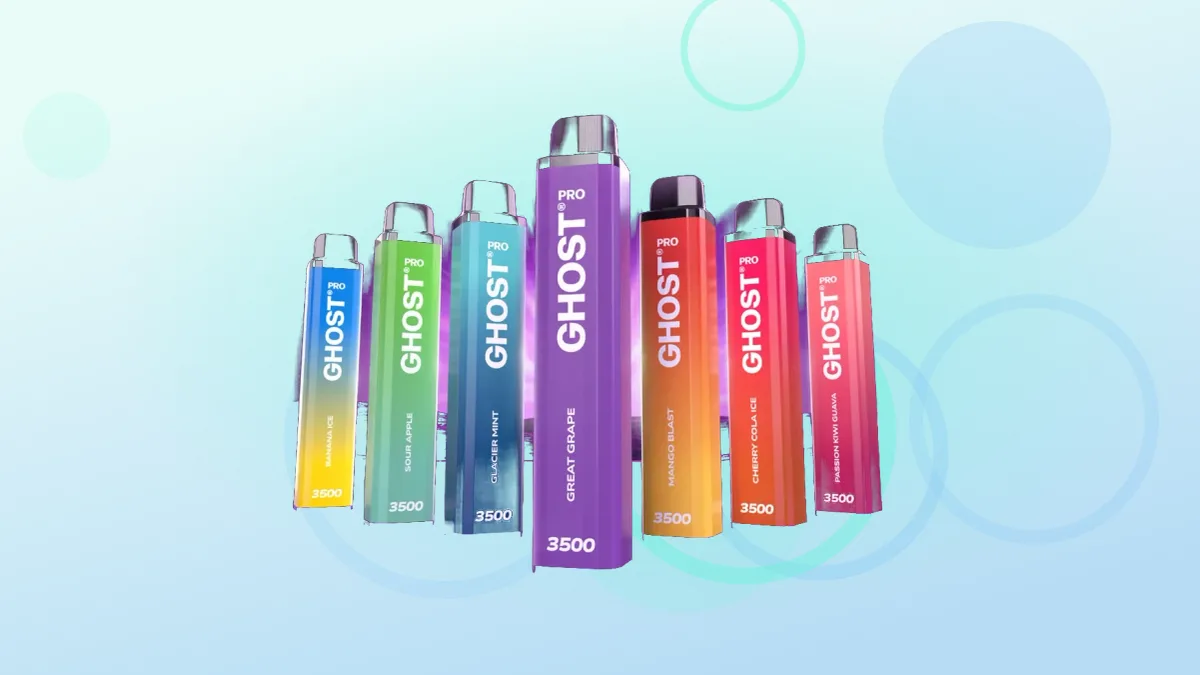
This is the piece almost nobody explains properly, and it's worth understanding if you're going to spend money on disposables regularly rather than picking whichever box looks nicest on a counter. Ghost Pro 3500 Puffs is built around a specific, deliberately balanced spec sheet — a 1500mAh battery, a 1.2 ohm mesh coil, 10ml of 20mg nicotine e-liquid, and a rating of up to 3500 puffs per device — and that combination isn't arbitrary. Each number is a trade-off decision, and the three of them only make sense when you understand how they interact.
We're going to walk through mAh, ohms, and airflow one at a time, then show how they combine to determine the two things you actually notice when you're vaping: vapour density (how thick and visible the cloud is) and vapour warmth (how hot or cool the draw feels on your throat and in your mouth). Along the way we'll use Ghost Pro's own spec as the worked example, because it's easier to understand abstract electrical concepts when they're tied to a real device you can hold in your hand rather than to numbers floating in the abstract. By the end, you should be able to look at any disposable's spec sheet — not just Ghost Pro's — and predict roughly what it's going to feel like before you ever take a draw.
The Battery: What 1500mAh Actually Powers
mAh stands for milliamp-hours, and it's a measure of electrical charge capacity — essentially, how much energy the battery can store and release over its lifetime before it's depleted. A 1500mAh battery, like the one inside every Ghost Pro device, can theoretically deliver 1500 milliamps of current for one hour, or 750 milliamps for two hours, or smaller currents for longer stretches. In a disposable vape, the battery doesn't discharge in one continuous stream — it fires in short bursts, one per puff, each burst lasting somewhere between one and three seconds depending on how long you draw.
Here's the part that matters for vapour production: battery capacity doesn't set the intensity of a single puff. That's the coil's job, which we'll get to next. What battery capacity sets is how many of those puffs the device can deliver in total before the charge runs out. A 1500mAh cell paired with a 1.2 ohm coil and Ghost Pro's tuned power delivery works out to roughly 3500 puffs of usable output — which is exactly the number printed on the device, because Ghost Pro's puff rating isn't a marketing round-up, it's derived from testing the actual battery-to-coil relationship rather than picking an arbitrary big number.
This is also why battery capacity and vapour density are only indirectly related. A bigger battery in the same device with the same coil doesn't make each individual puff thicker — it just means you get more puffs before the device dies. What determines whether puff number one and puff number three thousand feel roughly the same is voltage stability: whether the battery can maintain consistent output as it depletes, rather than tapering off and producing progressively thinner, cooler vapour toward the end of the device's life. This is a real phenomenon in cheap disposables — a battery that sags under load delivers less power to the coil late in its charge cycle, and the last few hundred puffs feel noticeably weaker than the first few hundred. A well-matched 1500mAh cell paired to a 1.2 ohm coil is sized so the battery isn't straining to keep up for the vast majority of the device's rated life, which is why the draw should feel consistent from the first puff to somewhere close to the last.
Coil Resistance Explained: Why 1.2 Ohms Is the Working Number
Resistance, measured in ohms, describes how much a coil resists the flow of electrical current. It sounds like a small technical footnote, but it's actually the single biggest lever on vapour production in the entire device, because of a basic electrical relationship: power output is proportional to voltage squared divided by resistance. In plain terms, lower resistance at a fixed voltage means more power gets dumped into the coil per puff, which means more heat, which means more liquid vaporised per draw, which means a thicker, denser cloud.
A 1.2 ohm coil, like the one in every Ghost Pro device, sits in what the vaping industry generally calls the "mouth-to-lung" resistance range — higher resistance than the sub-ohm coils (below 1.0 ohm) built for the huge, loose lung-hits favoured in cloud-chasing setups, but low enough to still produce a genuinely satisfying, visible exhale rather than the thin wisp you'd get from a high-resistance coil built for a tight, cigarette-like draw. This is a deliberate middle point, and it's the right one for a disposable that's meant to be drawn on repeatedly throughout a day rather than used for occasional big cloud tricks.
The reason 1.2 ohms works well specifically alongside a 1500mAh battery comes back to that power equation. At the voltage a 1500mAh lithium cell delivers, a 1.2 ohm coil pulls enough current to heat the coil quickly and evenly without demanding more than the battery can comfortably sustain across thousands of puffs. Drop the resistance much lower without changing the battery, and you'd get a hotter, denser first few hundred puffs — but you'd also drain the cell faster and risk the voltage sag we just discussed, meaning the device would taper off sooner and unevenly. Raise the resistance instead, and puffs get thinner and cooler, stretching battery life further but at the direct cost of the vapour density most disposable users are actually looking for. Ghost Pro's 1.2 ohm figure is the point where those two curves cross in a way that keeps output strong for close to the device's full rated 3500 puffs, rather than trading early performance for a number that only looks good on paper.
The Mesh Coil Factor: Why Shape Matters As Much As Resistance
Resistance tells you how much power a coil pulls, but it doesn't tell you how that power gets applied to the e-liquid — and that's where coil geometry comes in. Ghost Pro uses a mesh coil rather than the older round-wire coil design that dominated vaping for its first decade, and the shape difference has a real, measurable effect on vapour independent of the ohm rating.
A traditional round-wire coil is a single strand of resistance wire wound into a tight spring shape and wrapped around a wicking material. It heats from a comparatively small surface area, which means the liquid touching the coil at any given moment gets very hot very fast, while liquid slightly further from the wire barely warms up — an uneven heating profile that tends to produce hot spots, a slightly more "biting" throat sensation, and occasionally a faint burnt taste if the wick can't keep the hottest points saturated.
A mesh coil instead uses a flat sheet of perforated metal, heated across its entire surface simultaneously. Because the heating surface is much larger and much more evenly distributed, a mesh coil vaporises liquid more uniformly at a slightly lower peak temperature for the same power input. Practically, this shows up in three ways: the vapour tends to feel smoother and less harsh on the throat at the same nicotine strength and resistance, flavour compounds in the e-liquid vaporise more completely and consistently (which is a big part of why flavour-heavy profiles like Peach Mango or Caribbean Crush taste accurate rather than muddy), and the coil is less prone to localised dry hits, because there's no single hot filament wire waiting to scorch a thin patch of wick. This is why a 1.2 ohm mesh coil and a 1.2 ohm round-wire coil, despite having identical resistance on paper, will not vapour the same 10ml of e-liquid identically — the mesh design is doing real mechanical work that the ohm rating alone doesn't capture.
Airflow Design: The Overlooked Third Variable
If battery and coil were the whole story, every 1500mAh/1.2 ohm device on the market would feel identical, and they don't. The third variable — airflow — is the one manufacturers talk about least, which is strange, because it's arguably the most immediately noticeable of the three when you actually take a draw.
Airflow refers to the path and volume of air moving through the device from the intake vents, past the heated coil, and out through the mouthpiece. It affects vapour production in two ways that pull in opposite directions. First, more airflow across the coil cools the vapour before it reaches your mouth — this is why a draw with a wide-open airflow channel feels cooler and smoother than one with restricted airflow at the exact same coil temperature. Second, airflow volume changes how much vaporised liquid gets carried out per draw versus how much condenses back inside the device — a well-tuned airflow channel pulls the full vapour cloud out efficiently, while a poorly designed one can let vapour condense on interior walls before it ever reaches you, which reads to the user as "weak" vapour even though the coil is doing its job correctly.
Draw resistance — how much physical effort it takes to pull air through the device — is directly set by how tight or open this airflow path is. A very restricted airflow path (a narrow channel) requires a harder, longer pull to move air, which mimics a tighter, more cigarette-like draw and tends to concentrate the vapour into a denser, warmer stream because the air isn't diluting it much before it hits your mouth. A more open airflow path takes a lighter, easier pull, moves more ambient air alongside the vapour, and produces a cooler, slightly less concentrated cloud that's easier to draw on for longer.
Ghost Pro's airflow is tuned to sit alongside its 1.2 ohm mesh coil and 1500mAh battery specifically to produce a moderate, comfortable draw resistance — noticeably easier than a tight mouth-to-lung cigarette-style pull, but with enough resistance that the vapour doesn't feel diluted or thin. This matters more than people expect for flavour perception, too: menthol and ice profiles like Glacier Mint or Watermelon Freeze rely partly on airflow-driven cooling to deliver that crisp, sinus-clearing sensation, while dessert and candy profiles like Candy Floss lean on a slightly warmer draw to let the sweeter notes read clearly rather than getting blown past your palate too fast.
The Power Triangle: How Battery, Coil, and Airflow Combine
Now put the three pieces together, because none of them determines vapour output alone — it's the interaction that matters, and it's worth walking through as a single system rather than three separate specs.
When you draw on a Ghost Pro device, the airflow sensor (this is the mechanism behind draw-activation, which we'll cover in more detail shortly) detects the pull and closes the circuit, letting the 1500mAh battery discharge current through the 1.2 ohm mesh coil. The coil's resistance, combined with the battery's voltage output, determines how much power is dissipated as heat — this is the raw amount of vaporisation potential available for that puff. The mesh geometry then determines how evenly that heat is spread across the wicked liquid, which affects how completely the liquid turns to vapour versus how much stays as unvaporised residue. Finally, the airflow path determines how much of that vapour gets carried to your mouth, and at what temperature, by controlling how much ambient air dilutes and cools the stream on its way out.
Change any one variable and the other two have to be understood in that new context. This is why simply swapping to a lower-resistance coil in an otherwise identical device doesn't automatically produce "better" vapour — if the airflow channel wasn't also widened to match, the denser vapour has nowhere efficient to go and can condense inside the device rather than reaching you, and the battery will deplete faster without a matching increase in usable puffs. It's also why a huge battery number by itself is a hollow spec — a 2000mAh battery bolted onto a coil and airflow path tuned for something smaller doesn't produce thicker clouds, it just produces the same clouds for slightly longer, or, if the tuning is off, produces an inconsistent draw where early puffs are over-powered and later ones are under-powered.
The reason Ghost Pro's 3500-puff rating and its vapour character stay consistent across a review base of 383 verified UAE customers scoring the brand 9.9 out of 10 comes down to this triangle being tuned as a set, not as three independent numbers picked to look good on a spec sheet.
Vapour Density, Warmth, and Throat Hit: Untangling the Terms
People use "strong," "harsh," "thick," and "smooth" almost interchangeably when describing vapour, but they're actually describing at least four distinct physical properties, and understanding the difference will make you a much more precise judge of what you're tasting and feeling.
Vapour density is purely about visible volume — how much aerosol is suspended in the air on your exhale. This is driven mostly by coil power (the battery-times-resistance relationship) and how efficiently the mesh coil converts liquid to vapour, with airflow playing a secondary role in how much of that vapour survives the trip to your mouth without condensing.
Vapour warmth is a temperature sensation, driven primarily by airflow. A hotter coil doesn't automatically mean a hotter-feeling draw if enough cool ambient air is mixing in through a wide airflow channel — this is why some low-resistance, high-power setups still feel surprisingly cool, while a tighter-draw device with less raw power can feel warmer simply because there's less air diluting the heat.
Throat hit is the physical sensation in the back of your throat, and it's driven by a combination of nicotine strength and vapour temperature/density together, rather than any one factor alone. Ghost Pro's fixed 20mg nicotine strength across all 32 flavours means throat hit stays fairly consistent between flavours from a chemistry standpoint — most of the perceived difference in throat hit you'll notice between, say, a Sour Apple and a Blueberry Pomegranate, comes down to how the specific flavour compounds and any cooling agents interact with your throat, not the nicotine itself.
Flavour intensity is a separate axis again, governed by how completely the coil vaporises the flavouring compounds in the liquid (a job the mesh design does well) and by draw speed — pulling too fast can push vapour past your palate before the flavour receptors fully register it, which is part of why a slightly slower, more deliberate draw tends to bring out more nuance in complex profiles like Passion Kiwi Guava or Strawberry Peach Citrus than a fast, sharp pull does.
Once you separate these four properties, you can actually diagnose what you're experiencing rather than lumping everything into "this hits different." A device that feels harsh but not particularly warm has a throat-hit issue, not a heat issue. A device that feels weak in volume but the flavour is still coming through clearly has a density issue with the coil or airflow, not a flavour or nicotine problem.
Draw-Activated Design: Why No Button Changes the Airflow Equation
Ghost Pro devices are draw-activated with no fire button, which is standard for disposables but worth explaining mechanically, because it directly ties into the airflow discussion above. Inside the device sits a small airflow sensor — typically a pressure-sensitive microswitch — positioned in the intake path. When you draw on the mouthpiece, the drop in air pressure across the sensor triggers it to close the circuit between the battery and the coil, and the coil begins heating for as long as you continue drawing (or until the device's safety cutoff kicks in on an unusually long single draw).
This matters for vapour consistency in a way button-fired devices don't have to worry about. Because the coil only fires while air is actively moving across the sensor, there's a natural, physical link between "air is flowing" and "heat is being generated" — you can't accidentally fire the coil with the airflow path blocked (which, on button-fired devices with a manual trigger, is exactly how you produce a dry, burnt-tasting hit, because the coil heats up with no liquid vapour being carried away). Draw-activation effectively guarantees that heat generation and airflow happen in sync every single time, which is one of the quieter reasons disposables with this design tend to deliver more consistent vapour puff-to-puff than manually-fired devices in inexperienced hands.
The trade-off is a very slight delay — a fraction of a second between when you start drawing and when the coil reaches full temperature — which is why the first quarter-second of a very short, sharp puff can occasionally feel thinner than a longer, more deliberate draw. This isn't a fault; it's just the sensor and coil catching up to your airflow. Users who draw in short, sharp puffs tend to report slightly less dense clouds than users who draw a bit longer and steadier, purely because of this activation lag, not because of anything different happening at the battery or coil level.
The Puff Curve: How Vapour Character Shifts From Puff One to Puff 3500
No disposable delivers perfectly identical vapour on puff one and puff 3500, and understanding why helps set realistic expectations rather than mistaking normal battery behaviour for a defective unit.
In the first stretch of a device's life — roughly the first several hundred puffs — the battery is at or near full charge, and the coil, still fresh and evenly saturated with e-liquid, is operating at its most efficient. This is typically when vapour density and flavour clarity are at their peak. E-liquid saturation of the wick is even, the mesh has no residue buildup, and battery voltage is at its highest and most stable point.
Through the middle stretch of the device's rated life, vapour output should stay remarkably consistent if the battery-coil-airflow tuning is done well — this is the zone where a properly matched 1500mAh/1.2 ohm setup earns its keep, because a mismatched or cheaply tuned device tends to show its weaknesses here, either sagging in output or, less commonly, running hot as the coil starts to gum up with residue from repeated heating cycles.
In the final stretch — roughly the last few hundred puffs before the 3500 rating is reached — two things happen simultaneously. The battery voltage naturally tapers as the cell approaches full depletion, which is basic lithium-battery discharge behaviour and not specific to vaping. And the remaining e-liquid in the tank sits lower in the reservoir, meaning the wick has to draw liquid a slightly longer distance to keep the coil saturated. Both factors combine to produce a gradual, gentle decline in vapour density toward the very end of the device's life rather than a hard cliff — most users describe it as the last handful of puffs feeling "lighter" rather than the device abruptly stopping.
This gradual taper, rather than an abrupt failure, is actually a sign of good engineering: it means the 1500mAh capacity and 1.2 ohm coil are matched closely enough that the battery doesn't run out of usable power while there's still substantial liquid left in the tank, and the tank doesn't run dry while there's still plenty of battery charge left. Either mismatch would waste part of what you paid for.
How Flavour Category Shapes Perceived Vapour Character
The hardware is identical across all 32 Ghost Pro flavours — same 1500mAh battery, same 1.2 ohm mesh coil, same airflow design, same 20mg strength. But the vapour from a Glacier Mint and the vapour from a Candy Floss can feel meaningfully different in the mouth and throat, purely because of how the liquid's ingredients interact with heat and airflow, not because the underlying device changes.
Flavours in the Ice & Menthol category — Banana Ice, Blackcurrant Ice, Cherry Cola Ice, Glacier Mint, Red Apple Ice, and Watermelon Freeze — contain cooling agents that create a chemical cold sensation on top of whatever physical cooling the airflow provides. This stacks with the airflow-driven temperature drop we discussed earlier, which is why menthol and ice profiles tend to feel noticeably cooler and crisper on the exhale than fruit or dessert profiles at the exact same coil temperature — the sensation is partly thermal and partly chemical, and the two reinforce each other.
The Berry Mix line — Berry Burst, Blackcurrant Berry Squash, Blueberry Pomegranate, Blue Razz Lemon, Blue Sour Razz, Buba Blue, and Strawberry Grape — tends to sit in a middle ground, with the tartness in profiles like Blue Sour Razz giving a slightly sharper, brighter sensation on the inhale that reads as more "present" even at identical vapour density, simply because sour and tart notes are more attention-grabbing to the palate than sweet ones.
Tropical & Fruit flavours — a nine-strong lineup including Peach Mango, Strawberry Kiwi, Passion Kiwi Guava, Caribbean Crush, and White Peach Razz among others — generally deliver a rounder, warmer-tasting draw, since these liquids typically lean on layered sweetness rather than any cooling or sour element, letting the natural warmth of the vapour come through without competing sensations.
The Candy & Dessert pair, Candy Floss and Gummies, along with the Signature Classics line (Mr. Blue, Mr. Red, Red Angel, Pink Lady, Pink Orange Fizz, and Sour Apple), round out the range with everything from straightforward sweet-shop profiles to the tartness of Sour Apple, which — like the sour berry profiles — reads as sharper and more vivid on the exhale due to that acidity rather than any difference in the actual vapour output. None of this means the hardware is doing something different from flavour to flavour; it means the same 1.2 ohm mesh coil is vaporising chemically different liquids, and your palate is responding to those chemical differences on top of the physical vapour characteristics we've spent this whole article breaking down.
Troubleshooting Weak Clouds, Harsh Hits, and Gurgling
Understanding the mAh/ohm/airflow triangle also makes it much easier to correctly diagnose the handful of things that can occasionally go wrong with any disposable, rather than assuming the worst about a whole batch.
Weak or thin vapour that appears gradually over the device's life is almost always the normal battery taper described earlier — expected behaviour as a device nears the top end of its 3500-puff rating, not a fault. Weak vapour that's present from the very first puff, by contrast, is unusual and worth double-checking: draw a bit longer and steadier to rule out the draw-activation lag mentioned earlier, since very short sharp puffs can feel artificially weak simply because the sensor and coil haven't fully caught up.
A harsh or hot-tasting draw usually points to airflow rather than the coil itself — check that the intake vents aren't being covered by your fingers while you draw, since blocking the airflow path forces the coil to fire with less air moving across it, concentrating heat and producing exactly the harsher, hotter sensation described in the throat-hit section above.
A gurgling sound or sensation, if it occurs, typically indicates excess liquid has pooled somewhere in the airflow path rather than being fully absorbed by the wick — this can happen if a device has been stored on its side or upside down for an extended period before use, since the 10ml fill can settle unevenly. Letting the device sit upright for a few minutes before use, especially with a fresh unit, generally resolves this.
None of these issues reflect a change in the underlying 1500mAh/1.2 ohm mesh coil specification — they're the practical, physical realities of how battery-coil-airflow systems behave in the real world, and recognising them for what they are (normal taper, blocked airflow, liquid settling) rather than assuming a defect saves you the hassle of an unnecessary swap.
UAE Climate and Real-World Conditions: Heat, AC, and Humidity
Vapour physics doesn't operate in a vacuum, and the UAE's climate genuinely affects how a disposable performs day to day in ways worth knowing about. High ambient heat — a regular feature of Dubai, Abu Dhabi, Sharjah, and the rest of the Emirates for much of the year — slightly increases e-liquid viscosity reduction, meaning the liquid flows a touch more freely to the wick in hot conditions, which can make vapour feel marginally denser on a hot afternoon than it would on a cooler evening. This is a minor effect but a real one.
More noticeable is the swing between outdoor heat and indoor air conditioning that's a daily reality across the UAE. Moving from a hot car or street into a heavily air-conditioned mall or office changes the ambient air temperature mixing into your draw via the airflow path, which can make the exact same device feel slightly cooler and crisper indoors than outdoors — this isn't the device changing, it's the airflow doing exactly what it's designed to do: mixing ambient air into the vapour stream, and that ambient air is simply colder indoors.
Lithium batteries, including the 1500mAh cell in every Ghost Pro device, also perform most consistently within a moderate temperature range. Leaving a device in direct sun on a car dashboard during peak UAE summer heat isn't advisable for any lithium-battery product, disposable vape or otherwise, and storing devices in a normal indoor environment between uses keeps both the battery and the e-liquid performing the way they're designed to. None of this is unique to Ghost Pro — it's simply the physical reality of battery-and-liquid electronics in a hot climate, and worth keeping in mind if you're buying a box of 10 to keep on hand.
Buying Smart: Matching Vapour Preference to Ordering in the UAE
Everything in this article points to one practical conclusion: because the hardware — 1500mAh battery, 1.2 ohm mesh coil, tuned airflow — is identical across the entire 32-flavour range, your choice of which flavour to buy is really a choice about which taste profile and sensation (cooling, tart, sweet, rounded) you want layered on top of a vapour experience that's fundamentally consistent. If you want maximum cooling sensation stacked on top of the physical airflow cooling, the Ice & Menthol category (Banana Ice, Blackcurrant Ice, Cherry Cola Ice, Glacier Mint, Red Apple Ice, Watermelon Freeze) is the obvious lane. If you prefer a sharper, more attention-grabbing draw, the sour entries across Berry Mix and Signature Classics — Blue Sour Razz and Sour Apple in particular — deliver that vividness. If you want a warmer, rounder, less sensation-heavy draw, Tropical & Fruit and the Grape Collection (Grape Bull, Great Grape) lean that way, and Candy & Dessert covers the sweeter end for anyone prioritising taste over throat sensation.
Every flavour in the range is priced identically — 40 AED for a single device, or 350 AED for a box of 10, which works out to roughly 35 AED per device by the box — so there's no cost trade-off involved in exploring different categories to find your preferred vapour character; the only variable is taste. Ordering runs entirely through WhatsApp at +971 56 165 2004, where the team can confirm current stock across all 32 flavours before you commit. Delivery is cash on delivery in AED only, with standard delivery at 30 AED, waived entirely on orders of 350 AED or more. Turnaround is fast and genuinely reflects UAE geography: about 2 hours across Dubai, 4 to 6 hours for Sharjah and Ajman, roughly 6 hours for Abu Dhabi and Al Ain, and 6 to 12 hours out to Ras Al Khaimah, Fujairah, and Umm Al Quwain.
As with any nicotine product, Ghost Pro is restricted to buyers aged 21 and over, and nicotine products remain age-restricted and regulated in the UAE — if you have specific legal or regulatory questions, current official guidance is the right place to check rather than relying on any single retailer's summary.
Final Verdict: Reading a Spec Sheet Like Someone Who Understands It
The next time you see a disposable vape advertised purely on its puff count, you'll know that number is only the output of a calculation — battery capacity divided by power draw per puff — and tells you almost nothing about what the vapour will actually feel like. The real story is in the triangle: how many milliamp-hours the battery holds and how stable its voltage stays under load, how many ohms the coil resists current at and whether it's built as a mesh sheet or a round wire, and how open or restricted the airflow path is on the draw.
Ghost Pro's 1500mAh battery and 1.2 ohm mesh coil aren't impressive in isolation — plenty of devices on the market quote similar-sounding numbers. What matters, and what a spec sheet alone can't show you, is whether those numbers were tuned together, matched to an airflow path that neither wastes vapour to condensation nor over-dilutes it, and sized so the battery doesn't taper hard before the tank runs dry or vice versa. That tuning is what shows up as a full 3500 puffs of reasonably consistent vapour density and warmth, across all 32 flavours from Glacier Mint to Candy Floss, and it's reflected in an aggregate 9.9 out of 10 score across 383 verified UAE customer reviews. Understanding the mechanics doesn't just satisfy curiosity — it makes you a sharper judge of any disposable you pick up, Ghost Pro or otherwise, because you now know exactly which spec to blame when something feels off, and exactly why a well-matched device feels right from the first puff to the last.
Quick answers
Does a higher mAh battery mean thicker vapour clouds?+
Not directly. Battery capacity (mAh) mainly determines how many puffs a device delivers in total before it dies, not how dense any single puff is. Vapour density per draw is set primarily by coil resistance and how much power is dissipated as heat, while the battery's job is to sustain that power output consistently across all 3500 rated puffs, such as with Ghost Pro's 1500mAh cell paired to its 1.2 ohm mesh coil.
Why does Ghost Pro use a 1.2 ohm coil instead of a lower-resistance sub-ohm coil?+
Lower resistance increases power draw and heat, producing bigger clouds but draining the battery faster and risking voltage sag late in the device's life. A 1.2 ohm mesh coil sits at a middle point that delivers a satisfying, visible exhale while staying sustainable across a 1500mAh battery's full 3500-puff rating, without the harsh, unstable output that an unmatched low-resistance coil can cause.
Why does vapour feel weaker toward the end of a disposable's life?+
As a lithium battery approaches depletion, its voltage naturally tapers, and the wick has to pull remaining e-liquid a slightly longer distance from a lower reservoir level. Both effects combine to gradually reduce vapour density in the final stretch of a device's rated puffs, which is normal behaviour rather than a fault, and shows up as the last puffs feeling lighter rather than the device stopping abruptly.
Does flavour choice actually change how thick or warm the vapour feels?+
The hardware is identical across all 32 Ghost Pro flavours, but the liquid itself isn't. Ice and menthol profiles like Glacier Mint or Watermelon Freeze add a chemical cooling sensation on top of the physical airflow cooling, while sour profiles like Blue Sour Razz or Sour Apple read as sharper and more vivid, and rounder fruit or dessert profiles like Peach Mango or Candy Floss feel warmer and smoother, all from the same 1500mAh/1.2 ohm mesh coil setup.
Why does a Ghost Pro device sometimes feel harsher when I cover the airflow vents with my fingers?+
Blocking the intake vents restricts the amount of ambient air mixing into the vapour stream. Since airflow is what cools and dilutes vapour on its way out, reduced airflow concentrates the heat and produces a harsher, hotter-feeling draw even though the coil and battery are behaving normally.
What does mesh coil actually mean, and why does it matter for vapour quality?+
A mesh coil is a flat, perforated sheet of resistance metal heated across its whole surface, unlike older round-wire coils that heat from a thin wound wire. The larger, more even heating surface vaporises e-liquid more completely and at a more consistent temperature, which generally produces smoother vapour and clearer flavour than a round-wire coil at the same resistance.
Is it normal for a disposable to gurgle or sound different sometimes?+
Occasional gurgling usually means liquid has pooled unevenly in the airflow path, often after a device has been stored on its side for a while, since the 10ml fill can settle unevenly. Letting a fresh device sit upright for a few minutes before use typically resolves it and isn't related to the battery or coil.
Does UAE heat and air conditioning actually affect how a disposable vapes?+
Yes, in minor but real ways. Higher ambient heat can slightly loosen e-liquid viscosity, making vapour feel marginally denser, while moving between hot outdoor air and strong air conditioning changes how much the airflow path cools your draw, since airflow works by mixing in ambient air. Avoiding prolonged direct sun exposure, such as leaving a device on a car dashboard, is also good practice for any lithium-battery product in UAE summer conditions.
Related guides
Ghost Pro Blue Sour Razz Review: Taste, Price & Where to Buy in Dubai (2026)
We reviewed Ghost Pro Blue Sour Razz in full — the sharp sour-candy hit, who it suits, and how it compares to Blue Razz Lemon and Buba Blue.
The Complete Guide to Ghost Pro's Tropical & Fruit Collection
Nine flavours, four fruit personalities: a full breakdown of Ghost Pro's Tropical & Fruit collection, grouped by orchard, tropical punch, stone fruit, and melon profiles, with sweetness and tartness compared side by side.
Strawberry Melon Vape: The Chewy Candy Take on Fruit
Why Ghost Pro Strawberry Melon Chew tastes like a sweet instead of fresh fruit, and who that suits.
Vape Flavors Explained: The Main Families and What They Taste Like
A plain map of vape flavour families, what each tastes like and how to tell which you'll enjoy.