
Vape Flavour Fatigue: Why It Happens and How to Rotate Around It
By Ghost Pro UAE Team· Published 9 Aug 2026· Fact-checked by our order desk
That flat, muted taste after a week on the same flavour isn't your device losing quality — it's palate fatigue. Here's why it happens and how to build a simple flavour rotation with the Ghost Pro range to stop it.
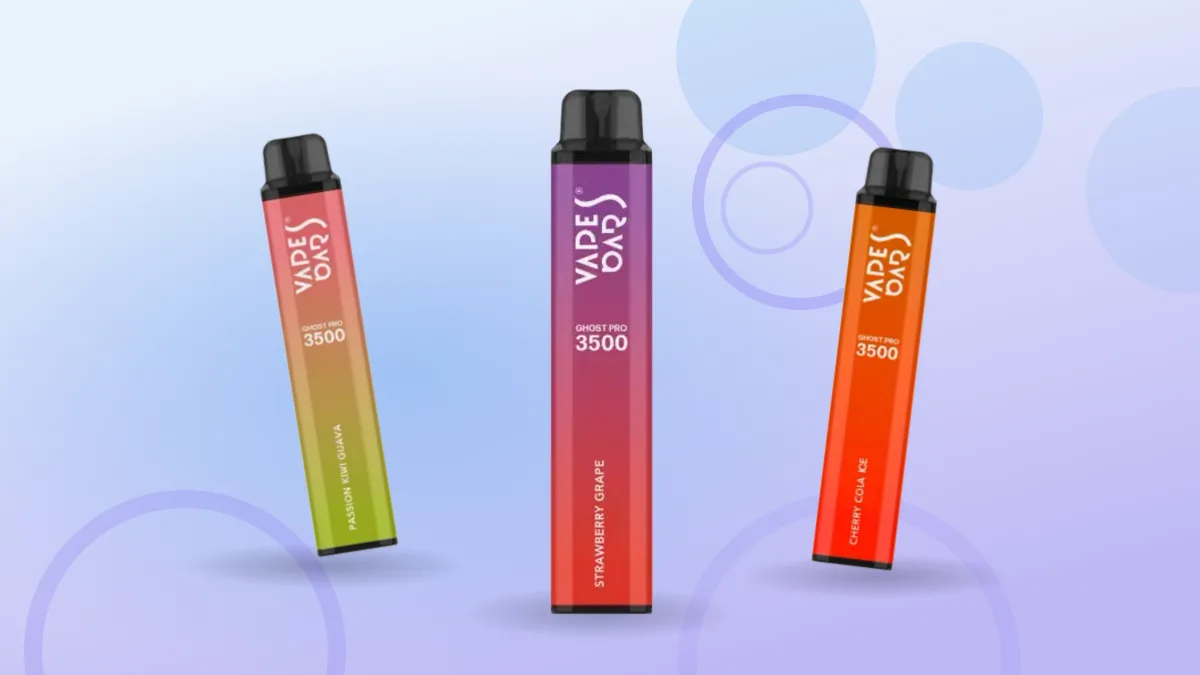
Order the same flavour four boxes in a row and something predictable happens around box three: the draw that used to make you sit up now barely registers. You pull harder, hold the vapour longer, maybe start double-puffing to chase the hit you got on day one. Nothing's wrong with the device — a Ghost Pro 3500 Puffs unit is still doing exactly what it did the first day, 1500mAh battery and 1.2 ohm mesh coil pushing out the same 10ml of 20mg e-liquid at the same rate. What's changed is you. This is flavour fatigue, and it's one of the most common — and most avoidable — reasons vapers end up unsatisfied with a product that's objectively fine.
This article breaks down why flavour fatigue happens, how to recognise it before it wastes a whole box, and how to build a rotation system using the Ghost Pro range so you're never stuck sanding down your palate on one profile for weeks at a time.
What Flavour Fatigue Actually Is
Flavour fatigue — sometimes called palate fatigue or flavour blindness — is the gradual dulling of your perceived intensity of a flavour after repeated exposure. It's not unique to vaping. It's the same reason the fifth bite of an intensely sweet dessert tastes less sweet than the first, why perfume you wear daily stops registering to your own nose within minutes even though everyone else can smell it, and why a coffee drinker eventually needs a stronger roast to feel like they're tasting anything at all.
With disposable vapes, the effect is more pronounced than with food for a simple reason: repetition density. A single Ghost Pro device is rated for up to 3500 puffs. If you're a moderate user pulling 150-200 draws a day, that's two to three weeks of hitting the exact same flavour molecule combination, dozens of times a day, with no gap. Compare that to eating the same dessert — you might have it once a day at most. Vaping compresses years of "eating the same thing" repetition into a couple of weeks, so the fatigue curve is steep and it sneaks up fast.
It's also flavour-specific, not device-specific. Your ability to taste a Watermelon Freeze doesn't degrade your ability to taste a Peach Mango sitting in a drawer next to it. This is the entire reason rotation works: fatigue is a relationship between you and one specific flavour compound, not a general decline in how your device performs or how sensitive your palate is overall.
Why Your Palate Taps Out: The Adaptation Mechanism
The everyday, non-medical explanation is straightforward: your senses are built to detect change, not to broadcast a constant signal at full volume forever. Smell and taste receptors — and vaping flavour is overwhelmingly a smell experience, since most of what you register as "flavour" is aroma reaching your nasal passages from the back of your throat — adapt to sustained, repeated stimulation by turning down their own sensitivity. This is called olfactory and gustatory adaptation, and it's a normal, universal feature of how sensory systems work, not something specific to nicotine products or to any particular brand.
Three factors make the adaptation curve steeper or shallower:
Molecular complexity. A simple, single-note profile like Glacier Mint fatigues faster because there's only one dominant signal for your receptors to get used to. A layered profile like Strawberry Peach Citrus or Passion Kiwi Guava, which stacks multiple fruit notes with different top, mid, and back-of-throat characteristics, gives your palate more to track, so full fatigue takes longer to set in.
Intensity. Bold, sweet, or heavily flavoured profiles — think Candy Floss or Gummies from the Candy & Dessert lineup — often fatigue faster precisely because they hit hard. The stronger the initial signal, the more dramatic the perceived drop-off once your receptors adjust to it.
Frequency and volume. Someone doing occasional social draws across a day will notice fatigue far more slowly than someone chain-vaping through a stressful workday. It's dose and repetition, not the device or the nicotine strength, that drives the curve — every Ghost Pro flavour carries the same 20mg strength in the same 10ml fill, so switching flavours never changes how much nicotine you're taking in per puff.
None of this means anything is going wrong physiologically that you should be worried about — it's a normal sensory response, the same one that makes a scented candle "disappear" in a room you've been sitting in for an hour. The practical takeaway isn't medical, it's behavioural: expect it, plan around it, and don't mistake it for the product losing quality.
Signs You've Hit the Wall With a Flavour
Fatigue rarely announces itself outright — it shows up as a handful of small behaviour changes that, added together, are a clear signal to switch.
You're pulling longer or harder for the same result. If your draws are getting longer and deeper on a device that's only a few days old, that's usually not the coil breaking in — 1.2 ohm mesh coils are consistent from first puff to last — it's you compensating for a flavour signal that's dropped in your perception.
The flavour tastes "flat" or "muted" rather than "gone." True e-liquid depletion (a device actually running dry near end of life) tends to taste burnt or thin. Fatigue tastes like the flavour is still there, just quieter — as if someone turned the volume down on one specific note.
You reach for the device out of habit rather than want. This is the clearest tell. If you notice you're vaping on autopilot rather than because a specific flavour sounds appealing right now, that's fatigue talking, not appetite.
You catch yourself craving something completely different — often something you wouldn't normally reach for. A sudden pull toward something sharp and citrus-forward like Blue Razz Lemon when you've spent two weeks on something rich and dessert-like is your palate asking for contrast, not necessarily a sign you dislike your usual pick.
Satisfaction per session drops even though puff count per session goes up. This is the compensation pattern in a nutshell: needing more input for less output is inefficient regardless of the product, and it's the single biggest practical reason to build a rotation before you get here rather than after.
Why Disposables Make Fatigue More Noticeable Than Refillables
With a refillable system, a lot of vapers unconsciously rotate without ever framing it that way — they've got two or three bottles on the shelf and grab whichever one's closer. Disposables like the Ghost Pro 3500 Puffs remove that friction-free switching, because each device is a single, sealed, single-flavour commitment for its entire lifespan. That's a real advantage in other ways — no e-liquid to measure, no coils to prime, no leaking bottles, just a draw-activated device straight out of the box with nothing to press or adjust — but it does mean the fatigue clock starts the moment you open one and runs, uninterrupted, until roughly 3500 puffs later.
If you buy one flavour at a time, one box at a time, you're structurally locked into single-flavour stretches that can run two to three weeks for a moderate user. That's long enough for fatigue to build, peak, and start actively degrading your experience before the box is even finished. The fix isn't to abandon disposables for something more complicated — it's to treat your flavour selection the way you'd treat a stocked shelf of refill bottles: buy across categories rather than repeating the same SKU, so you always have an unfatigued option sitting in the drawer.
This is also where the box pricing works in your favour rather than against it. At 350 AED for a box of 10 (roughly 35 AED per device against the 40 AED single-device price), there's no cost penalty for splitting a box order across three or four different flavours instead of ten of the same one — you're paying for volume, not for flavour uniformity, so a mixed order costs exactly the same as a matched one.
Mapping the Ghost Pro Range: Six Categories, Six Different Jobs
Before building a rotation, it helps to think of the full 32-flavour range not as one big list but as six distinct toolkits, each suited to a different mood or moment:
Ice & Menthol (Banana Ice, Blackcurrant Ice, Cherry Cola Ice, Glacier Mint, Red Apple Ice, Watermelon Freeze) — cooling, crisp, palate-resetting. These lead with a menthol chill that clears the palate rather than coating it, which makes them the natural "reset" category between richer flavours.
Berry Mix (Berry Burst, Blackcurrant Berry Squash, Blueberry Pomegranate, Blue Razz Lemon, Blue Sour Razz, Buba Blue, Strawberry Grape) — layered, juicy, mid-weight. This is the largest single fruit category and the most versatile middle ground between the sharp citrus-adjacent notes and the heavier tropical fruit.
Tropical & Fruit (Apple Pear Strawberry, Caribbean Crush, Passion Kiwi Guava, Peach Mango, Strawberry Kiwi, Strawberry Melon Chew, Strawberry Peach Citrus, Watermelon Bull, White Peach Razz) — the biggest category at nine flavours, generally sweeter and rounder, built around stone fruit, melon, and tropical notes with less sharp edge than the berry lineup.
Grape Collection (Grape Bull, Great Grape) — a small, focused pair built around concentrated grape candy sweetness, with Grape Bull carrying more of an energy-drink-style tang against Great Grape's straighter, classic grape profile.
Candy & Dessert (Candy Floss, Gummies) — the most intensely sweet, least fruit-forward category, closer to confectionery than fruit, and typically the fastest to fatigue because of how concentrated and single-note the sweetness is.
Signature Classics (Mr. Blue, Mr. Red, Red Angel, Pink Lady, Pink Orange Fizz, Sour Apple) — the range's most distinctive, best-known profiles. Pink Lady leans into a crisp, sweet-tart apple note, Sour Apple pushes that tartness further into genuinely sharp territory, Pink Orange Fizz brings a citrus-soda brightness, and Mr. Blue and Mr. Red anchor the category with bold, candy-forward blue and red fruit profiles that regular Ghost Pro customers tend to come back to.
Once you see the range this way, rotation planning becomes a matter of picking across categories, not just across names.
The Core Principle: Pair One Bold Flavour With One Gentle Flavour
The single most useful rule for rotation is deceptively simple: never run two intense flavours back to back, and never run two flat, mild flavours back to back either. Pair a bold pick with a gentle one so each session recalibrates your palate for the next.
"Bold" here means high sweetness, high tartness, or heavy candy-like concentration — Candy Floss, Gummies, Sour Apple, Grape Bull, Mr. Red. These are satisfying precisely because they hit hard, but that intensity is exactly what accelerates fatigue.
"Gentle" means cooling, lighter, or more restrained — most of the Ice & Menthol lineup (Glacier Mint, Watermelon Freeze, Red Apple Ice), plus lighter Tropical & Fruit picks like Strawberry Kiwi or Apple Pear Strawberry.
The logic mirrors how a chef sequences a tasting menu: you don't serve two heavy, rich courses in a row, and you don't serve two thin, light ones back to back either — you alternate so each dish resets your palate for the next rather than blurring into it. Concretely: if your current device is something concentrated like Buba Blue or Blackcurrant Berry Squash, your next pick should deliberately be something cooler and simpler — Glacier Mint or Red Apple Ice are the obvious moves. When that gentler device starts feeling a little thin (a normal, expected feeling after a stretch on something bold), that's your cue to swing back toward intensity rather than reaching for another mild pick.
This single pairing habit does more to prevent fatigue than any other single change, because it works with the adaptation mechanism rather than against it — it deliberately interrupts the "same signal, over and over" pattern that causes desensitisation in the first place.
Building a Two-Device Rotation
The simplest rotation setup that actually works is two devices from two different categories, run in alternation rather than sequentially finishing one before opening the other. This means keeping both devices accessible and consciously switching between them — by day, by session, or by mood — rather than treating the second one as a backup you only touch once the first runs dry.
A workable two-device pairing example: Watermelon Freeze (Ice & Menthol) paired with Peach Mango (Tropical & Fruit). The Freeze brings a crisp, cooling watermelon top note that clears the palate; Peach Mango brings a rounder, sweeter stone-fruit profile with more body. Switching between the two every day, or even every few sessions, means neither one gets the sustained, uninterrupted exposure that drives fatigue.
Another solid two-device combination pairs intensity against calm rather than category against category: Sour Apple (Signature Classics) against Glacier Mint (Ice & Menthol). Sour Apple's sharp tartness is exactly the kind of bold profile that fatigues fast if run alone for two weeks straight; alternating it with Glacier Mint's clean, simple cooling profile means the tartness stays vivid every time you come back to it instead of gradually reading as "less sour than it used to be."
The mechanism behind why this works is straightforward: each time you switch away from a flavour, you give its specific receptor response time to recover, even if that gap is only a few hours. A two-device rotation, done consistently, roughly doubles the effective lifespan of full-intensity enjoyment you get out of a given amount of e-liquid, compared to running the same two devices back-to-back in sequence.
Building a Three-Device Rotation (the Full Triangle)
For anyone vaping regularly enough that fatigue is a recurring annoyance rather than an occasional one, a three-device rotation across three different categories is the more durable long-term system. The structure: one cooling/reset flavour, one mid-weight fruit flavour, and one bold/intense flavour, cycled so you're never on the same one two sessions running.
A representative triangle: Red Apple Ice (Ice & Menthol) for reset, Strawberry Kiwi (Tropical & Fruit) for the middle ground, and Mr. Red (Signature Classics) for intensity. Run in rotation — Ice, then Fruit, then Classic, then back to Ice — each flavour is separated from its last appearance by two full sessions on something completely different, which is enough of a gap that most vapers report the "flat" fatigue sensation essentially never sets in, because no single flavour ever gets the sustained repeated exposure that causes it.
A second triangle built around the berry and grape side of the range works just as well: Blue Sour Razz (Berry Mix, tart and sharp) as the bold anchor, Blueberry Pomegranate (Berry Mix, rounder and less aggressive) as the middle, and Banana Ice (Ice & Menthol) as the reset. Note that this triangle deliberately pulls two of its three picks from the same Berry Mix category but at different intensity levels — proving the rule isn't strictly "one from each category," it's "vary the intensity and profile enough that no two consecutive picks feel similar." Category is a useful shortcut for variety, not the actual mechanism.
Three devices also has a practical logistics benefit: it maps naturally onto a mixed box order. A box of 10 split roughly 3-4-3 or 4-3-3 across three flavours gives you a stocked rotation that lasts weeks without a reorder, at the same 350 AED box price as ten of one flavour.
Sample Rotation Rosters for Different Routines
Rotation strategy should flex with how and when you actually vape, not follow one rigid template. A few starting rosters for different patterns:
The all-day light user (occasional draws spread across a full day, low total volume): a two-device rotation is plenty, since low frequency already gives receptors time to recover between sessions. Try Strawberry Melon Chew and Glacier Mint — one light and fruity, one clean and cooling, swapped whichever feels right at the moment rather than on a fixed schedule.
The heavy daily user (frequent draws, high total puff volume, the group most at risk of fast fatigue): the full three-device triangle matters most here. Pull one from Ice & Menthol, one from Berry Mix or Tropical & Fruit, and one from Signature Classics or Candy & Dessert, and force yourself to swap at least once per day even if you're not craving change yet — by the time you feel the flat, muted sensation, you're already a day or two behind on rotating.
The social/evening user (vaping mainly in specific windows — after work, at gatherings): match flavour intensity to the setting rather than rotating on a timer. Bolder, more distinctive picks like Candy Floss, Gummies, or Pink Orange Fizz suit social settings where the flavour is part of the experience being shared or discussed; something quieter like White Peach Razz or Apple Pear Strawberry suits a solo wind-down. Rotating by occasion rather than by day naturally spaces out repeated exposure to any one flavour.
The explorer (someone who hasn't settled into favourites yet): rather than rotating between two or three fixed picks, deliberately sample across all six categories over a month — one flavour from each of Ice & Menthol, Berry Mix, Tropical & Fruit, Grape Collection, Candy & Dessert, and Signature Classics. This front-loads the discovery process and naturally prevents fatigue simply because nothing repeats until the full six-category cycle finishes.
None of these rosters are fixed rules — the point of a rotation system is that it's yours to adjust. The only non-negotiable principle underneath all four patterns is the same one from earlier: never let a single flavour run long enough, uninterrupted, that it goes flat on you.
Nicotine Stays Constant Even When Flavour Doesn't
One question that comes up naturally once people start rotating between multiple devices: does switching flavours change the nicotine experience? With the Ghost Pro range, the honest answer is no, by design. Every flavour across all 32 options — from Glacier Mint to Gummies to Great Grape — is filled with the same 10ml of 20mg nicotine strength e-liquid, delivered through the same 1500mAh battery and 1.2 ohm mesh coil, draw-activated with no button on every single device. There's no strength tiering across flavours and no category that's formulated differently from another.
This matters for rotation specifically because it means flavour switching is a genuinely clean variable — you can rotate purely for palate freshness without simultaneously changing how much nicotine you're taking in per puff or per session. Some vapers assume a "stronger tasting" flavour like Sour Apple or Grape Bull must carry more nicotine than something like Watermelon Freeze; it doesn't. The perceived intensity difference is entirely about flavour concentration and profile, not nicotine strength. If your goal in rotating is purely to keep your palate engaged rather than to manage your nicotine intake, the Ghost Pro range's flat, consistent 20mg-across-the-board approach makes that simple — the only thing changing between devices in your rotation is the flavour experience itself.
Ordering and Costing a Rotation Set in the UAE
Setting up a rotation doesn't cost more than buying single flavours repeatedly — it's the same pricing structure, just spread across more variety. A single device is 40 AED regardless of flavour or category; a box of 10 is 350 AED, which works out to roughly 35 AED per device, and there's no premium for mixing flavours within that box. A three-device starter rotation bought as singles runs 120 AED total; the same three flavours bought as part of a mixed box of 10 costs the same 350 AED as any other box of 10, just split across your chosen picks instead of stacked on one.
Delivery is cash on delivery in AED only — no cards, no online payment — with standard delivery at 30 AED, waived entirely on orders of 350 AED or more. That threshold is worth planning around if you're setting up a serious rotation: a mixed order of two boxes (20 devices split across four or five flavours, for instance) clears the free-delivery line automatically, whereas a single box of 10 mixed flavours does not, so it's worth deciding upfront whether you want to start small with one box or go straight to a two-box rotation stock-up.
Delivery speed varies by emirate: Dubai typically arrives in around 2 hours, Sharjah and Ajman in roughly 4-6 hours, Abu Dhabi and Al Ain around 6 hours, and Ras Al Khaimah, Fujairah, and Umm Al Quwain in roughly 6-12 hours. For anyone actively managing a rotation and running low on a specific category, these windows matter — a Dubai-based rotation can restock same-day, while a Fujairah-based one benefits more from ordering slightly ahead rather than waiting until the drawer is empty.
All ordering and stock checks run through WhatsApp at +971 56 165 2004 — this is also the easiest way to confirm exactly which flavours are in stock before committing to a specific mixed-box combination, since availability across all 32 flavours can shift. Ghost Pro's aggregate rating across UAE customers sits at 9.9/10 from 383 verified reviews, which is worth mentioning here specifically because rotation-based buying (mixed boxes, trying categories you haven't before) relies on a level of trust in consistency across the whole range, not just in one or two flavours you already know you like.
As with any nicotine product, this range is restricted to buyers aged 21 and over, and nicotine products remain age-restricted and regulated in the UAE — if you're ever unsure about current rules in your specific emirate, checking official guidance directly is the right move rather than relying on general assumptions.
Storing and Managing Multiple Devices at Once
Running two or three devices in active rotation rather than one at a time changes how you should store and handle them, even though each individual unit needs no real maintenance — there's no coil to swap, no tank to refill, no button to worry about wearing out on a device that's draw-activated from first puff to last.
Keep them upright and at room temperature. All disposable vapes, including 1500mAh battery units like these, perform most consistently when stored upright rather than on their side for extended periods, and away from direct heat or direct sunlight — a car dashboard in UAE summer heat is the single worst place to leave any of them, rotation or not.
Label or physically separate them if the flavours look similar. With a three-device rotation running simultaneously, it's easy to grab the wrong one out of habit, especially with devices sharing a similar case colour. A small tray or a dedicated drawer section per flavour avoids the minor annoyance of realizing halfway through a draw that you grabbed yesterday's pick instead of today's.
Track roughly how far into each device you are. Since each is rated for up to 3500 puffs, a rotation naturally means multiple devices are mid-life at once rather than one finishing before the next starts. Some light-handed users find it useful to jot a start date on each device with a marker, purely so they're not caught off guard by one running out mid-rotation while the other two still have plenty left — not because the devices behave unpredictably, but because rotation by definition means uneven usage rates across your active set.
Don't let a device sit unused for extended stretches once opened. A device you rotate into regular use every few days performs identically throughout its life. One you open, take a few draws from, then leave untouched for weeks as a low-priority "occasional" pick is more likely to feel different by the time you return to it — less because of the device itself and more because your own palate has moved on in the meantime, which is really just fatigue's mirror image: absence, not repetition, changing your perception.
Rotation Mistakes That Undo the Whole Point
A few common missteps quietly cancel out the benefits of rotating in the first place:
Rotating between flavours that are too similar. Switching from Blueberry Pomegranate to Blue Razz Lemon isn't really rotation — both are Berry Mix flavours with overlapping berry-forward profiles, so your palate barely registers the change. Real rotation needs enough contrast in intensity, temperature, or flavour family that each switch is a genuine reset, not a lateral move.
Only rotating after fatigue has already set in. Waiting until a flavour tastes flat to reach for the second device means you've already spent several sessions unsatisfied before acting. The better habit is proactive rotation on a rough schedule — daily, or every few sessions — rather than reactive rotation only once you notice the problem.
Buying ten of one flavour "to be efficient." It's an understandable instinct, since box pricing rewards buying in volume — 350 AED for 10 versus 400 AED for the same count bought as singles. But that saving is identical whether the ten devices are one flavour or five, so there's no financial reason to sacrifice variety for volume. A mixed box captures the same discount with none of the fatigue risk.
Ignoring the bold/gentle balance. A rotation of three intense picks — say, Gummies, Sour Apple, and Grape Bull — technically varies the flavour but not the intensity, and heavy, concentrated profiles run back-to-back can produce a milder version of the same fatigue as running one flavour alone, just spread across three. Always anchor at least one pick in the gentler end of the range — Ice & Menthol is the natural home for this.
Treating rotation as permanent rather than seasonal. Preferences shift — a rotation that felt perfectly balanced during a UAE summer, leaning heavily on cooling Ice & Menthol picks, might feel too thin during cooler months when richer Tropical & Fruit or Signature Classics options appeal more. Revisiting your rotation every few weeks rather than locking it in indefinitely keeps the system working as your own preferences move.
Building Your Own System From Here
The underlying idea behind everything above is simple enough to hold in your head without a spreadsheet: no single flavour should get so much uninterrupted exposure that it goes flat on you, and the fix is always the same — contrast, not willpower. Pick two or three devices spanning different intensity levels and, ideally, different categories from the Ghost Pro range's six groupings. Lean on Ice & Menthol as your reset button, use Berry Mix and Tropical & Fruit as your reliable middle ground, and treat Candy & Dessert, Grape Collection, and the boldest Signature Classics picks as the high-intensity anchors you deliberately space out rather than run back-to-back.
Because pricing, nicotine strength, battery performance, and puff count are identical across all 32 flavours, rotation costs nothing extra and changes nothing about the product's core performance — it's a pure upside adjustment to how you buy and use something you were already going to buy anyway. Whether you start with a simple two-flavour pairing or build the full three-device triangle, the fastest way to lock in a rotation is a single mixed order: message +971 56 165 2004 on WhatsApp, confirm which flavours are currently in stock across the categories you want to combine, and split a box of 10 (350 AED, cash on delivery, free shipping once you're at orders of 350 AED+) across your chosen picks instead of defaulting to ten of the same one. It's the same order you were going to place — just distributed in a way that keeps every draw tasting like the first one.
Quick answers
How long does it usually take before a flavour starts tasting flat?+
It varies by how often you vape and how intense the flavour is, but for a moderate daily user, noticeable fatigue on a single flavour commonly sets in somewhere in the second week of steady use. Bold, concentrated profiles like Candy Floss or Sour Apple tend to fatigue faster than lighter, layered ones like Strawberry Peach Citrus, simply because there's more repeated intensity for your palate to adjust to.
Does flavour fatigue mean something is wrong with the device or the e-liquid?+
No. Every Ghost Pro device runs the same 1500mAh battery and 1.2 ohm mesh coil delivering the same 10ml of 20mg e-liquid consistently from first puff to last. Flavour fatigue is a normal sensory adaptation response in your own palate and nose, not a sign of a faulty unit or degraded e-liquid.
If I rotate between flavours, does that change how much nicotine I'm getting?+
No. All 32 Ghost Pro flavours are filled with the same 10ml of 20mg nicotine strength e-liquid, so switching flavours as part of a rotation changes only the taste experience, not your nicotine intake per puff.
What's the simplest rotation to start with if I've never done this before?+
Two devices from two different categories is enough to see a real difference. Pair something cooling from Ice & Menthol, like Glacier Mint or Red Apple Ice, with a mid-weight pick from Tropical & Fruit or Berry Mix, like Peach Mango or Strawberry Grape, and alternate between them by day or by session rather than finishing one before opening the other.
Does buying a mixed box of different flavours cost more than buying ten of the same flavour?+
No. A box of 10 is 350 AED regardless of whether it's ten of one flavour or split across several — there's no surcharge for mixing. That means a rotation-friendly mixed order captures the same per-device savings (roughly 35 AED per device versus 40 AED buying singles) with none of the downside of repeating one flavour for the whole box.
Can I ask about current flavour stock before deciding how to split a mixed order?+
Yes. Message +971 56 165 2004 on WhatsApp to check which flavours are currently available across the six categories before placing a mixed box order, since availability across all 32 flavours can shift.
Is there a flavour category that works best as the 'reset' point in a rotation?+
Ice & Menthol tends to work best for this — flavours like Glacier Mint, Watermelon Freeze, and Red Apple Ice lead with a cooling note that clears the palate rather than adding another layer of sweetness or intensity, which makes them a natural break between two bolder picks in a rotation.
Should I rotate flavours even if I don't feel fatigued yet?+
It's generally more effective than waiting for the flat, muted sensation to show up first. Proactive rotation — swapping on a rough daily or every-few-session basis — keeps intensity consistent throughout, whereas reactive rotation means you've already spent time on a device that wasn't fully satisfying before you switched.
Related guides
Ghost Pro Watermelon Freeze Review: Taste, Price & Where to Buy in Dubai (2026)
Watermelon Freeze is the crowd-pleasing, sweet-and-cold flavour in the Ghost Pro range. Here's how it actually tastes and who it's genuinely built for.
Sharjah Vape Delivery Guide: How to Order Ghost Pro 3500 Puffs
A Sharjah-specific breakdown of how to order Ghost Pro 3500 Puffs — covering Al Nahda, Al Majaz, and Al Qasimia delivery times, the WhatsApp ordering process, cash-on-delivery essentials, and the full 32-flavour range.
Ghost Peach Mango Vape: Taste and How It Compares
A plain-spoken look at Ghost Pro Peach Mango: the taste, why it works without menthol, and how it stacks up against the other peach flavours in the range.
Best Vape Flavors UAE: What Suits the Heat and the Air Conditioning
The UAE climate changes how a vape flavour feels. Here's which flavours suit outdoor heat, which suit air-conditioned rooms, and which handle both.