
What Makes a Flavour "Balanced": A Look Inside Ghost Pro's Recipes
By Ghost Pro UAE Team· Published 22 Jul 2026· Fact-checked by our order desk
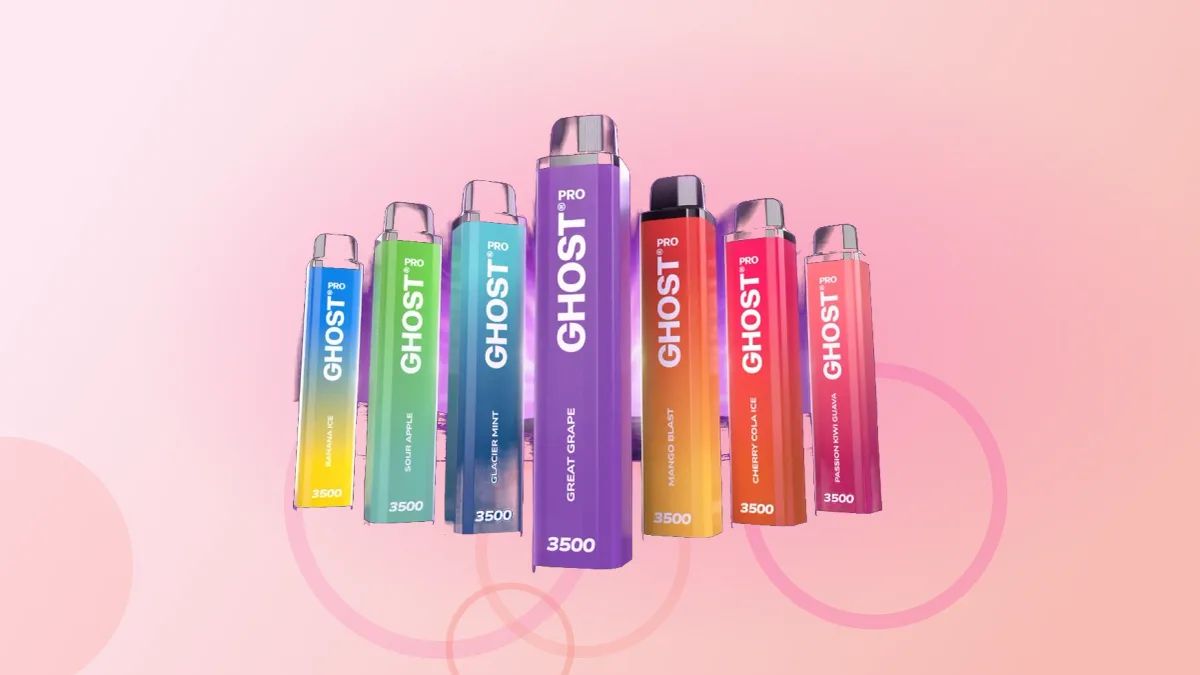
"Balanced" gets stamped on every vape flavour's packaging, but it actually means something specific — the exact interplay of sweetness, tartness, coolness, and intensity. Here's how that plays out across Ghost Pro's 32 flavours, category by category.
What "Balanced" Actually Means in Flavour Design
Every vape brand claims its flavours are "balanced." It's one of those words that gets stamped on packaging and product pages until it stops meaning anything. So let's define it properly, because once you understand what balance actually is, you'll taste Ghost Pro's flavour range differently — and you'll know exactly which of the 32 flavours across our six categories fits the way you actually want to vape.
A flavour is "balanced" when no single element overwhelms the others across the full length of a draw, and across the full life of the device. That's the part most people miss: balance isn't just about the first puff. It's about whether the same ratio of sweet, tart, cool, and intense still holds up on puff 50, puff 800, and puff 3000. A flavour that tastes incredible for the first ten pulls and then turns into a wall of syrup by the end of the day isn't balanced — it was just front-loaded.
Flavour design, at its core, is a formulation problem. E-liquid is built from a PG/VG base carrying flavour concentrates, and every concentrate brings its own weight to the final taste: some are purely sweet, some are sharp and acidic, some carry cooling compounds, and some are simply loud — meaning they register strongly on the palate even in small amounts. Getting a recipe right means deciding how much of each force to let through, and knowing which ones cancel each other out, which ones amplify each other, and which ones fight for the same space on your tongue.
This article is a tour through that process, using real, specific flavours from Ghost Pro's lineup — Ice & Menthol, Berry Mix, Tropical & Fruit, Grape Collection, Candy & Dessert, and Signature Classics — as working examples of balance done well, badly, or differently depending on what a flavour is trying to achieve. Some flavours chase balance through restraint. Others chase it through layering three or four notes so precisely that none of them get to dominate. None of it happens by accident, and once you can spot the mechanics, choosing a flavour stops being a guess and starts being a decision based on what you actually like.
The Four Forces Every Recipe Has to Juggle
There are four variables that determine how a flavour lands, and almost every recipe decision comes down to trading them against each other.
Sweetness is the most obvious one — the sugar-like top note that reads as "candy," "ripe fruit," or "dessert." It's also the easiest force to overdo. Pile on too much sweetness and a flavour reads as one-dimensional, and worse, it fatigues the palate fast. This matters more on a disposable rated for up to 3500 puffs than it does on a single dessert you eat once: a flavour has to survive a lot of repetition without turning cloying.
Tartness, or acidity, is sweetness's natural counterweight. Citrus, berries, and sour candy notes all bring tartness, and a well-built recipe uses it to cut through sugar so the flavour doesn't sit flat on the tongue. Tartness is also what gives a flavour "lift" — the sensation of brightness right as you inhale, before the sweeter notes settle in on the exhale.
Coolness is its own axis entirely, delivered by cooling agents (the same family of compounds behind menthol and mint) rather than by fruit or sugar concentrates at all. Coolness changes how the other three forces are perceived, because cooling compounds numb sweet-taste receptors slightly. That's a crucial, counterintuitive fact: an iced flavour needs more sweetness underneath the cooling, not less, or it reads as thin and medicinal instead of crisp and refreshing.
Intensity is the catch-all for how loud a flavour is — how much it fills the mouth and throat regardless of whether it's sweet, tart, or cool. A flavour can be low in sugar and still feel intense if the concentrate is simply potent. Intensity is the variable that determines whether a flavour feels "big" from the first draw or reveals itself gradually.
Balance, in the end, is just the skill of setting all four of these dials so that the finished flavour tastes like one coherent idea instead of four competing ones. The rest of this article shows how that plays out flavour by flavour.
Where Balance Breaks Down
It's worth spending a section on failure, because you learn what balance is by seeing what happens when it's missing. Across the vape category broadly — not naming names, just naming patterns — there are a handful of recurring mistakes.
The first is straightforward oversweetening. A single-note fruit flavour with nothing to cut it will taste fantastic for the first few draws and syrupy by the halfway point of the device. It's the flavour equivalent of drinking straight fruit cordial with no water added — pleasant in a sip, exhausting over a session.
The second is over-mentholation. Ice flavours are popular specifically because they feel refreshing, especially in UAE heat, but crank the cooling compound too high and the fruit note underneath disappears entirely. You're left with something that tastes like inhaling a cough drop rather than a chilled version of the fruit it's named after.
The third is sour with nothing behind it. Sour candy flavours need a sweet resolution — sourness that never lands anywhere feels sharp and almost chemical, like biting into something acidic with no ripeness to soften the edge.
The fourth, specific to multi-fruit blends, is what you could call note-crowding: stack four or five fruit concentrates together without a clear hierarchy and you get mud — a blend where nothing is identifiable and the overall impression is just "sweet and vaguely fruity," which is a failure of design even if it isn't unpleasant.
The fifth failure is one that only shows up with heavy use: inconsistency across the life of the device. A flavour can be genuinely well-balanced in formulation and still taste unbalanced in practice if the hardware delivering it doesn't vaporize evenly — hot spots that scorch some of the sweeter, more delicate notes while leaving harsher ones intact, or weak spots that mute cooling and intensity toward the end of the device's life. We'll come back to this later, because it's exactly why Ghost Pro pairs every recipe with a 1.2 ohm mesh coil built to hold flavour output steady across all 3500 rated puffs — a good recipe deserves hardware that doesn't undercut it.
Ice & Menthol: Balancing Cold Against Sweet
The Ice & Menthol category — Banana Ice, Blackcurrant Ice, Cherry Cola Ice, Glacier Mint, Red Apple Ice, and Watermelon Freeze — exists to solve one specific problem: how do you deliver a genuinely refreshing, cold sensation without letting the cooling wash out everything else? Since cooling compounds dull sweet perception, every flavour in this category needs to run its fruit or candy notes hotter than it would in a non-iced version just to end up at the same perceived sweetness.
Glacier Mint is the purest test case, since there's no fruit to hide behind — it's just mint and cooling intensity, which means the entire balance question comes down to how sharp the cooling ramp feels on inhale versus how smooth it settles on exhale. Watermelon Freeze takes a candy-forward watermelon note and pushes it hard enough that it still reads as fruity and sweet even with a genuinely cold top note riding over it — get that ratio wrong and you either lose the watermelon or lose the freeze.
Banana Ice is the more unusual formulation in the lineup, because banana is a heavier, creamier flavour profile than most things that get iced. The cooling here isn't fighting brightness, it's cutting density — carving through what would otherwise be a thick, almost custardy note and turning it into something that feels lighter on the palate. Red Apple Ice works the opposite way: apple already has a natural crispness to it, so the cooling reinforces a quality that's already there rather than working against the fruit's character, which is why it reads as clean and snappy rather than as two separate sensations layered on top of each other.
Cherry Cola Ice is the most complex balancing act in the category because it's carrying three distinct forces at once — cola's darker, almost caramelized spice-and-vanilla undertone, cherry's tart-sweet fruit note, and the cooling on top. Getting all three to sit together without one of them reading as an afterthought is a genuine three-way balance problem. Blackcurrant Ice has an easier path to the same destination, because blackcurrant carries natural tartness on its own — it's already doing some of the work that cooling usually has to do elsewhere, so the ice here can stay lighter while still reading as refreshing.
Berry Mix: Balancing Sweet Against Sour
Berries are tart by nature, which makes the Berry Mix category — Berry Burst, Blackcurrant Berry Squash, Blueberry Pomegranate, Blue Razz Lemon, Blue Sour Razz, Buba Blue, and Strawberry Grape — the clearest showcase of the sweet-versus-tart axis in the entire range.
Blue Sour Razz is the most literal example: it's built as a two-stage flavour, where a sour candy-dust top note hits first on the inhale and a sweeter raspberry base note resolves it on the exhale. That sequencing is the entire trick — sourness that arrives and then resolves reads as playful and candy-like, while sourness with no resolution just reads as harsh. Blueberry Pomegranate runs a gentler version of the same idea: pomegranate's natural tartness keeps blueberry's jammy, almost baked sweetness from feeling heavy, without ever pushing into genuinely sour territory.
Berry Burst is the generalist of the group — a mixed-berry blend engineered so that no single berry note takes over, which makes it a strong entry point if you're not sure which side of the sweet-tart line you prefer yet. Blue Razz Lemon adds a citrus element on top of blue raspberry candy sweetness, and the lemon's acidity does double duty: it cuts the sweetness and adds a brightness that keeps the flavour from feeling one-note over a long session.
Buba Blue leans further into nostalgia-driven bubblegum sweetness, keeping its tartness deliberately light — the balance point here is closer to the sweet end of the spectrum by design, built for people who want the candy character of blue raspberry without much bite. Blackcurrant Berry Squash takes its cue from the concept of fruit cordial or squash — a concentrated berry note that reads as slightly diluted and refreshing rather than syrupy, which is its own kind of balance: intensity kept in check rather than sweetness versus tartness. Strawberry Grape closes out the category with a different kind of balance question entirely — two genuinely sweet fruits paired together, where the trick isn't sweet-versus-tart but making sure the two fruits land as distinguishable layers (grape as the deeper base note, strawberry as the brighter top note) instead of blurring into a single generic "berry" impression.
Tropical & Fruit: Balancing Complexity Against Intensity
At nine flavours, Tropical & Fruit is the largest category in the Ghost Pro range — Apple Pear Strawberry, Caribbean Crush, Passion Kiwi Guava, Peach Mango, Strawberry Kiwi, Strawberry Melon Chew, Strawberry Peach Citrus, Watermelon Bull, and White Peach Razz — and it's where the balance challenge shifts from sweet-versus-tart to something more architectural: how do you combine two or three fruits without them colliding?
The answer, almost every time, is sequencing — deciding which note the palate registers first, which one shows up in the middle of the draw, and which one lingers into the exhale. Peach Mango is a clean example: peach's lighter, slightly floral sweetness sits up front, while mango's denser, more tropical weight shows up later and lingers — two ripe, sweet fruits kept distinct by giving them different positions in the draw rather than different sweetness levels. Strawberry Kiwi uses a different mechanism: kiwi brings a faint green, almost vegetal tartness that keeps strawberry's candy-forward sweetness from tipping into flat one-note territory.
Caribbean Crush is the widest blend in the category, built around a whole basket of tropical notes rather than one or two — the balance question here is really about intensity distribution, making sure no single fruit in the mix shouts louder than the others. Passion Kiwi Guava pushes three fruits at once and manages it by establishing a clear hierarchy: passionfruit's tartness leads, kiwi's green edge sits in the middle, and guava's musky sweetness closes it out, so even with three notes in play the palate can track all of them in sequence rather than getting a muddled blend.
Strawberry Melon Chew borrows its structure from chewy fruit candy rather than fresh fruit, which changes the balance target entirely — it's less about ripeness and more about hitting a candy-realistic sweetness without drifting into anything sharp or tart. Strawberry Peach Citrus solves a specific risk with pairing two soft, sweet fruits together (strawberry and peach can get heavy fast) by adding a citrus note whose entire job is to keep the top end bright. Watermelon Bull takes candy watermelon and gives it the tangy, slightly carbonated-tasting edge associated with energy drinks, which is a genuinely different kind of intensity than a straightforward fruit flavour — the balance is between recognisable watermelon sweetness and that sharper energy-drink tang. White Peach Razz closes the category by balancing through contrast in weight rather than in sweetness or tartness: white peach is deliberately delicate and soft, raspberry is sharper and more assertive, and the tension between a quiet fruit and a loud one is the whole point. Apple Pear Strawberry, meanwhile, layers three orchard and garden fruits at three different ripeness levels — apple's crispness, pear's softer sweetness, and strawberry's brightness — stacked so each one occupies a distinct point in the draw instead of blending into a single generic fruit note.
Grape Collection: Balance Through Simplicity
Not every flavour achieves balance through complexity. The Grape Collection — just Grape Bull and Great Grape — makes the opposite case: sometimes the hardest part of balance is restraint.
Grape is a notoriously easy flavour to get wrong, because the line between "recognisable grape candy" and "artificial cough-syrup grape" is thin, and it's crossed by pushing sweetness or intensity a fraction too far. Great Grape is the category's straightforward, nostalgic execution — real grape-candy sweetness held carefully below the point where it turns cloying or synthetic-tasting, which is a subtler achievement than it sounds, since grape concentrate is one of the most concentrated, loudest flavour notes commonly used in vape liquid. Keeping something that potent in check without losing its identity entirely is its own kind of formulation discipline.
Grape Bull takes the same base note and gives it the tangy, slightly fizzy edge associated with energy drinks — the same idea behind Watermelon Bull in the Tropical & Fruit lineup, applied to a different fruit base. Here the balance question is about layering two forces that don't naturally belong together: grape's soft, round sweetness and the sharper, almost carbonated tang of an energy-drink profile. Get the ratio wrong and one of the two completely swallows the other; get it right and you get a flavour that reads as both familiar and slightly unexpected at the same time. With only two flavours in the category, Grape Bull and Great Grape essentially sit at either end of the same axis — one calm and classic, one sharper and more energetic — which is itself a demonstration of how much range a "simple" single-fruit flavour idea can actually cover.
Candy & Dessert: Balancing Sweetness Against Fatigue
Candy and dessert flavours carry an obvious risk: sugar-forward profiles are the fastest ones to cause palate fatigue over a long vaping session, which matters enormously on a device rated for up to 3500 puffs. The two flavours in this category — Candy Floss and Gummies — solve that risk in different but related ways.
Candy Floss (cotton candy) is, by nature, a flavour built around airiness rather than density — the real confection itself is spun sugar, mostly air, with a light, almost evaporating sweetness rather than a heavy, syrupy one. A well-built Candy Floss recipe respects that: the sweetness is kept bright and light rather than thick, and the overall intensity is dialed lower relative to fruit-forward flavours in the range. That's the balance mechanism here — not sweet-versus-tart or sweet-versus-cool, but managing perceived weight so a fundamentally sugary flavour doesn't feel heavy by puff two hundred.
Gummies takes a different approach, built around the "flavour medley" character of actual gummy candy — several fruit notes coexisting under a shared candy-sugar coating rather than one dominant profile. The balance challenge is uniformity: every fruit note in the blend needs roughly the same sweetness ceiling so that the overall impression reads as "mixed gummy candy" rather than one fruit poking through more than the others. It's a subtler version of the note-crowding problem discussed earlier in the Tropical & Fruit section, except here the goal isn't to sequence the fruits distinctly — it's closer to the opposite, blending them into one cohesive candy impression on purpose.
Signature Classics: Balancing Boldness and Drinkability
Signature Classics — Mr. Blue, Mr. Red, Red Angel, Pink Lady, Pink Orange Fizz, and Sour Apple — are the flagship flavours of the range, built to be immediately recognisable and bold from the first draw. That creates a specific balance tension: how do you keep a flavour big and distinctive without it becoming fatiguing over a full device's worth of puffs? The industry term for this is "drinkability" — whether a flavour is something you can comfortably return to draw after draw, session after session, versus something that's fun for a few puffs and then wears out its welcome.
Mr. Blue and Mr. Red are built around big, candy-forward blue and red fruit blends respectively, and the balance work in both is about softening the top note just enough that it holds up over repeat draws without losing the boldness that makes them recognisable in the first place — too much smoothing and they'd feel generic, too little and they'd fatigue fast. Red Angel takes a more elevated approach to a red-fruit profile, using smoother transitions between sweetness and tartness so the sharper edges get rounded off, giving it a more refined character than a straightforward candy-red blend.
Pink Lady draws on the crisp, slightly tart, faintly floral character associated with its namesake apple variety, and its balance question sits right at the intersection of the Ice & Menthol category's crispness discussion and the Berry Mix category's sweet-tart discussion — a flavour that's neither purely sweet nor sharply tart, but calibrated right in between. Pink Orange Fizz introduces a genuinely different sensation: a carbonated "fizz" impression layered over citrus orange, where the balance challenge is intensity management — citrus alone can turn harsh and acidic at high concentration, so the fizz effect and the underlying sweetness both have to be tuned to keep the orange bright without letting it burn.
Sour Apple closes the category and ties directly back to the sour-resolution principle introduced with Blue Sour Razz in the Berry Mix section: a sour flavour only works if the sourness eventually resolves into something sweet. Sour Apple's balance lives entirely in that ratio — enough tartness up front to earn the "sour" in its name, enough apple sweetness underneath to keep it from reading as harsh or purely acidic. It's one of the cleanest single-flavour demonstrations in the entire Ghost Pro lineup of the sweet-versus-tart principle that runs through this whole article.
The Hardware Side of Balance
A perfectly formulated recipe can still taste unbalanced if the device delivering it isn't consistent — which is why flavour balance in a disposable vape isn't purely a liquid question, it's a hardware question too.
Ghost Pro devices run a 1.2 ohm mesh coil rather than a traditional single-wire coil. Mesh coils heat more evenly across their surface, which matters directly to balance: an uneven coil creates hot spots that can scorch the more delicate top notes in a flavour (the cooling in an Ice & Menthol flavour, the tartness in a Berry Mix flavour) while leaving heavier base notes intact, which skews the ratio the recipe was built around. Even heating keeps every element of a flavour vaporizing at roughly the intended rate, draw after draw.
The 1500mAh battery plays a similar role over the life of the device. As batteries discharge, output can taper, and a coil running on less power vaporizes liquid less efficiently — which tends to mute the more subtle elements of a flavour (coolness and tartness especially) before it mutes raw sweetness, since sweetness tends to be the loudest, most heat-resistant signal. A battery sized to comfortably power the coil across all 3500 rated puffs is part of what keeps a flavour's balance from visibly drifting toward "flatter and sweeter" by the last quarter of the device.
Every device is also pre-filled with 10ml of 20mg nicotine e-liquid, and that fixed volume matters for consistency too: the flavour concentrate ratio is set once, at manufacturing, against that exact volume and against the puff count the hardware is rated for — there's no dilution or concentration drift happening mid-use the way there can be with refillable systems where liquid gets mixed, topped up, or left to sit. And because Ghost Pro devices are draw-activated with no fire button, vapor production is tied directly to airflow through the mouthpiece rather than to how long or how hard someone happens to press a button — which keeps flavour intensity from swinging between draws based on user technique, another small but real contributor to a flavour tasting the same on puff 1 as it does on puff 2000.
Finding Your Own Balance Point
Everything above describes how Ghost Pro's recipes are engineered, but "balanced" is still partly personal — the specific ratio of sweet, tart, cool, and intense that feels right to you is a matter of preference, not just formulation.
If you gravitate toward refreshing and crisp over sugary, the Ice & Menthol category — Glacier Mint, Watermelon Freeze, Red Apple Ice, Banana Ice, Cherry Cola Ice, Blackcurrant Ice — is your starting point, since coolness is doing a lot of the work in how each of those flavours reads. If you like a flavour with some bite and brightness rather than straightforward sweetness, Berry Mix and Sour Apple from Signature Classics lean into that tart, candy-sour territory. If pure, uncomplicated sweetness is what you're after, Grape Collection and Candy & Dessert sit closer to that end of the spectrum, while Tropical & Fruit rewards people who want more going on across a single draw — multiple fruits revealing themselves in sequence rather than one flavour hitting all at once.
Because every flavour is 40 AED for a single device, the lowest-friction way to figure out where your own balance point sits is to try two or three flavours from different categories rather than committing straight to a box. Once you've identified which axis you actually respond to — cooling, tartness, straightforward sweetness, or layered complexity — a box of 10 at 350 AED (working out to roughly 35 AED per device) becomes a much more confident purchase, since you're buying into a profile you already know suits you rather than gambling on a flavour name alone. Checking what's currently in stock, or asking for a recommendation based on what you've liked before, is as simple as messaging Ghost Pro's WhatsApp order line at +971 56 165 2004.
Ordering Ghost Pro Across the UAE
Once you know which flavour — or flavours — you want to try, ordering is straightforward and runs entirely through WhatsApp at +971 56 165 2004, where you can also confirm live stock before committing to a specific flavour or category.
Pricing is flat across the entire 32-flavour range: 40 AED for a single device, or 350 AED for a box of 10, which brings the effective per-device cost down to about 35 AED when you buy by the box. Delivery is 30 AED standard, and it's waived entirely once an order reaches 350 AED — a useful thing to keep in mind if you're planning to test multiple flavours across categories at once, since ordering a spread of singles to compare balance profiles can be an efficient way to hit that free-delivery threshold.
Delivery speed varies by emirate: Dubai orders typically arrive in around 2 hours, Sharjah and Ajman in roughly 4 to 6 hours, Abu Dhabi and Al Ain in around 6 hours, and Ras Al Khaimah, Fujairah, and Umm Al Quwain in roughly 6 to 12 hours. Payment is cash on delivery in AED only — there's no card or online payment option, which keeps the ordering process simple and contactless-free by design. Ghost Pro currently holds a 9.9/10 rating across 383 verified UAE customer reviews, which reflects consistency across exactly the kind of repeat purchasing this article has been describing — people finding a flavour or category that matches their own balance preference and coming back to it. As with any nicotine product, Ghost Pro is restricted to buyers aged 21 and over, and nicotine products remain age-restricted and regulated in the UAE — if you have specific legal questions, current official guidance is the right place to check rather than assuming details from a blog post.
Final Thoughts
"Balanced" isn't a marketing word when you break it down properly — it's a description of how sweetness, tartness, coolness, and intensity are weighted against each other, and whether that weighting holds up from the first puff to the three-thousandth. Some Ghost Pro flavours achieve it through contrast, like the sour-then-sweet resolution in Blue Sour Razz and Sour Apple, or the delicate-versus-sharp pairing in White Peach Razz. Others achieve it through restraint, like Great Grape holding back just short of syrupy, or Candy Floss staying light instead of dense. Others achieve it through sequencing, like Peach Mango and Passion Kiwi Guava revealing their component fruits one at a time rather than all at once. And all of it rests on hardware — the 1.2 ohm mesh coil, the 1500mAh battery, the 10ml of 20mg nicotine liquid measured against a 3500-puff rating — built to deliver that formulation consistently rather than letting it drift.
The best way to put any of this to the test is simply to try it. Message +971 56 165 2004 on WhatsApp to check current stock, ask about a flavour that matches the balance profile you're after, and get a straightforward cash-on-delivery order moving to wherever you are in the UAE.
Quick answers
What does it actually mean for a vape flavour to be "balanced"?+
It means no single element — sweetness, tartness, coolness, or overall intensity — overwhelms the others, and that ratio holds steady from the first puff through the last of the device's rated 3500 puffs. A flavour that's great for ten draws and then turns syrupy isn't balanced, it's just front-loaded.
Which Ghost Pro flavour is easiest to start with if I'm not sure what "balanced" tastes like?+
Berry Burst (Berry Mix) is a good reference point because it's deliberately built so no single berry note dominates. From there, Peach Mango (Tropical & Fruit) shows how two sweet fruits can be sequenced rather than blended, and Glacier Mint (Ice & Menthol) shows how a single note relies purely on intensity control.
Why do iced flavours like Glacier Mint or Watermelon Freeze need extra sweetness?+
Cooling compounds slightly dull how sweet taste receptors register, so an iced recipe has to push its fruit or candy note a bit harder underneath the cooling than a non-iced version would need to, or the flavour ends up tasting thin and medicinal instead of crisp and refreshing.
Does the 1.2 ohm mesh coil actually change how balanced a flavour tastes?+
Yes. Mesh coils heat more evenly than a standard coil, which matters because uneven heat can scorch delicate top notes like cooling or tartness while leaving heavier base notes untouched, skewing the ratio the recipe was built around. Even heating keeps every element vaporizing at the intended rate.
Are sour flavours like Sour Apple or Blue Sour Razz harsh to vape?+
They're built around a specific sequence: tartness hits first on the inhale, then a sweeter note resolves it on the exhale. Sourness with no sweet resolution reads as harsh, but Sour Apple and Blue Sour Razz are formulated so the sour note lands somewhere rather than sitting unresolved.
Does a flavour's balance change over the life of a 3500-puff device?+
It can, if the hardware isn't consistent. Ghost Pro pairs its recipes with a 1500mAh battery sized to hold coil output steady across the full rated puff count, since tapering power tends to mute subtle notes like coolness and tartness before it mutes raw sweetness, which would otherwise skew the flavour flatter and sweeter by the end of the device.
Should I buy a single device or a box of 10 to find my preferred flavour balance?+
Start with a couple of single devices at 40 AED each from different categories — say, one from Ice & Menthol and one from Berry Mix — to identify which axis (cooling, tartness, or straightforward sweetness) you respond to. Once you know, a 350 AED box of 10 of that flavour becomes a far more confident purchase.
Does nicotine strength affect how balanced a flavour feels?+
Nicotine strength itself (20mg across every Ghost Pro flavour) is separate from taste balance, but the fixed 10ml liquid volume it's mixed into is set once against that concentration and against the device's 3500-puff rating, which is part of what keeps the flavour concentrate ratio — and therefore the balance — from drifting as the device is used.
Related guides
Sweet, Sour, Icy or Creamy: How to Map Your Flavour Preferences
Stop guessing at "something fruity" — a five-question self-assessment that sorts your palate into sweet, sour, icy, or creamy/smooth, then maps the result onto specific flavours across all 32 options in the Ghost Pro range.
Ghost Vape Flavors by Mood: A Decision Guide
Not sure which of the 32 Ghost Pro flavours to choose? Start from the mood you're in and follow the shortlist.
Best Ice & Menthol Ghost Pro Flavours for Dubai Summer
Dubai heat calls for real cooling power — here's how the Ghost Pro 3500 Puffs Ice & Menthol lineup ranks from sharpest chill to gentlest frost, plus which flavour fits your summer day best.
Blueberry Pomegranate Vape: Jammy Berry Meets Bright Tang
What a blueberry pomegranate vape tastes like, why the pairing works, and how Ghost Pro's version compares to other berry flavours.