
Why Ghost Pro Holds a 9.9/10 Rating: What UAE Customers Say
By Ghost Pro UAE Team· Published 13 Jul 2026· Fact-checked by our order desk
Ghost Pro holds a 9.9/10 rating across 383 verified UAE customer reviews. Here's what the aggregate feedback on delivery speed, device consistency, flavour variety, and pricing actually shows — no invented quotes, just the patterns.
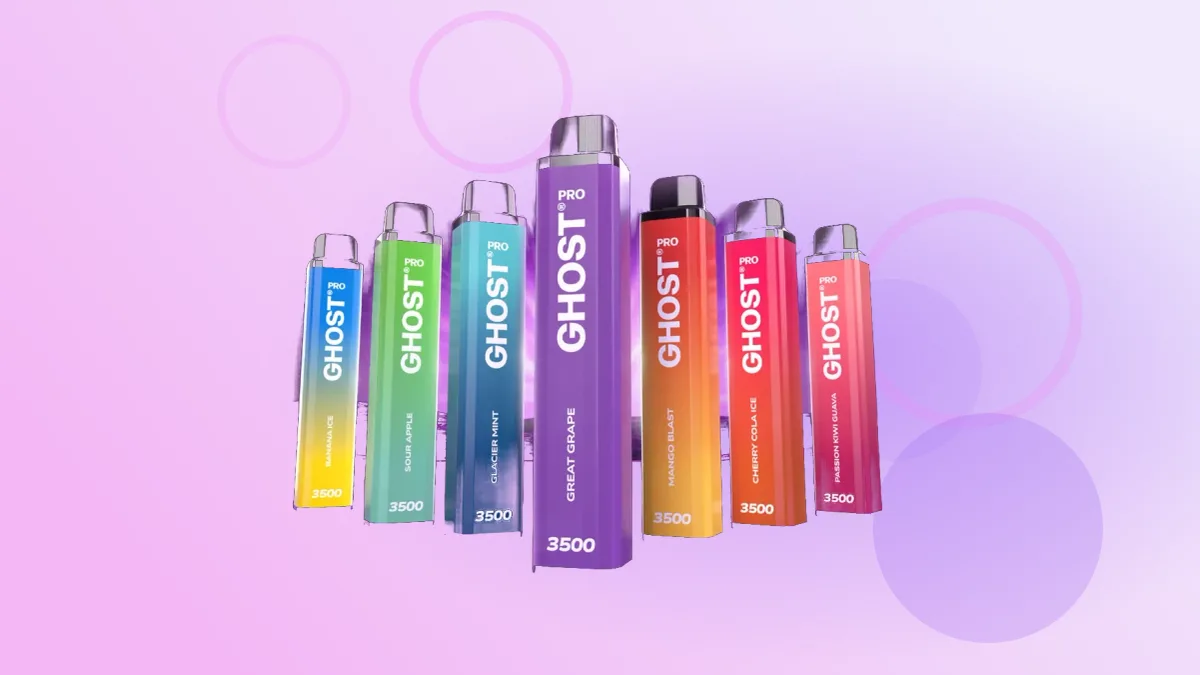
A Rating That's Hard to Ignore: Breaking Down 9.9/10 From 383 Reviews
A 9.9 out of 10 rating sounds almost too clean to trust. Most of us have learned to be suspicious of perfect-looking numbers on product pages — they usually mean five reviews, all glowing, all posted the same week. That's not what's happening here. Ghost Pro's 9.9/10 comes from 383 verified UAE customer reviews, accumulated order by order, across every emirate the brand delivers to. That's a large enough sample that a handful of bad experiences — and there will always be a handful, no product is flawless — get absorbed into the average rather than distorting it.
What makes the number worth examining isn't the score itself. It's what sits underneath it: hundreds of individual purchase decisions, repeat orders, and delivery experiences that collectively point in the same direction. When you're buying a nicotine product online in Dubai, Abu Dhabi, Sharjah, or anywhere else in the UAE, you're trusting a stranger to get your order right, deliver it on time, and hand over a device that actually performs as described. A rating built from hundreds of real transactions is the closest thing to a second opinion you get before you've even placed your first order.
This article isn't about cherry-picking five-star comments. It's about looking at the aggregate — what categories of feedback show up again and again, what the recurring praise clusters around, and honestly, what keeps the score at 9.9 rather than a flat 10. Because that quarter-point gap tells you more about the brand's honesty than a perfect score ever could. Real products have friction points. What matters is whether that friction is minor and rare, or systemic. We'll walk through the specific themes — delivery timing, device consistency, flavour range, pricing logic, and the ordering process itself — that show up consistently across those 383 reviews, without inventing quotes or names that aren't verifiable. Aggregate data, discussed honestly, is more useful than a wall of suspiciously perfect testimonials anyway.
What "Verified" Actually Means for These Reviews
Before diving into what the reviews actually say, it's worth being precise about what "verified" means in this context, because the word gets thrown around loosely in e-commerce. A verified review, in the way it applies here, is tied to an actual completed order — someone who placed a request through WhatsApp, received a delivery, paid cash on arrival, and then left feedback afterward. It's not a review scraped from a third-party forum, not an incentivized post from someone who never bought anything, and not a submission with no purchase behind it.
This matters more for a category like disposable vapes than it does for, say, a phone case. Nicotine products carry an age restriction — Ghost Pro is intended for buyers aged 21 and over — and the purchase itself happens through a slightly less conventional channel than a typical online store: an order placed via WhatsApp at +971 56 165 2004, paid for in cash when the courier arrives. That structure actually makes verification more meaningful, not less. Every review sits on top of a real cash transaction and a real doorstep handoff. There's no one-click "buy now" button generating reviews from browsing sessions that never converted.
The 383 figure also isn't static — it's a running total that grows as new orders complete and new customers weigh in, which is why the rating reflects ongoing performance rather than a snapshot from a single launch month. A brand that had a rough first quarter and cleaned up its act would see that reflected over time as the average shifts upward; a brand coasting on early reviews while quality slips would see the opposite. Holding steady at 9.9 across a sample this size suggests consistency rather than a lucky early run that's since been diluted by newer, less enthusiastic buyers.
It's also worth noting what this rating is not. It is not a claim about health outcomes, safety relative to smoking, or any medical benefit — Ghost Pro doesn't make those claims, and this article won't either. It's a satisfaction score tied to the buying experience: did the product arrive, did it work as described, did the price match expectations, was the flavour good. Those are answerable, verifiable questions, and that's exactly why the feedback is worth reading closely.
The Number One Theme: Delivery Speed Across the Emirates
If there's one topic that surfaces more than any other in aggregate feedback, it's delivery speed — and that makes sense, because speed is the part of the experience customers feel most acutely. You place an order through WhatsApp, and then you're just waiting. In Dubai, that wait tends to land around two hours, which is fast enough that a same-afternoon order regularly beats the customer's own expectations. In Sharjah and Ajman, the window sits at roughly four to six hours. Abu Dhabi and Al Ain typically see deliveries within about six hours. The more distant emirates — Ras Al Khaimah, Fujairah, and Umm Al Quwain — run longer, generally six to twelve hours, simply because of the distances and courier logistics involved in reaching those areas.
Delivery cost is the other half of this theme, and it comes up almost as often as speed does. Standard delivery is 30 AED, but that fee disappears entirely on orders of an order of 350 AED or more. That threshold shows up in feedback in a fairly predictable way: customers who order a single device for 40 AED accept the delivery charge as a minor cost of convenience, while customers who order in bulk — say, a box of Peach Mango alongside a box of Blue Razz Lemon — end up with free delivery on top of the better per-unit price a box already offers. That combination, bulk pricing plus waived delivery, is one of the clearer value patterns you can trace directly back to the way the pricing and delivery structure is designed.
What ties this theme together in the aggregate data isn't that every single delivery hit the fastest end of its window — some inevitably land later, especially during high-demand periods or in the farther emirates — but that the ranges hold up as a reasonable expectation-setting tool. Customers who order from Fujairah aren't comparing their wait time to a Dubai customer's two-hour turnaround; they're comparing it to what they were told to expect for their own emirate, and it's largely landing within that band. That's a subtler but more important form of consistency than raw speed alone.
Consistency in the Device Itself: Battery, Coil, and Puff Count
Delivery gets people excited in the short term, but it's the device performance that determines whether someone reorders — and reorder behavior is baked into a rating built from hundreds of transactions, because repeat customers are disproportionately represented in a sample this size. The hardware specs behind every Ghost Pro flavour are identical regardless of which of the 32 options you pick: a 1500mAh battery, a 1.2 ohm mesh coil, 10ml of 20mg nicotine e-liquid pre-filled at the factory, and a rating of up to 3500 puffs per device. No button, fully draw-activated.
That consistency across the entire catalogue is a bigger deal than it sounds. A lot of disposable vape ranges vary hardware quality flavour by flavour, or run different battery capacities across different lines, which means a customer's experience with one flavour doesn't predict their experience with the next one. When every device — from a Watermelon Freeze to a Sour Apple to a Gummies — is built on the same 1500mAh battery and 1.2 ohm mesh coil, feedback about performance generalizes across the whole range. A customer who found their Blue Sour Razz hit smoothly from first draw to last can reasonably expect the same mesh coil to deliver similar performance in a Strawberry Melon Chew.
Mesh coils in general tend to produce more even vapour and flavour delivery across the life of a device compared to older coil designs, which lose flavour intensity as the wick saturates unevenly — that's a big part of why the "hits the same on puff 3000 as it did on puff 50" type of consistency shows up as a recurring theme in aggregate satisfaction rather than a rare compliment. And because the puff count and nicotine strength are fixed at 3500 puffs and 20mg across every flavour, customers know exactly what they're comparing when they switch flavours between orders. There's no guesswork about whether a new flavour will run out faster or hit differently at the nicotine level, which removes a common source of disappointment with disposable vape ranges that vary specs by SKU.
Flavour Variety: Why 32 Options Keeps Showing Up in Feedback
A 32-flavour catalogue spanning six categories — Ice & Menthol, Berry Mix, Tropical & Fruit, Grape Collection, Candy & Dessert, and Signature Classics — gives customers enough range that flavour fatigue isn't really a factor in repeat ordering, and that shows up in the kind of feedback that touches on variety. It's a common pattern in customer commentary generally: people who find a brand with only six or eight flavours tend to cycle through favorites and stall out, ordering the same one or two repeatedly until they get bored and start looking elsewhere. A range this wide keeps that from happening.
The category structure itself matters here too. Someone who wants a cooling, menthol-forward hit has six dedicated options in Ice & Menthol — Glacier Mint for a clean, near-pure mint experience, or Watermelon Freeze and Banana Ice for fruit-forward profiles with a cold finish layered underneath. Someone chasing tart, punchy fruit has the Berry Mix category to work through — Blue Sour Razz and Blackcurrant Berry Squash both lean into a sharper, more acidic edge, while Berry Burst and Strawberry Grape sit softer and sweeter. The Tropical & Fruit category is the largest at nine flavours, ranging from the layered sweetness of Peach Mango to the more complex three-way blend implied by Apple Pear Strawberry, giving fruit-focused customers the most room to rotate without repeating a profile.
Then there's the smaller, more specific categories that tend to attract a particular kind of loyal customer rather than broad appeal: the two-flavour Grape Collection (Grape Bull and Great Grape) for straightforward grape fans, the two-flavour Candy & Dessert lineup (Candy Floss and Gummies) for anyone who wants something that reads more like a treat than a fruit, and the six-strong Signature Classics category — Mr. Blue, Mr. Red, Red Angel, Pink Lady, Pink Orange Fizz, and Sour Apple — which functions almost like the brand's house blends, less tied to a single fruit and more built around a distinctive, memorable profile.
What this breadth does for the aggregate rating is subtle but real: it reduces the number of customers who end up disappointed simply because the one flavour they tried wasn't to their taste. With 32 options across six distinct categories, someone unhappy with a single flavour has 31 other directions to go before concluding the brand itself isn't for them — and that flexibility shows up as fewer flavour-driven negative reviews than you'd expect from a narrower catalogue.
Price and Value: The Math Customers Keep Doing
Pricing feedback tends to be the most mathematically literal category of customer commentary, because the numbers are simple enough that everyone runs them independently. A single Ghost Pro device costs 40 AED. A box of 10 costs 350 AED, which works out to 35 AED per device — a 5 AED discount per unit simply for buying in volume. That's not a deep discount in percentage terms, roughly 12.5%, but it's straightforward enough that customers notice it immediately and factor it into how they order.
The pattern that emerges in aggregate feedback around pricing is fairly predictable once you understand the delivery fee structure sitting alongside it. A first-time customer testing the brand tends to order a single device — 40 AED plus the 30 AED delivery fee, landing at 70 AED total for a first experience with, say, a Passion Kiwi Guava or a Cherry Cola Ice. That's a reasonable amount to risk on an unfamiliar flavour. But once someone decides they like the product, the math shifts hard toward boxes: two boxes of 10 comes to 700 AED with delivery waived entirely, versus paying delivery twice on two separate single-device orders. Customers doing bulk orders across multiple flavours — a box of Strawberry Kiwi and a box of Peach Mango, for instance — get the better per-unit price and free delivery in the same transaction.
Because pricing is fixed and identical across all 32 flavours — there's no premium flavour tier or discounted clearance line — value feedback tends to focus on volume strategy rather than flavour-by-flavour price comparisons. Customers aren't debating whether Gummies is worth more than Grape Bull; they're deciding whether they're confident enough in the brand to jump straight to box quantities. A rating built on cash transactions, where every AED spent was handed over in person at the door rather than charged automatically to a card on file, tends to reflect genuinely considered purchase decisions — people don't casually cash-pay for something they regret, the way an unnoticed subscription renewal might slip through on a saved card.
The WhatsApp Ordering Experience
Ordering through WhatsApp rather than a conventional checkout page is a deliberate structural choice, and it shows up as its own category of feedback because it changes the entire tone of the transaction. Instead of clicking through a cart, entering shipping details into form fields, and waiting for a confirmation email, the process is a conversation: a message to +971 56 165 2004 with a flavour request or a stock check, a reply confirming availability and price, and an order that moves toward delivery from there.
That conversational structure does a few things that show up in aggregate satisfaction. First, it makes stock checks trivial — a customer who wants to know whether Red Angel or Blue Razz Lemon is currently in stock before committing gets a direct answer rather than trusting a website inventory counter that may or may not be accurate in real time. Second, it creates a natural point for customers to ask questions before paying anything, which matters more for a nicotine product with an age restriction and specific hardware specs than it would for a generic retail item. Someone unsure whether the 20mg strength or the 3500 puff rating suits their usage can ask directly rather than guessing from a product description.
The trade-off, and it's a real one, is that WhatsApp ordering doesn't have the instant, always-on feel of an automated checkout — there's an implicit expectation of a reply within a reasonable window rather than an immediate cart confirmation. For the vast majority of the feedback reflected in the aggregate rating, that trade-off resolves in the brand's favor: a human-mediated order that catches problems before dispatch tends to produce fewer wrong-flavour or wrong-quantity mistakes than a fully automated system with no verification step. It's a slower front door, but it appears to be a more accurate one.
Cash on Delivery as a Trust Signal
Payment structure is one of those details that customers rarely mention directly as a compliment, but it shows up indirectly throughout the aggregate feedback in the form of comfort and repeat ordering. Ghost Pro only accepts cash on delivery, in AED — no cards, no online payment gateway, no stored payment information anywhere in the process. For a nicotine product being ordered by strangers over WhatsApp, that structure removes a category of risk that would otherwise sit over the entire transaction.
Think about what a card-based checkout would require here: a customer would need to hand over card details to an online form, trust that those details are stored securely, and hope the charge that eventually posts matches what was agreed. Cash on delivery collapses all of that into a single moment — the courier arrives, the customer inspects the order, and payment happens only once the product is physically in hand. There's no possibility of a surprise charge, no stored card number sitting in a database somewhere, and no dispute process to navigate if something goes wrong, because nothing is paid until the customer is satisfied enough to hand over cash.
This matters more for repeat customers than first-timers, and repeat customers are a meaningful chunk of any review base this size. Someone who has already been burned once by an online purchase — a wrong item, a delayed refund, a card charged before shipping — tends to specifically seek out cash-on-delivery options for anything they're less than fully certain about. A 383-review sample skewed toward genuine repeat business, rather than one-time impulse buys, is exactly the kind of sample where a payment structure like this tends to correlate with a high aggregate score: people who didn't trust the first transaction usually don't come back for a second and third, and the volume of return customers embedded in a growing review count suggests plenty of people did.
Regional Patterns: How Feedback Differs From Dubai to Ras Al Khaimah
One of the more interesting things about aggregating reviews across an entire country's worth of emirates is that satisfaction doesn't come from a single homogeneous customer base — it comes from people with meaningfully different delivery realities, and the rating holds up across all of them. Dubai customers, sitting inside roughly a two-hour delivery window, tend to weight their expectations around speed most heavily, simply because speed is the most visible variable when the wait is already short. A Dubai order that runs a little over two hours registers more sharply against expectations than the same delay would in a region where six hours was always the baseline.
Sharjah and Ajman customers, inside the four-to-six-hour band, and Abu Dhabi and Al Ain customers, around six hours, tend to fold delivery time into the background more and focus feedback on the product itself — flavour accuracy, device performance, whether the order matched what was requested. That shift in emphasis makes sense: when the delivery window is already known to be longer, it stops being the most emotionally charged part of the experience, and attention moves to what's actually inside the box once it arrives.
The more distant regions — Ras Al Khaimah, Fujairah, and Umm Al Quwain, with six-to-twelve-hour windows — represent the toughest test of the aggregate rating, because that's the widest gap between fastest and slowest possible delivery and the greatest opportunity for a customer's expectations to diverge from reality. That these regions still contribute positively to an overall 9.9 average suggests the expectation-setting itself is doing real work: a twelve-hour wait that was clearly communicated upfront lands very differently than an unexplained twelve-hour wait would. Customers in these areas aren't rating the brand against a two-hour Dubai standard; they're rating it against what they were told to expect for their own location, and that distinction is a big part of why regional variation in delivery time hasn't fractured the overall score into inconsistent regional pockets.
What Keeps It at 9.9 and Not a Flat 10
It would be easy — and dishonest — to write an article about a 9.9/10 rating and pretend that quarter-point gap doesn't exist. It does, and it's worth taking seriously rather than glossing over. No product moving hundreds of orders across seven emirates is going to bat a perfect thousand. Couriers hit traffic. A specific flavour occasionally runs low on stock right when someone wants it. A WhatsApp message sent late at night might not get an immediate reply. These are the ordinary friction points of real-world logistics, not defects in the product itself, and they're almost certainly what accounts for the gap between 9.9 and a flat 10.
What's more telling than the existence of that gap is its size. A rating dragged down to something like 7.5 or 8 out of 10 would suggest structural problems — a product that frequently underperforms its 3500 puff rating, a delivery system that regularly blows past its stated windows, a device that doesn't actually deliver the 20mg strength it claims. A 9.9 sitting on top of 383 reviews suggests the opposite: that the vast majority of transactions go essentially as described, and the small remainder reflects the kind of occasional, non-systemic friction that no delivery-based business entirely escapes.
There's also a useful test you can apply to any aggregate rating: does it hold steady or drift as the sample grows? A rating built on 20 early reviews that erodes as it climbs past 100, 200, and then 383 would be a red flag — it would suggest early reviewers were unrepresentative, perhaps friends and family or an initial promotional push, and that real broad-market feedback is less favorable. A rating that holds at 9.9 through that same growth, order after order, across every emirate the brand serves, suggests the opposite: that the experience being rated is genuinely consistent, not a statistical artifact of a small or curated early sample.
Why Aggregate Ratings Matter More Than Any Single Review
There's a reason this article has deliberately avoided inventing customer quotes, names, or dramatized testimonials, even though that kind of content is common — arguably expected — on e-commerce blogs. A single glowing quote, real or fabricated, tells you almost nothing statistically. It tells you that one person, on one day, felt strongly enough to write something enthusiastic. It says nothing about the 382 other transactions sitting alongside it, and it's trivially easy to cherry-pick or fabricate in a way that a genuine aggregate score isn't.
An aggregate rating, by contrast, is much harder to game convincingly at scale. Getting 383 separate cash-on-delivery transactions to average out to 9.9 requires that the underlying experience — the device performance, the delivery timing, the flavour accuracy, the ordering process — actually holds up across hundreds of independent interactions with different people in different emirates ordering different flavours at different times. You can't write your way to that number with clever copy. It has to come from the transactions themselves.
That's why this article has focused on categories rather than anecdotes: delivery speed as a recurring theme, device consistency as a recurring theme, flavour variety and pricing logic as recurring themes. These categories represent patterns that emerge only when you look across a large number of reviews rather than picking out the most flattering individual one. If you're comparing Ghost Pro against another disposable vape option in the UAE market, the more useful question isn't "what's the best single review either brand has ever received" — it's "what does the full distribution of feedback look like, and how large is the sample it's built on." A 9.9 from 383 verified reviews is a meaningfully different claim than a 9.9 from 12 reviews, even though the number printed on the page looks identical.
How We Track and Report This Rating
Transparency about methodology matters here, if only because vague claims about ratings are exactly what erode trust in online reviews generally. The 9.9/10 figure reflects verified UAE customer reviews tied to completed orders — placed through WhatsApp, delivered to a real address, paid for in cash on arrival — aggregated across the full 383-review sample rather than a curated subset. It's not a marketing number pulled from a single survey wave or a promotional campaign; it's the running average of real transaction outcomes.
It's worth being equally clear about what this figure doesn't claim. It isn't a clinical or scientific measurement, it doesn't make any statement about health effects or nicotine safety, and it shouldn't be read as anything beyond what it is: a satisfaction average tied to the purchasing and delivery experience for a legally age-restricted nicotine product. Anyone evaluating whether to try Ghost Pro should treat the rating as one useful data point about service reliability and product consistency — not as a substitute for their own judgment about whether a nicotine product is right for them in the first place, which remains a personal decision subject to age restrictions and general regulatory guidance that buyers should confirm through current official sources.
The rating is also a living number rather than a fixed one. As more orders complete across Dubai, Abu Dhabi, Sharjah, Ajman, Ras Al Khaimah, Fujairah, Umm Al Quwain, and Al Ain, the sample grows and the average adjusts accordingly. That's a feature of honest aggregate reporting, not a flaw — a number that never moves despite growing order volume would itself be a reason for skepticism. The fact that 9.9 has held steady through hundreds of additional reviews, rather than being an early spike that's since faded, is itself part of the evidence worth paying attention to.
Ordering With Confidence: What the Rating Means for You
None of this is useful as an abstract statistic if it doesn't translate into a clearer decision when you're actually ready to order. So here's the practical takeaway: a 9.9/10 rating from 383 verified reviews means that across hundreds of real cash transactions, in every emirate from Dubai to Umm Al Quwain, the core promises — a 1500mAh battery and 1.2 ohm mesh coil that performs consistently up to 3500 puffs, 10ml of 20mg nicotine e-liquid, delivery within the stated windows for your emirate, and a straightforward cash-on-delivery payment — have held up often enough and reliably enough to produce a score that's stayed remarkably stable as the sample size has grown.
If you're new to the brand, the sensible starting point is a single device at 40 AED, picking one flavour from any of the six categories that matches what you already know you like — something like Glacier Mint if you gravitate toward menthol, or Strawberry Peach Citrus if you want a brighter fruit profile. Once you've confirmed the device performs the way this article and the aggregate rating describe, the box pricing at 350 AED for 10 — working out to 35 AED per device — combined with free delivery from 350 AED (any full box), becomes the more economical way to keep a rotation of flavours on hand without paying delivery fees repeatedly.
Placing an order is as simple as messaging +971 56 165 2004 on WhatsApp with your flavour choice, quantity, and delivery address; a quick stock check through the same number confirms availability before you commit to anything. Remember that this is a nicotine product legally restricted to buyers aged 21 and over, and that general regulatory guidance around nicotine products in the UAE is worth checking through current official sources if you have specific questions beyond age eligibility. Beyond that, the 9.9/10 sitting on top of 383 verified reviews is about as strong a starting signal as an aggregate rating can reasonably offer — not because any single review promises perfection, but because hundreds of independent transactions, across every corner of the country the brand delivers to, have consistently pointed in the same direction.
Quick answers
Where does Ghost Pro's 9.9/10 rating come from?+
It's an aggregate score built from 383 verified UAE customer reviews, each tied to a completed order placed through WhatsApp and paid for via cash on delivery — not a curated selection of testimonials.
What does 'verified review' mean for Ghost Pro?+
A verified review is linked to an actual completed transaction: an order placed via WhatsApp at +971 56 165 2004, delivered to a real address, and paid for in cash on arrival. It excludes feedback from anyone who didn't complete a purchase.
What do customers mention most often in feedback?+
Delivery speed and reliability across the emirates, consistency of the device itself (the 1500mAh battery, 1.2 ohm mesh coil, and 3500 puff rating), the breadth of the 32-flavour range, and the value of box pricing at 350 AED versus single devices at 40 AED are the recurring themes in aggregate feedback.
Why isn't the rating a perfect 10 out of 10?+
A quarter-point gap on a sample of 383 real-world, delivery-based transactions across seven emirates reflects ordinary logistics friction — occasional delays or stock timing — rather than any single systemic issue with the product or service.
Does the rating say anything about health or safety?+
No. The 9.9/10 is a satisfaction score tied to the purchasing and delivery experience only. It makes no health, safety, or medical claims, and Ghost Pro is a nicotine product restricted to buyers aged 21 and over.
Does delivery speed affect how customers rate the product?+
It's one of the most frequently mentioned categories. Dubai customers typically see delivery in about 2 hours, Sharjah and Ajman in 4-6 hours, Abu Dhabi and Al Ain around 6 hours, and Ras Al Khaimah, Fujairah, and Umm Al Quwain in roughly 6-12 hours — feedback tends to track closely against these stated windows rather than a single national standard.
How is the rating kept honest rather than inflated?+
It's calculated from real cash-on-delivery transactions rather than incentivized or unverified submissions, and it's reported as a running average that grows and adjusts as new orders complete, rather than a fixed number frozen at an early, potentially unrepresentative sample size.
Can I check current stock or ask questions before ordering?+
Yes — message +971 56 165 2004 on WhatsApp for a stock check or any questions about flavours, strength, or delivery timing before placing an order. All orders are cash on delivery in AED only.
Related guides
Best All-Day Ghost Pro Flavours That Won't Tire Your Palate
Not every flavour that wows on the first puff survives puff two thousand. Here are the Ghost Pro 3500 Puffs flavours built for a full day of use — and the ones better saved for occasional sessions.
White Peach Razz Vape: The Delicate Peach Flavour Explained
What makes white peach different from ordinary peach, what the razz adds, and whether Ghost Pro White Peach Razz is the right peach flavour for you.
Ghost Pro Passion Kiwi Guava Review: Taste, Price & Where to Buy in Dubai (2026)
We put Ghost Pro Passion Kiwi Guava through a full review — taste, comparisons, and whether its tart, tangy tropical profile is worth ordering in the UAE.
Ghost Pro vs Other Disposable Vapes in the UAE — Which Should You Buy?
Shopping for a disposable vape in the UAE? Here's how Ghost Pro 3500 Puffs compares on puff count, flavours, delivery speed, and price so you can choose with confidence.