
Draw-Activated vs Button Vapes: What's the Difference and Why It Matters
By Ghost Pro UAE Team· Published 7 Aug 2026 · Updated 9 Oct 2026· Fact-checked by our order desk
Draw-activated devices like Ghost Pro 3500 Puffs fire the moment you inhale, while button vapes need a timed press first. Here's what that mechanical difference actually means for reliability, battery life, flavour, and everyday use across the UAE.
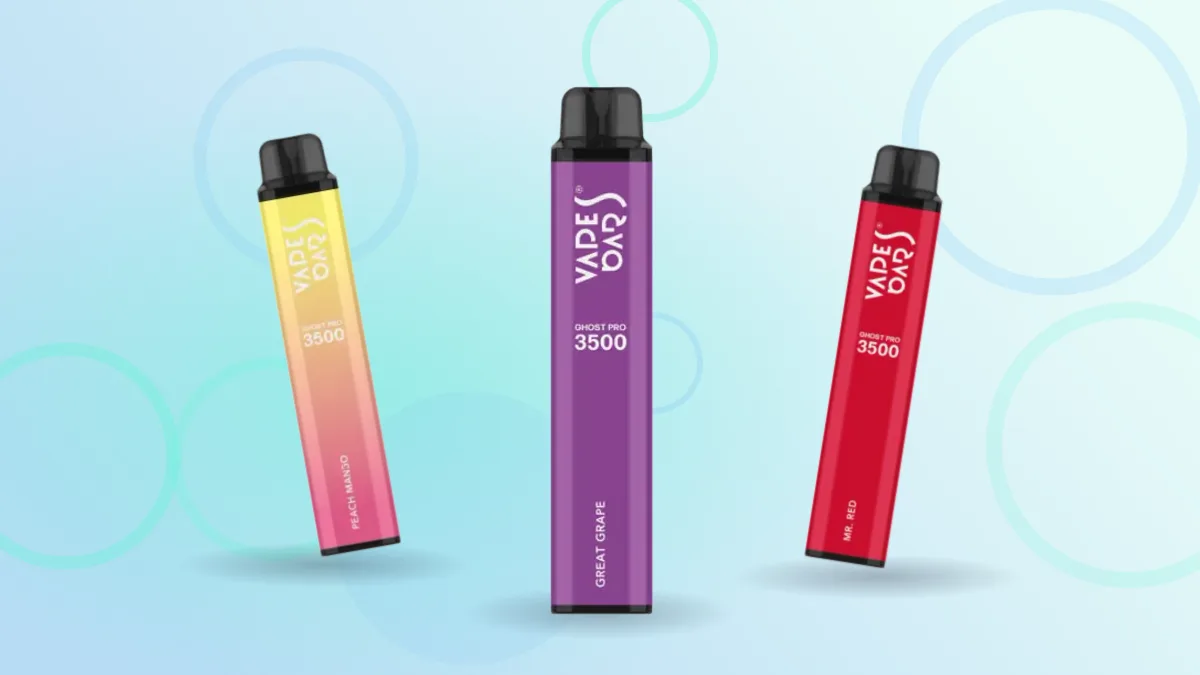
Pick up two disposable vapes in any UAE kiosk or have them delivered to your door, and the first thing you'll notice isn't the flavour name on the box — it's how you actually get the thing to produce vapour. Some devices ask for a firm press of a button before you inhale. Others do nothing at all until you put them to your lips and pull, at which point a tiny sensor inside wakes the coil up on its own. That second category — draw-activated, firing-button-free devices like Ghost Pro 3500 Puffs — has quietly become the dominant format for disposables sold across Dubai, Abu Dhabi, Sharjah and the rest of the Emirates, and there are real engineering and everyday-use reasons why.
This isn't a trivial spec-sheet detail. The activation method affects how a device survives being tossed in a bag, how quickly a first-time user gets a satisfying hit, how many "why isn't this working" moments you have at 2am, and even how consistent the flavour and throat hit feel from the first puff to the last. It also quietly shapes things people rarely connect to activation at all — how long the battery actually lasts against the rated puff count, and whether a device someone else handed you will work the same way it worked for them. If you've ever wondered why some vapes seem to "just work" while others need a specific button-press ritual, or why certain smokers swear by one mechanism and refuse to touch the other, this guide walks through the actual mechanics, the trade-offs, and who tends to prefer which — grounded in how these systems are actually built, not marketing language.
How a Draw-Activated Vape Actually Works
Every draw-activated disposable relies on a small airflow or pressure sensor sitting between the mouthpiece and the coil chamber. When you inhale, air moves across that sensor, the pressure inside the device drops for a fraction of a second, and the sensor reads that drop as a signal to close a circuit. The circuit sends power from the battery to the coil, the coil heats the e-liquid sitting in the wicking material around it, and vapour forms — all within roughly 0.1 to 0.3 seconds of you starting to inhale. There's no button anywhere on the device. No LED to check, no click to listen for, no five-rapid-presses unlock sequence to remember.
The sensor itself is typically a micro-electromechanical (MEMS) pressure diaphragm or an acoustic/airflow switch small enough to sit on a circuit board only a few millimetres across, wired to a low-power comparator chip that watches for a pressure differential crossing a threshold. Because the sensor and its control circuit draw only microamps while idle, the device can sit dormant in a pocket for hours or days without meaningfully depleting the battery — useful since a disposable rated for 3500 puffs is rarely used in one sitting, and typically sits idle between short sessions across a full day or longer.
Ghost Pro 3500 Puffs is built this way end to end. The 1500mAh battery and 1.2 ohm mesh coil inside each device are wired directly to a pressure-sensitive switch, not a mechanical button, which is why the device has no visible activation control at all — you simply draw on it like you would a straw, and the mesh coil fires. This is also why the device carries no on/off state in the traditional sense: it's either sitting idle (sensor open, no draw detected) or actively vaporising (sensor closed, draw detected), and it moves between those two states dozens of times a day without you ever thinking about it.
The mesh coil matters here as much as the sensor does. A 1.2 ohm mesh coil has a larger, flatter heating surface than the older single-strand coil designs, which means it responds faster and more evenly to the power pulse the sensor sends. A wound coil made of a single wire loop has to heat along a thin, uneven path, so different points reach vaporising temperature at different moments; a mesh element heats across a broad, perforated sheet almost simultaneously, which shortens the gap between "sensor fires" and "you taste something." Combined with draw activation, this is part of why mesh-coil disposables tend to produce vapour almost instantly on the first pull of the day, and it's also why the wicking material packed around the mesh has to be dense enough to keep feeding e-liquid at the speed a near-instant activation demands — a coil that fires fast but starves for liquid a split second later produces a dry, burnt-tasting pull instead of a clean one.
How a Button-Activated Vape Works Instead
Button-activated disposables and rechargeable pod systems use a mechanical or capacitive switch — a physical button you press with your thumb — wired directly into the circuit between the battery and the coil. Holding the button down completes the circuit and fires the coil; releasing it cuts power. Most disposable buttons are simple tactile dome switches: a thin metal dome that collapses under pressure to bridge two contact points, then springs back when released. A smaller number use capacitive touch pads instead of a mechanical dome, which removes the physical click but introduces its own quirk — capacitive sensors can be less reliable through gloves, thick sleeves, or when fingers are damp, since they rely on detecting the small electrical charge of a fingertip rather than a physical depression.
Some button models add a safety layer on top: five rapid clicks to unlock the device, another five to lock it again, intended to stop the coil firing accidentally inside a pocket or bag. This lock pattern is a direct carryover from earlier regulated box mods, where a firing button controlling a high-power circuit genuinely needed a deliberate safeguard against pocket fires that could overheat a coil or vent a battery. Carrying that same convention onto a low-power, fixed-output disposable is largely a design habit rather than a strict necessity, but it persists because it's a familiar, low-cost feature to include.
This design borrows directly from earlier box mod and pod mod vaping, where button control made sense because those devices often included variable wattage, pre-heat functions, or airflow adjustment that genuinely needed a physical input to manage. On a modern 3500-puff disposable, however, there's usually nothing to adjust — the wattage, coil resistance and airflow are all fixed at the factory — so the button on a disposable is functionally just an on-switch for a fixed circuit, not a control panel. It exists mostly because some manufacturers kept the format smokers were used to, or because a mechanical button is marginally cheaper to source than a calibrated pressure sensor at high volume.
The mechanical nature of a physical button is both its strength and its weak point, which we'll get into below — a switch you can feel and press is unambiguous, but it's also a moving part with contacts that can wear, stick, or fail to make a clean connection over thousands of presses, and a dome switch that's been pressed off-centre repeatedly (common when a button sits near the edge of a slim device body) wears unevenly and can start requiring a harder, less precise press to register.
The Core Difference: Sensing Airflow vs. Sensing a Press
Strip away the marketing and the difference comes down to this: a draw-activated device senses something happening in the physical world — air moving — while a button-activated device senses a discrete human action — a press. That distinction cascades into almost every practical difference between the two formats.
An airflow sensor is a passive component. It has no moving parts to wear out, nothing to click, nothing that can get stuck in the "down" position. It either detects a pressure change or it doesn't, and because inhaling is something every user does the same basic way, the sensor's job is narrow and consistent. A mechanical button, by contrast, has to survive physical depression thousands of times over the life of a device rated for up to 3500 puffs, plus however many accidental presses happen in a pocket, and its contacts have to make and break a clean connection every time without arcing, sticking, or degrading.
This is also where the "how many actions does the user need to take" question comes in. Draw activation is a single action: inhale. Button activation is technically two actions layered together — press, then inhale, timed to roughly overlap — and if the timing is off (press too late, release too early), you get a weak pull or nothing at all. There's a third, less obvious layer too: the coil needs a brief moment to ramp up to vaporising temperature after the circuit closes, so a button pressed and released too quickly can end the circuit before the coil has actually reached temperature, producing a puff of warm air with barely any vapour in it. For a product designed to be picked up and used immediately, without a manual, the single-action design of draw activation is a meaningful part of why it has become the default for straightforward disposables in the UAE market.
There's also a latency dimension worth naming: a quality pressure sensor responds to airflow in a fraction of a second, fast enough that users never perceive a gap between inhaling and tasting vapour, while a button has effectively zero latency between press and circuit closure but only helps if the press and the draw are actually synchronised — putting the timing burden back on the user rather than the device.
Ease of Use: The First Ten Seconds With a New Device
Think about the actual moment someone opens a new disposable vape for the first time. With a draw-activated device like Ghost Pro, that moment is genuinely simple: remove it from the box, peel off any silicone tip cover if fitted, put it to your lips, and inhale. There is nothing to learn. Someone who has never vaped in their life and someone who has run through forty different disposables both use it identically, because the device does not require them to know it has a sensor at all.
A button device asks more of a new user in that same first ten seconds. They need to locate the button (not always obvious on a slim, unlabelled disposable body), work out whether it needs to be held or clicked, and in some models, complete an unlock sequence before the first draw even fires. A first-timer who doesn't know about the five-click unlock will often assume the device is simply broken or empty, put it down, and either return it or ask someone else what's wrong — a friction point that never arises with a device that has no lock state to discover in the first place. For gifting, for handing a device to a curious friend, or for someone switching from smoking who just wants the closest thing to lighting a cigarette without extra steps, draw activation maps much more directly onto a familiar motion: you bring it up, you pull, you get a result.
This matters more in the UAE market specifically than it might elsewhere, because a large share of disposable vape buyers here are adult smokers looking for something they can use immediately, ordered by WhatsApp and delivered same-day rather than researched extensively beforehand. A device that requires zero explanation is a device that performs the same whether the customer read the box or didn't.
Reliability: What Actually Breaks and When
Every mechanical component has a failure mode, and it's worth being specific about what tends to go wrong with each activation type rather than treating one as flatly "better" in the abstract.
Button-activated devices most commonly fail at the switch contact point. Repeated pressing over hundreds or thousands of cycles can lead to a button that feels mushy, doesn't register a press cleanly, or in rarer cases, sticks in the depressed position — which, combined with a full battery, is the scenario that causes coils to overheat while sitting unused in a pocket. A dome switch can also develop what's sometimes called contact bounce, where a single press briefly makes and breaks the connection several times as the metal dome settles, which on a worn switch can translate into a stuttering draw. Locking mechanisms exist specifically to guard against pocket fires, but they add a step users can forget, and a device left unlocked has effectively removed that protection anyway.
Draw-activated devices shift the failure risk to the sensor's calibration rather than a physical switch. A poorly calibrated airflow sensor can be either too sensitive (firing on very light draws, or even ambient pressure changes) or under-sensitive (requiring an unusually hard pull to trigger, which some users interpret as the device "not working" when it's actually the coil or wicking that needs a moment, not the sensor). Quality control at the coil and sensor level is therefore the thing that determines whether a draw-activated device feels crisp from puff one to puff 3500, which is why the coil resistance and battery capacity Ghost Pro publishes — 1.2 ohm mesh, 1500mAh — are specced to hold a consistent draw resistance and vapour output across the device's full rated life rather than tapering off hard in the last few hundred puffs.
Neither mechanism is immune to running out of e-liquid before battery, or battery before e-liquid — that's a manufacturing balance question, not an activation-method question. But activation method absolutely affects the two failure modes users notice most: a button that stops registering, and a sensor that fires unpredictably. In everyday terms, "the button feels dead" is a more common support complaint across the disposable category than "the draw sensor stopped detecting airflow," largely because there's simply less to mechanically wear out on the sensor side. A draw sensor that fails also tends to fail all at once and obviously, whereas a worn button more often degrades gradually — giving weaker hits over days before it stops working outright.
Battery Efficiency and Why Activation Method Isn't Neutral Here
It's easy to assume the activation mechanism has nothing to do with how long a battery lasts, but there's a subtle interaction worth understanding. A button-activated device draws power for exactly as long as the button is held, which sounds efficient — except accidental presses (in a bag, in a pocket, against a car seat, wedged between other items) draw down the battery on cycles that produce no vapour and no benefit to the user, silently eating into the device's usable life. A button pinned down for even a few seconds inside a tightly packed bag pocket is enough to fire the coil repeatedly on liquid nobody is inhaling, which wastes both charge and e-liquid at the same time.
A draw-activated device only fires when actual airflow is detected, which in practice means power is drawn almost exclusively during genuine inhales. There's no equivalent "phantom firing" scenario for a well-calibrated sensor sitting in a pocket, because a pocket doesn't generate the directional pressure drop across the sensor that a real draw does. Over the roughly 3500 puffs a Ghost Pro device is rated for, that difference between "fires only on real draws" and "can fire on accidental presses" can meaningfully affect whether a device's 1500mAh battery and 10ml of 20mg e-liquid are used up together near the same time, or whether one runs out well before the other — which is the single most common disappointment with any disposable, regardless of brand.
This is also part of why draw-activated disposables generally don't need — and don't include — a battery level indicator most users check obsessively. The device is designed to deliver its full rated puff count on a single charge cycle that isn't rechargeable at all; you use it until the coil and battery reach end of life roughly together, then move to the next one. A button device with a habit of firing in a pocket, by contrast, is more likely to reach a flat battery while there's still visibly unused e-liquid left inside the tank, which reads to most users as a manufacturing defect even when the actual cause was a handful of accidental presses over the preceding days.
Flavour Delivery and Draw Consistency
Activation speed and consistency directly affect how a flavour actually tastes across a session, not just whether the device turns on. A sensor that fires instantly and consistently on every draw means the coil heats the e-liquid the same way every single time — same ramp-up, same vapour density, same throat hit. A button device that's pressed a fraction of a second early or held a fraction of a second too long changes how much the coil has pre-heated before you start pulling air through it, which can make an identical e-liquid taste slightly different from one puff to the next, especially noticeable on more delicate or layered flavour profiles.
This is where mesh coil technology and draw activation work together rather than as separate features. Take something like Glacier Mint from the Ice & Menthol range — a flavour built around a clean, immediate cooling sensation that's supposed to hit the same way every time you draw. Inconsistent activation timing can make an icy flavour feel sharp on one pull and muted on the next, because the coil temperature at the moment vapour forms wasn't the same both times. A tart, layered profile like Sour Apple from the Signature Classics lineup is even more sensitive to this — the tartness upfront and the sweeter apple finish depend on even heat distribution across the mesh surface, which is exactly what consistent, sensor-timed activation is built to deliver draw after draw.
Fruit-forward blends benefit from the same consistency, and the more notes a flavour is layering, the more exposed it is to uneven heating. A juicy, multi-note profile like Peach Mango from the Tropical & Fruit category needs the coil hitting the same temperature on every draw to keep the peach and mango notes balanced rather than one overpowering the other as the device warms up unevenly. On the berry side, a layered profile like Blueberry Pomegranate from the Berry Mix category relies on that same even ramp-up to keep its two fruit notes reading as distinct rather than blurring into a single generic "berry" taste, which is more likely when the coil is under-heated on a mistimed button press.
And on the sweeter, dessert-style side, something like Candy Floss depends on a gentle, even vapour density to read as sugary rather than harsh — a coil firing on a delayed or partial button press can push that flavour toward acrid instead of sweet, since a sugar-forward profile has little aromatic complexity to fall back on if the base vapour production itself is uneven. Draw activation's main flavour contribution, in short, isn't a different taste — it's the same taste, reliably, on puff one and puff three thousand.
Muscle Memory and Why the Mechanism Fades Into the Background
One angle that's easy to overlook is how quickly the activation mechanism disappears from conscious attention once it's familiar — and how differently that happens for each format. With a draw-activated device, there's nothing to remember, so the habit a user forms is identical to drinking from a straw: lift, inhale, done. That's part of why long-time smokers switching to vaping often gravitate toward draw activation specifically — the motion of raising something to the mouth and pulling mirrors a cigarette directly, with no mechanical step layered in that a cigarette never had. A button device asks the user to build a different habit instead — press-and-hold synchronised with inhale — and while most people master that coordination within a few draws, the learning period re-appears every time the device is handed to someone new or a locked unit is picked up without anyone realising the lock is engaged.
Who Actually Prefers Draw-Activated Devices, and Why
The clearest pattern among draw-activated users is that they want the vape to disappear as a piece of technology and behave like a habit instead. This group skews heavily toward adult smokers transitioning their habit to vaping, people who want to hand a device to someone else without a tutorial, and anyone who values fewer decision points in their day. If your mental model of "how you use this" is "you inhale," a draw-activated disposable matches that model exactly.
Frequent, high-volume users also tend to prefer draw activation simply on cycle-count math. Someone getting close to a device's full 3500-puff rating over a week or two of regular use is pressing (or not pressing) a hypothetical button thousands of times; removing that mechanical action removes one more thing that can degrade with heavy use. And because draw activation requires no unlock sequence, people who use their vape in short, frequent bursts throughout the day get identical performance in each context without needing to remember whether the device is currently locked or unlocked.
There's a quieter group worth naming too: people who vape in social or semi-professional settings where a visible button-press ritual, or the click of a dome switch, draws more attention than they'd like. A draw-activated device can be brought up and used with a motion that looks almost identical to simply adjusting something near the face, with no audible click and no visible thumb action — a small thing, but one that matters to users who'd rather their vaping not be a noticeable event in a meeting or a quiet room.
There's also a straightforward practicality argument specific to how disposables get used day-to-day in the UAE: ordered by WhatsApp, delivered same-day in most emirates, and used immediately out of the box by someone who wants a working device with zero setup. Draw activation removes the only step where a brand-new user could get it "wrong," which matters when the device is arriving by delivery rather than handed over with an in-person demonstration.
Who Tends to Prefer Button-Activated Devices, and Why
Button activation still has a real, rational user base, and it's worth taking seriously rather than treating it as purely legacy preference. The strongest argument in its favour is deliberate control: a button gives an unambiguous, tactile confirmation that the device is about to fire, which some users — particularly those who came from more powerful mod-style setups where accidental firing had real consequences — simply find more reassuring than trusting an invisible sensor. For a user who's spent years pressing a fire button before every draw, that motion is deeply ingrained, and switching to a device with no button at all can initially feel like something is missing even when the draw-activated device performs perfectly.
The lock/unlock function is the other genuine advantage. Users who carry their vape loose in a pocket, a gym bag, or alongside keys and coins are more exposed to accidental pressure-sensor activation in a poorly calibrated draw device than to an accidental button press on a device they've deliberately locked. For that specific carrying style, a lockable button can feel like the safer choice, even though it depends entirely on the user remembering to engage the lock. There's also a narrower use case around gloved or wet hands — a mechanical dome button can still be pressed reasonably reliably through a thin glove, a condition under which a capacitive touch button would struggle, though a draw sensor is unaffected either way since it responds to airflow rather than touch.
Some long-time vapers also associate the click of a button with a kind of quality signal left over from higher-end mod culture, where a satisfying, well-damped button was a genuine mark of build quality. That association doesn't automatically transfer to a sealed, non-rechargeable disposable — there's no wattage dial or pre-heat function being controlled — but the psychological preference persists for a meaningful slice of the market, and it's a legitimate reason someone reaches for a button model out of habit or comfort rather than performance.
Accidental Activation and Everyday Safety
This is probably the most practically important comparison for anyone deciding between the two, because it's about what happens when the device isn't in your hand. A well-calibrated pressure sensor is inherently resistant to accidental firing, because a pocket, bag, or car seat doesn't reliably generate a directional pressure drop the way a real inhale does. That's a structural advantage draw activation has by design, not just by careful engineering — the physics of how the sensor works make truly accidental firing rare, since the sensor needs a specific kind of pressure change across the mouthpiece opening that ordinary jostling simply doesn't produce.
A button, being a physical object that anything can press against, doesn't have that same structural protection unless the lock feature is actively engaged and the user remembers to engage it every single time the device goes into a pocket. In practice, plenty of users don't bother locking a device they intend to use again within the hour, which is precisely the window when accidental pocket presses are most likely — car keys, coins, or the edge of a wallet pressing against the button are all common triggers. The result is a familiar disposable-vape complaint — a device found unexpectedly warm, or a battery that's mysteriously drained by the afternoon — that maps far more often to unlocked button designs than to draw-sensor designs.
None of this means button devices are unsafe when used correctly with the lock engaged. It means draw activation removes an entire category of "did I lock it" user error by not requiring the safeguard in the first place. For anyone who carries a device loose rather than in a dedicated case, that's a real, everyday-relevant difference, not a marketing talking point.
Cost, Manufacturing, and Why the Market Has Shifted Toward Draw Activation
There's a manufacturing story behind why draw-activated disposables have become the default format across most of the UAE market rather than button models. A calibrated micro pressure sensor, produced at high volume, has fewer moving parts than a mechanical switch assembly, which tends to mean fewer points of failure to warranty or replace and a simpler assembly line with one less mechanical component to install and test per unit. A button assembly requires a separate housing cutout, a dome or capacitive pad, and solder points that have to withstand thousands of presses without fatiguing — each an additional place a unit can fail final inspection. A sensor-based board, by contrast, can often be tested electronically in a fraction of a second per unit, simply by simulating a pressure change and confirming the circuit responds.
For a disposable — a product designed to be used once through its full puff count and then discarded, never opened or serviced — that manufacturing simplicity aligns naturally with the product's whole design philosophy: fewer parts, fewer failure points, consistent behaviour for the device's entire rated life.
This is also reflected in how disposables are priced and sold in the UAE. Ghost Pro 3500 Puffs runs 40 AED for a single device or 350 AED for a box of ten, which works out to roughly 35 AED per device by the box — pricing built around a device that's genuinely meant to be picked up and used with zero friction from the first draw to the last, across all 32 flavours in the range. That value proposition depends on the device performing identically for every single one of its up-to-3500 puffs, which is exactly the consistency argument draw activation is built around.
Side-by-Side: Draw-Activated vs. Button-Activated at a Glance
| Factor | Draw-Activated | Button-Activated |
|---|---|---|
| How it fires | Airflow sensor detects inhale | Physical button press completes circuit |
| Learning curve for new users | None — just inhale | Must locate and time button press |
| Moving parts | None (sensor is passive) | Mechanical switch, subject to wear |
| Accidental activation risk | Low by design | Higher unless locked, and lock must be remembered |
| Consistency across full puff life | High — same trigger every draw | Depends on press timing staying consistent |
| Battery efficiency | Fires only on genuine draws | Can fire on accidental presses |
| Performance with gloves or wet hands | Unaffected — responds to airflow, not touch | Mechanical dome usually fine; capacitive touch can struggle |
| Discretion (sound, visible action) | Silent, no visible button press | Audible click on dome switches; visible thumb action |
| Feel/control preference | Passive, "just works" | Tactile, deliberate confirmation |
| Best suited to | First-time users, habitual smokers, high-frequency use | Users who want a locking mechanism and tactile control |
Ghost Pro 3500 Puffs sits firmly in the draw-activated column across its entire lineup — every flavour, from Ice & Menthol options like Watermelon Freeze to Berry Mix choices like Blue Razz Lemon, fires the same way: no button, no lock sequence, just draw and go.
Ordering, Delivery, and Getting the Right Device for the Right Person
Whichever activation style suits you, getting the actual device into your hands in the UAE comes down to a straightforward process. Ghost Pro orders and stock checks run entirely through WhatsApp at +971 56 165 2004 — no account creation, no online payment, just a message confirming which flavours and how many devices or boxes you want. Payment is cash on delivery in AED only, so there's no card or online payment step at any point in the process, which suits the same "no friction, no extra steps" philosophy that draw activation applies to the device itself.
Delivery speed varies by emirate. Dubai orders typically arrive in around 2 hours, Sharjah and Ajman in roughly 4 to 6 hours, Abu Dhabi and Al Ain in about 6 hours, and Ras Al Khaimah, Fujairah and Umm Al Quwain in the 6-to-12-hour range. Standard delivery is 30 AED, waived entirely on orders of 350 AED or more — a threshold worth planning around if you're deciding between single devices and a box of 10 at 350 AED. Buying by the box also drops the effective per-device cost to roughly 35 AED, which matters more the more you're using the higher end of that 3500-puff rating per device.
As with any nicotine product, Ghost Pro 3500 Puffs is restricted to buyers aged 21 and over, and nicotine products generally remain age-restricted and regulated in the UAE — if you have questions about the specifics of current rules in your emirate, official guidance is the right place to check rather than a blog post.
Making the Choice That Actually Fits How You Vape
There's no universally "correct" answer between draw-activated and button-activated — the right choice depends on how you actually carry and use the device day to day, not on which mechanism sounds more advanced. If you want a device that works identically for a first-time user and a daily vaper alike, that has fewer mechanical parts to fail across its full rated puff count, and that removes the "did I lock it" question entirely by not needing a lock, draw activation is the more forgiving, lower-friction format — which is exactly why it's the mechanism behind every device and every one of the 32 flavours Ghost Pro sells across Dubai, Abu Dhabi, Sharjah, Ajman, Ras Al Khaimah, Fujairah, Umm Al Quwain and Al Ain.
If, on the other hand, you specifically value the tactile confirmation of a physical press, you're disciplined about engaging a lock every time the device goes in your pocket, or you regularly use devices with gloves or wet hands where a mechanical dome switch has a genuine edge, a button model isn't an unreasonable choice — it's just asking a little more of you as the user in exchange for that control.
What shouldn't factor into the decision is any assumption that one mechanism is inherently "better" vapour, better flavour, or better value in the abstract. The 9.9/10 rating Ghost Pro holds across 383 verified UAE customer reviews reflects consistency in the actual product experience — the 1500mAh battery, the 1.2 ohm mesh coil, the full 3500-puff rating being met device after device — not the activation mechanism in isolation. Activation method is one input into reliability and ease of use, not the entire story, and understanding how it actually works is what lets you make a genuinely informed choice the next time you're picking a flavour and a format rather than just grabbing whatever's in front of you.
Quick answers
What does "draw-activated" actually mean on a vape?+
It means the device fires automatically when it detects you inhaling, using a small internal airflow or pressure sensor rather than a button. There's nothing to press: you put the device to your lips, pull, and the sensor closes a circuit that powers the coil within a fraction of a second.
Is Ghost Pro 3500 Puffs draw-activated or button-activated?+
Ghost Pro 3500 Puffs is fully draw-activated across every flavour in the range. The 1500mAh battery and 1.2 ohm mesh coil are wired to a pressure-sensitive switch, not a mechanical button, so there's no button, no lock sequence, and no unlock ritual to learn.
Which is safer against accidental firing, draw-activated or button vapes?+
Draw-activated devices are structurally more resistant to accidental firing because a pocket or bag doesn't generate the directional pressure drop a real inhale does. Button devices rely on a lock feature that the user has to remember to engage every time, so unlocked buttons are more exposed to accidental presses from keys, coins, or other items.
Does the activation method affect how a flavour tastes?+
Yes. A sensor that fires consistently heats the coil the same way on every draw, which keeps flavour and vapour density stable from the first puff to the last. A button pressed slightly early or late changes how pre-heated the coil is, which can make layered flavours taste a little different from one puff to the next.
Why do some vapers still prefer button-activated devices?+
Button activation offers deliberate, tactile confirmation that some users — especially those coming from mod-style devices — find more reassuring than an invisible sensor. A lockable button can also feel safer for people who carry their device loose in a bag, and mechanical dome buttons can be easier to use with gloves than capacitive touch controls.
Does the activation method affect battery life?+
It can. A draw-activated device only draws power during genuine inhales, since a pocket doesn't produce the airflow needed to trigger the sensor. A button can be pressed accidentally in a bag or pocket, which fires the coil and drains the battery without producing any usable vapour.
How much does Ghost Pro 3500 Puffs cost and how do I order it in the UAE?+
Every flavour is 40 AED for a single device or 350 AED for a box of 10 (about 35 AED per device by the box). Orders and stock checks go through WhatsApp at +971 56 165 2004, with cash-on-delivery payment in AED only — no cards or online payment.
How fast is delivery across the Emirates?+
Dubai orders typically arrive in around 2 hours, Sharjah and Ajman in roughly 4 to 6 hours, Abu Dhabi and Al Ain in about 6 hours, and Ras Al Khaimah, Fujairah, and Umm Al Quwain in the 6-to-12-hour range. Standard delivery is 30 AED, waived on orders of 350 AED or more.
Related guides
Ghost Pro Blackcurrant Ice Review: Taste, Price & Where to Buy in Dubai (2026)
Ghost Pro Blackcurrant Ice is the sharpest, tartest flavour in the range. Here's what it actually tastes like, who should buy it, and how it holds up against the milder options.
Caribbean Crush vs Pink Orange Fizz
Caribbean Crush brings a warm tropical punch blend, Pink Orange Fizz brings a tangy citrus soda snap — we break down taste, throat feel, best moments, and pricing to help you pick between Ghost Pro's two most distinct flavours.
Berry Burst Vape: What's in the Mix and How It Compares
A clear look at Ghost Pro Berry Burst: the three berries in it, how it differs from the other berry flavours, and who it suits.
Watermelon Freeze Vape: The Coldest Fruit Flavour in the Range
What a watermelon freeze vape tastes like, why it's colder than other ice flavours, and who should choose it.