
Why Mesh Coils Replaced Traditional Coils in Modern Disposables
By Ghost Pro UAE Team· Published 20 Jul 2026· Fact-checked by our order desk
Disposable vapes quietly swapped wire coils for mesh coils industry-wide — here's the actual engineering behind why, and how Ghost Pro's 1.2 ohm mesh coil design plays it out in a real 3500-puff device.
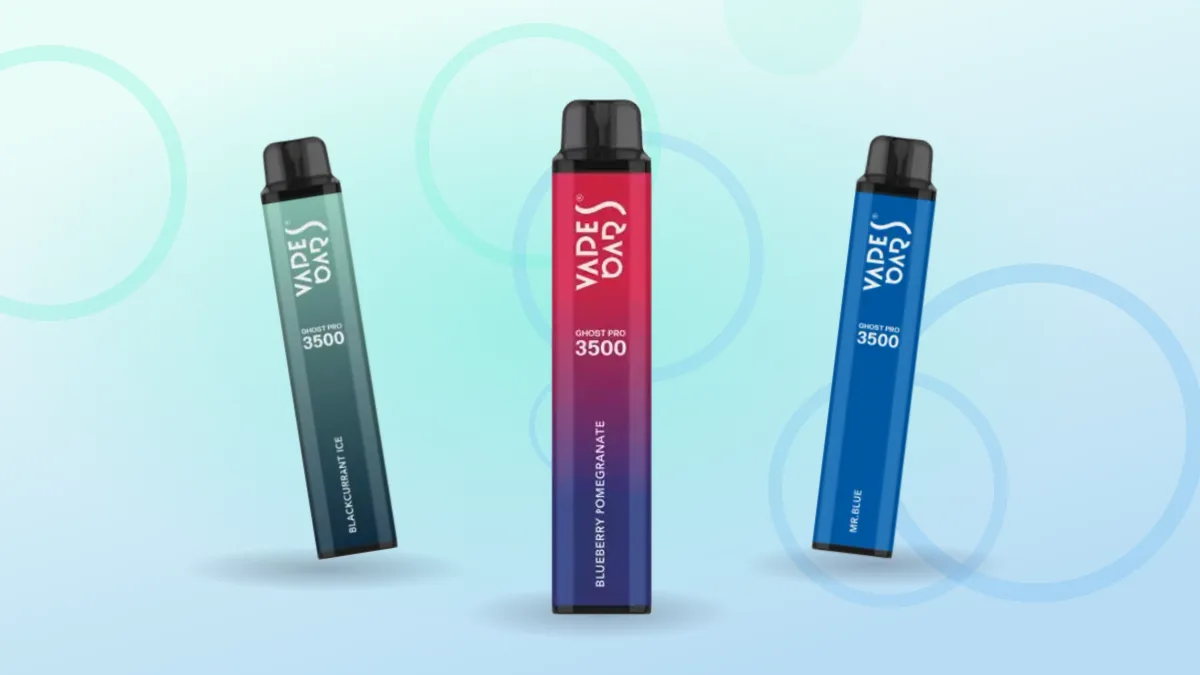
The Coil You Never See Is Doing All the Work
Nobody buys a disposable vape because of its coil. You buy it because Watermelon Freeze tastes like an actual frozen watermelon slice, or because Gummies tastes uncannily like the candy, or because it's 9pm on a Thursday in Deira and you need something in twenty minutes without downloading a delivery app you'll never use again. The coil is the one component you never see, never touch, and never think about — right up until the device starts tasting burnt on day two and you throw it away early, annoyed, without knowing exactly why.
That "why" almost always traces back to one piece of nichrome or kanthal wire wound into a tiny coil, sitting inside a wick, quietly failing to keep up with how fast you're pulling on it. For the better part of a decade, that traditional round-wire coil was the default in basically every vaping device on the market, disposables included. Then, over the past several product generations, the disposable category broadly shifted to mesh coils — a flatter, wider heating element that does the same basic job through a fundamentally different shape. Ghost Pro 3500 Puffs runs mesh coils across its full lineup, in every device, at every flavour, and this article is about why that switch happened industry-wide and what it actually changes in your hand.
This isn't a puff piece about one brand's marketing claim. Mesh coil adoption is a genuine engineering shift that happened across disposable vape manufacturing broadly, driven by a real problem: single-wire coils were inconsistent, prone to dry hits, and degraded unevenly across a device's lifespan. Mesh coils were the industry's answer. Ghost Pro's implementation — a 1.2 ohm mesh coil paired with a 1500mAh battery, rated for up to 3500 puffs per device — is a useful, concrete example of how that design plays out in a real product you can order tonight for 40 AED. But the underlying story is bigger than one brand, and understanding it will change how you evaluate any disposable, not just this one.
How Traditional Coils Actually Worked (And Where They Fell Short)
A traditional vape coil is built around a single strand of resistance wire — usually kanthal or nichrome — wound into a tight spiral, sitting inside a tube of cotton wicking that draws e-liquid up from a reservoir. When current runs through that wire, it heats up along its length, and the cotton next to it turns liquid into vapour. It's a simple, well-understood design that powered the entire early vaping industry, and it still works. The problem was never that it didn't work. The problem was where it worked.
A wound wire coil heats unevenly by nature. The wire itself has a small footprint — a thin, round strand — so heat concentrates at specific points along the coil rather than spreading across a broad surface. Some sections of the coil run hotter than others. The cotton wicking touching those hot spots has to keep pace by wicking liquid fast enough to replace what's vaporizing, and it often can't, especially as the coil ages or as you take a harder, faster draw. The result is a coil that performs great on puff one and increasingly unevenly from there — patches of cotton drying out faster than the wick can resaturate them, uneven vapour production, and a flavour profile that can shift noticeably between the start of a session and twenty minutes later.
None of this made single-wire coils bad products. It made them a compromise that vapers had learned to live with — blow gently, don't chain-vape, expect the last quarter of any cartridge or pod to taste worse than the first. That compromise became the default assumption baked into how people used vaping products for years. Mesh coils exist because manufacturers decided that compromise didn't need to be permanent.
What a Mesh Coil Actually Is
A mesh coil replaces the single wound wire with a flat sheet of perforated metal — visually closer to a tiny piece of fine metal screen than to a spring. Instead of one thin strand of wire generating heat along its length, the entire mesh sheet heats up essentially at once, distributing electrical resistance across a wide, flat surface rather than concentrating it in a coiled line.
The practical shape difference matters more than it sounds like it should. A round wire coil is essentially one-dimensional — heat radiates from a line. A mesh coil is two-dimensional — heat radiates from a plane. That plane sits directly against the cotton wick, and because the heating surface is spread out rather than concentrated, the liquid vaporizing off that cotton heats more evenly across a much larger contact area at any given moment.
This is also why mesh coils tend to hit harder and produce denser vapour at the same wattage or resistance as an equivalent wire coil — you're vaporizing e-liquid across a wider front instead of squeezing it through a narrow hot zone. In Ghost Pro's case, that mesh element is built at 1.2 ohm resistance and paired with the device's 1500mAh battery, a combination tuned specifically for the kind of steady, moderate-wattage draw a 10ml pre-filled disposable is designed to deliver across its full rated 3500 puffs — not a single explosive hit, but a flat, repeatable performance curve from the first draw to somewhere near the last.
Surface Area Is the Whole Story
If you strip away every other detail, the entire mesh-versus-wire debate comes down to one variable: surface area. A single coiled wire, even a well-made one, has a relatively small total surface area in contact with the wicking material. A mesh sheet, folded or layered into the same physical space, can expose several times more surface area to the same volume of e-liquid.
More surface area heating at once means more e-liquid can vaporize per draw without any single point overheating. Think of it as the difference between boiling water in a narrow test tube versus a wide shallow pan with the same total volume of water and the same total heat input — the pan brings everything to temperature more evenly and faster, because more of the liquid is close to the heat source at once. A wire coil is the test tube. A mesh coil is the pan.
This matters directly for flavour. Vaporization is a chemical and physical process, and how evenly it happens changes what actually reaches your mouth. Uneven heating on a wire coil means some of the e-liquid vaporizes cleanly while liquid sitting in cooler zones of the same coil lags behind or vaporizes incompletely, which can mute or distort the flavour compounds that make Peach Mango taste like peach and mango rather than something vaguely sweet and vaguely fruity. Even heating across a mesh surface means a more complete, more consistent vaporization of the same e-liquid, which is a large part of why disposables built around mesh coils are generally described as delivering "truer" or "cleaner" flavour compared to older wire-coil devices at a comparable price point.
It also matters for vapour density and throat feel. Even heating produces more consistent vapour production per draw, which is part of why mesh-coil disposables tend to feel more satisfying pull to pull rather than delivering one strong hit followed by a series of weaker, thinner ones.
Dry Hits: The Failure Mesh Was Built to Prevent
If you've vaped for any length of time, you know a dry hit the instant it happens — a harsh, burnt, almost chemical taste that replaces whatever flavour was supposed to be there, usually accompanied by a scratchy feeling at the back of the throat. A dry hit happens when the heating element gets hotter than the wicking material can keep pace with — the cotton runs dry at that specific point, and instead of vaporizing liquid, the coil starts scorching cotton fibers directly.
Wire coils are structurally more prone to this because their heat concentrates at specific points along the coiled wire. If wicking can't resaturate that exact hot spot fast enough — because you took a long draw, because the device is nearing the end of its liquid, because the wick material has broken down slightly with use — that localized hot spot burns dry while liquid elsewhere in the same coil chamber may still be perfectly fine. You get a burnt taste even though there's technically still e-liquid in the device.
Mesh coils reduce this risk structurally, not just by improving the tolerances. Because the heating surface is broad and flat rather than concentrated into a line, heat distributes across more wicking material at once, and no single point has to work dramatically harder than its neighbours. The wick behind a mesh coil is drawing from a wider, more evenly-heated zone, which means it's less likely that one small patch of cotton gets stranded dry while the rest of the reservoir is fine. It doesn't make dry hits physically impossible — no coil design does, and pulling too hard, too fast, on any device can still overwhelm a wick's ability to resaturate — but it meaningfully raises the threshold at which that failure happens, which is exactly why mesh became the standard for devices marketed on hitting a specific puff count reliably, like Ghost Pro's 3500-puff rating.
The Wicking Equation: Cotton, Speed, and 10ml of E-Liquid
None of this works without wicking, and wicking is the part of coil design that gets the least attention despite doing half the job. The coil generates heat; the wick's entire function is delivering liquid to that heat fast enough that vaporization happens instead of combustion. A phenomenal coil sitting on mediocre wicking will still dry-hit. It's a paired system, not a single component.
Ghost Pro devices are pre-filled with 10ml of 20mg nicotine e-liquid, and that volume has to get vaporized gradually and evenly across a rated 3500 puffs without the wick ever falling meaningfully behind the coil's demand. That's a bigger ask than it sounds — 10ml sounds small, but spread across thousands of individual draws, the wick is doing a huge number of very fast resaturation cycles, over and over, without pause, often multiple draws back to back in a single session.
A wide, flat mesh surface interacts differently with wicking than a coiled wire does. Because heat is spread across a broader area rather than concentrated, the wick behind it can draw liquid up across that same broader area rather than funneling everything toward one hot line. This distributes the physical demand on the cotton more evenly, which is part of why mesh-coil disposables tend to hold flavour and vapour quality more consistently deep into their rated puff life rather than tapering off hard in the final third — a pattern that was much more common with older single-wire designs, where the last stretch of e-liquid often tasted noticeably worse than the first.
Why 1.2 Ohm, and How It Works With a 1500mAh Battery
Resistance and battery output are a matched pair, not two separate specs you can read in isolation. A coil's resistance, measured in ohms, determines how much current flows through it at a given voltage, which in turn determines how hot it gets and how much vapour it produces per draw. Pair the wrong resistance with the wrong battery and you get a device that's either underpowered and weak-tasting or overpowered and prone to exactly the dry-hit and burnt-taste problems mesh coils are designed to avoid.
Ghost Pro's 1.2 ohm mesh coil sits in what's generally considered a sub-ohm-adjacent, moderate-resistance range well suited to draw-activated disposables — low enough to pull real vapour production and flavour intensity out of every inhale, high enough that the 1500mAh battery isn't straining to drive it at a punishing current draw thousands of times over the device's life. That balance is exactly what lets a single non-rechargeable battery reasonably power a device rated for up to 3500 puffs without the output visibly sagging by puff two thousand.
This is also where mesh construction pulls its weight again: because the resistance is spread across a broad flat surface rather than one wound wire, the same 1.2 ohm rating produces more even heat distribution than a wire coil built to an equivalent resistance would. You get the vapour output and flavour intensity that a lower-resistance coil promises, without concentrating that output into hot spots the way a comparable wire coil tends to. The battery, the coil, and the wick are functioning as one tuned system here — not three specs stacked on a product page.
Draw Activation and Mesh: A Natural Pairing
Ghost Pro 3500 Puffs devices have no button — they're draw-activated, meaning a sensor detects the change in airflow the instant you inhale and fires the coil automatically. This is standard across most modern disposables now, but it's worth connecting to coil design because the two decisions reinforce each other more than people realize.
A button-fired coil gets pressed and held for a fixed or variable duration set by the user, which means the coil is often already heating before the user starts drawing air through it — priming heat into a system with no airflow yet, which is one of the classic causes of dry, burnt-tasting first hits on button devices. Draw activation instead ties coil firing directly to inhale, so heat and airflow start together. That timing precision matters more with a mesh coil than it did with older wire coils, because mesh is capable of ramping up vapour production faster — a broad, even heating surface reaches effective vaporizing temperature across its whole area quickly, so the sensor-to-heat lag has to be tight or you either waste the front of the draw or overheat before airflow catches up.
The combination — draw-activated firing plus a mesh coil — is part of why modern disposables generally feel more responsive and consistent from the very first pull compared to older button-fired, wire-coil devices, where the first hit of a session was often the least reliable one. There's no button to hold down incorrectly, no timing to learn, and no lag between inhale and vapour — you draw, the sensor fires, the mesh coil heats evenly across its surface, and the hit arrives.
Consistency Across 3500 Puffs: Beginning, Middle, End
The real test of any coil design isn't puff one. It's puff two thousand. A device rated for up to 3500 puffs is making an implicit promise that whatever flavour and vapour quality you get early on will hold up reasonably well for a long stretch afterward, not just for the honeymoon period before the first signs of wear show up.
This is where the surface area advantage compounds. A wire coil's small heating surface means it's already working close to its practical limit even when new — there's not much margin left as cotton wicking breaks down slightly with heat cycling over hundreds or thousands of draws, or as the wire itself experiences minor oxidation from repeated heating and cooling. Once that thin margin erodes, performance drops off noticeably, and it tends to drop off in a way you can taste — flatter vapour, muted flavour, the first hints of a burnt edge creeping in well before the e-liquid is actually gone.
A mesh coil starts with a wider performance margin because it isn't relying on a single small hot zone to do all the work. As it heat-cycles through thousands of draws, the same gradual wear happens, but it's distributed across a broader surface rather than concentrated at a few points, so the practical effect on flavour and vapour output is more gradual and less abrupt. That's the mechanism behind the common observation that mesh-coil disposables "taste the same at the end as they did at the start" far more reliably than older wire-coil devices did. It's not that mesh coils don't wear — every heating element does — it's that the wear curve is flatter, which is exactly what you want from a device that's supposed to deliver a consistent experience across its full rated puff count rather than just its first quarter.
Why the Whole Disposable Industry Moved This Direction
It's worth being clear that this shift wasn't one brand's idea. Mesh coil technology migrated into disposables from refillable pod systems and sub-ohm tanks, where it had already proven out the same surface-area advantages for years before disposable manufacturing caught up. Once component suppliers could produce mesh coils cheaply and reliably enough at the scale disposables require — millions of identical, pre-assembled, sealed units — the economics and the performance case both pointed the same direction, and the category moved as a whole.
That's the honest framing: mesh coils became standard across quality disposable vapes broadly because they solved a real, common complaint — dry hits and flavour inconsistency — better than the wire coils they replaced, at a cost structure that scaled. It wasn't a single brand's proprietary breakthrough; it was a component-level upgrade that spread across manufacturing supply chains and got adopted broadly because it worked. Any disposable vape you pick up today from a reputable manufacturer is more likely than not built around mesh, precisely because the alternative — going back to single-wire coils — would mean shipping a product with a known, well-documented weakness that customers can immediately taste.
Ghost Pro's decision to build its entire 3500 Puffs range around a 1.2 ohm mesh coil isn't a marketing flourish, in other words — it's table stakes for a device that has to perform consistently across a 10ml fill and thousands of draws while being sold sealed, with no way for a customer to adjust or rebuild the coil themselves the way you could on old refillable hardware. Mesh removes a huge amount of the guesswork and user error that used to come with a coil, which matters even more on a disposable, where the coil you get is the coil you're stuck with for the life of the device.
Tasting the Difference Across Ghost Pro's Flavour Categories
Coil design isn't an abstract engineering detail — it directly shapes how each flavour actually tastes in your mouth, and it shows up differently depending on what kind of flavour you're vaping. Across Ghost Pro's 32-flavour range, spanning six categories, the mesh coil's even heating plays a slightly different role in each.
In the Ice & Menthol lineup — Banana Ice, Blackcurrant Ice, Cherry Cola Ice, Glacier Mint, Red Apple Ice, and Watermelon Freeze — the cooling agents that create that menthol snap need to vaporize alongside the fruit or cola notes at a matched rate, or you get a flavour that either loses its icy edge too fast or tastes like cooling spray with the fruit buried underneath. Even heating keeps both elements vaporizing together rather than one outpacing the other.
The Berry Mix category — Berry Burst, Blackcurrant Berry Squash, Blueberry Pomegranate, Blue Razz Lemon, Blue Sour Razz, Buba Blue, Strawberry Grape — leans on layered fruit notes that are easy to flatten into a generic "berry" blur if a coil isn't vaporizing evenly; a hot spot can scorch the more delicate top notes while heavier ones linger. Tropical & Fruit flavours like Passion Kiwi Guava, Strawberry Melon Chew, and Watermelon Bull rely on the same principle at a bigger scale, since tropical blends often stack three or more fruit notes that need to arrive together rather than staggered.
Sharper, tart profiles show the difference most clearly. Sour Apple, from the Signature Classics line, depends on that upfront tartness landing cleanly — a coil running hot in patches tends to round off sourness into something flatter and sweeter than intended, which is the opposite of what a "sour" flavour is supposed to deliver. The same logic applies to Grape Bull and Great Grape from the Grape Collection, and to dessert-style flavours like Candy Floss and Gummies, where the whole appeal is a specific, recognisable candy note rather than a generic sweetness. Even heating is what keeps Mr. Blue, Mr. Red, Red Angel, and Pink Orange Fizz tasting like distinct, specific flavours rather than converging toward the same vague fruity-sweet middle ground that badly-heated e-liquid tends to drift toward.
Buying Smart: What to Check, What It Costs, How It Arrives
None of this coil engineering matters if you can't actually get a reliable device in your hands at a fair price, so here's where it lands practically. Every flavour in Ghost Pro's range — all 32 of them, across Ice & Menthol, Berry Mix, Tropical & Fruit, Grape Collection, Candy & Dessert, and Signature Classics — is priced the same: 40 AED for a single device, or 350 AED for a box of 10, which works out to roughly 35 AED per device when you buy by the box. Every device carries the same specs regardless of flavour: a 1500mAh battery, a 1.2 ohm mesh coil, 10ml of 20mg nicotine e-liquid, draw-activated firing with no button, and a rating of up to 3500 puffs.
Ordering runs through WhatsApp at +971 56 165 2004 — message to check stock on specific flavours or place an order, since that's the channel Ghost Pro uses for both. Payment is cash on delivery in AED only; there's no card processing and no online payment, so have cash ready for whichever driver shows up. Delivery is 30 AED standard, waived entirely once your order reaches 350 AED, which makes buying by the box a fairly easy call if you're a regular. Timing depends on where you are: expect roughly 2 hours in Dubai, 4 to 6 hours in Sharjah and Ajman, around 6 hours in Abu Dhabi and Al Ain, and 6 to 12 hours out toward Ras Al Khaimah, Fujairah, or Umm Al Quwain.
If you want a signal that the coil-level details in this article hold up in practice rather than just on paper, Ghost Pro currently sits at a 9.9 out of 10 rating across 383 verified UAE customer reviews — a reasonable proxy for whether the mesh coil, wicking, and battery pairing described above actually performs the way it's supposed to once it's in someone's hands rather than in a spec sheet. As with any nicotine product, this is restricted to buyers aged 21 and over, and nicotine products remain age-restricted and regulated in the UAE — check current official guidance if you have specific legality questions, since that's not something a blog post should be the final word on.
Getting the Most Out of Your Coil Day to Day
A few practical habits get more consistent performance out of a mesh coil across its full puff life, even though there's nothing to maintain or rebuild on a sealed disposable. Slower, steadier draws give the wick more time to keep pace with the coil, which matters even with mesh's wider margin for error — rapid, back-to-back chain draws are still the fastest way to outrun any wick's resaturation speed, mesh or otherwise. Letting a device sit for a few seconds between draws in a heavy session gives the cotton time to fully resaturate the mesh surface before the next hit, which keeps flavour sharper for longer.
Temperature matters too. Leaving a disposable in a hot car in Dubai in August — where interior temperatures can climb well past what any e-liquid or battery is designed for — can affect both the coil's wicking material and the battery's output over time. Keeping the device at reasonable ambient temperature between uses protects the consistency the mesh coil is built to deliver. And if a device does start tasting off before you'd expect based on usage, that's more likely a sign it's nearing the natural end of its 10ml fill or its 3500-puff rating than a defect — mesh coils flatten the wear curve, they don't eliminate the fact that a sealed disposable has a finite, honest lifespan built around a finite amount of e-liquid and a non-rechargeable battery.
The bigger picture is that mesh coil technology moved the entire disposable category from "acceptable most of the time" to "reliable almost all of the time," and that shift is exactly why it's now the standard rather than a premium feature. When you're comparing devices — whether that's deciding between a Peach Mango and a Strawberry Peach Citrus, or comparing Ghost Pro against something else on a shelf — the coil inside is arguably the single biggest factor in whether that first draw tastes as good as the last one, even though it's the one spec most people never think to ask about.
The Bottom Line
Mesh coils didn't win because of clever marketing. They won because they solved a specific, well-understood physical problem — uneven heating on a small, concentrated surface — with a straightforward engineering answer: spread the same heat across a much wider surface instead. Every downstream benefit people actually notice — fewer dry hits, steadier flavour, better performance late into a device's life — traces back to that one change in shape.
Ghost Pro's 1.2 ohm mesh coil, built into a 1500mAh, draw-activated device rated for up to 3500 puffs and pre-filled with 10ml of 20mg nicotine e-liquid, is one concrete implementation of an industry-wide shift, not an isolated gimmick. Whether you're reaching for Glacier Mint on a hot afternoon or working through a box of Strawberry Grape, the coil sitting inside that 40 AED device is doing more consistent, more even work than the wire coils it replaced — and that's the actual, physical reason it tastes the way it does from the first puff to somewhere near the last.
Quick answers
What actually is a mesh coil, in simple terms?+
A mesh coil is a flat, perforated sheet of metal that heats e-liquid across a wide, even surface, instead of the single thin wound wire used in traditional coils. That broader heating surface is why mesh coils vaporize e-liquid more evenly and consistently than older wire-coil designs.
Does Ghost Pro 3500 Puffs use a mesh coil?+
Yes. Every Ghost Pro 3500 Puffs device across all 32 flavours is built with a 1.2 ohm mesh coil paired with a 1500mAh battery, delivering even heating across the device's full 10ml, 20mg nicotine fill and its rated up to 3500 puffs.
Why do mesh coils reduce dry hits compared to older coils?+
Dry hits happen when a coil's wicking can't keep a hot spot supplied with liquid fast enough, so the coil scorches cotton instead of vaporizing e-liquid. Because a mesh coil spreads heat across a wide flat surface rather than concentrating it along one wire, no single point has to work dramatically harder than the rest, which meaningfully lowers the risk of that failure.
Will a mesh coil disposable still taste good near the end of its 3500 puffs?+
Mesh coils are designed to wear more gradually and evenly than traditional wire coils, so flavour and vapour quality tend to hold up more consistently deep into a device's life. Performance can still taper naturally as the 10ml e-liquid fill runs low, which is expected on any disposable regardless of coil type.
Why did the whole disposable vape industry move to mesh coils instead of just one brand?+
Mesh coil technology proved its surface-area and consistency advantages in refillable pod systems and tanks first, and once manufacturers could produce mesh coils reliably at the scale disposables require, the performance and cost case pointed the same direction across the category, so it became a broad manufacturing shift rather than one company's proprietary feature.
Does the mesh coil affect how different Ghost Pro flavours taste?+
Yes. Even heating helps layered or sharp profiles come through cleanly: cooling notes in Ice & Menthol flavours like Glacier Mint stay balanced against the fruit underneath, tart flavours like Sour Apple keep their intended sourness instead of rounding out, and multi-fruit blends in the Tropical & Fruit and Berry Mix categories stay distinct rather than blurring together.
How does draw activation relate to the mesh coil in Ghost Pro devices?+
Ghost Pro devices are draw-activated with no button, so the coil fires the instant airflow is detected rather than being pre-heated by holding a button. That tight timing pairs well with a mesh coil's fast, even heat-up across its surface, giving a more consistent hit from the very first draw.
Where can I check stock or order Ghost Pro 3500 Puffs in the UAE?+
Orders and stock checks go through WhatsApp at +971 56 165 2004. Devices are 40 AED each or 350 AED per box of 10, payment is cash on delivery in AED only, and delivery is 30 AED standard (free on orders of 350 AED or more), typically arriving in about 2 hours in Dubai and up to 6-12 hours in areas like Ras Al Khaimah, Fujairah, or Umm Al Quwain.
Related guides
How to Read a Ghost Pro Flavour Page Like a Pro: Tags, Ratings and What They Mean
Every Ghost Pro flavour page packs a category label, taste tags, a buy-box, a spec block and an FAQ into one small space — here's exactly what each piece means, so you can scan any of the 32 flavours and know in seconds whether it's the one to order.
Ghost Pro 3500 Wholesale UAE: How Bulk Orders Work
How wholesale orders of Ghost Pro 3500 work in the UAE: minimums, tiers, mixed cartons, delivery and how to get a quote.
First-Time Buyer's Checklist: Ordering From Ghost Pro on WhatsApp
Never ordered from a WhatsApp-only vape brand before? Here's the exact step-by-step walkthrough for placing your first Ghost Pro 3500 Puffs order — from your opening message to checking your delivery at the door.
Blackcurrant Ice Vape Flavor: Tart, Dark and Cold
What a blackcurrant ice vape tastes like, how blackcurrant differs from blueberry, and whether Ghost Pro Blackcurrant Ice suits you.